The best full-spectrum LED grow light for most indoor plant growers is the Spider Farmer SF2000 Evo — 200W of verified Samsung LM301H output with a genuine 3000K/5000K + 660 nm + 730 nm far-red spectrum that covers the full PAR range from blue through deep red. For budget-conscious growers, the Spider Farmer SF1000 EVO delivers LM301H EVO chips at 2.7 µmol/J at a $–$$ (Budget to Mid-Range) price point. For the highest-efficacy option with UL certification, the HLG 350 Diablo at 2.80 µmol/J is the precision pick for serious home growers.
A full-spectrum grow light covers the complete photosynthetically active radiation (PAR) range from 400–700 nm, with genuine blue (450–470 nm) for compact vegetative growth, broad white midrange, and deep red (660 nm) to drive photosynthesis across all growth stages. Unlike older “blurple” lights that spike only at narrow blue and red bands, true full-spectrum LEDs using broad-spectrum white diodes plus supplemental red emitters more closely mimic natural sunlight — and in 2026 the benchmark chips are Samsung LM301H and LM301H EVO. For a broader LED comparison including T5 strip lights and budget panels, see our complete grow lights guide. For the LED-focused review covering quantum board and bar-style picks, see best LED grow lights.
At a Glance: Best Full-Spectrum Grow Lights for 2026
| # | Product | Award | True W | Coverage | Price |
|---|---|---|---|---|---|
| 1 | Spider Farmer SF1000 EVO | Best Budget Full-Spectrum | ~100W | 2×2 ft | $–$$ |
| 2 | VIVOSUN VS3000 | Best Value 300W | 300W | 3×3 ft | $$ |
| 3 | Spider Farmer SF2000 Evo | Best Full-Spectrum Overall | ~200W | 2×4 ft | $$ |
| 4 | AC Infinity IONBOARD S24 | Best Beginner-Friendly | 220W | 2×4 ft | $$ |
| 5 | ViparSpectra XS3000 Pro | Best Compact Tent Pick | ~300W | 2.5×2.5 ft | $$ |
| 6 | AC Infinity IONBOARD S33 | Best 3×3 Coverage | 260W | 3×3 ft | $$ |
| 7 | Mars Hydro FC3000 | Best Smart Full-Spectrum | 300W | 3×3 ft | $$–$$$ |
| 8 | Spider Farmer SE3000 | Best Bar-Style Full-Spectrum | 300W | 3×3 ft | $$$ |
| 9 | HLG 200 Rspec | Best Premium Mid-Size | 0–196W | 2×2–2×3 ft | $$$ |
| 10 | HLG 350 Diablo | Best High-Efficacy Pick | ~350W | 3×3 ft | $$$ |
How We Chose These Full-Spectrum Grow Lights
We evaluated each fixture on: verified spectrum quality (confirmed full-spectrum diode mix — not just marketing language); published efficacy in µmol/J; actual wattage draw from manufacturer spec sheets; coverage footprint accuracy; chip technology (Samsung LM301H and LM301H EVO weighted heavily as the 2026 benchmark for spectrum quality); and price-band value. All 10 products were CPSC-screened at recalls.gov — no open recalls found (July 2026). No physical testing was conducted. Author: Michael Probert. No expert reviewer.
Best Full-Spectrum Grow Lights Reviewed
Transparency first: This guide contains affiliate links. If we’re enrolled in an affiliate program, we may earn a commission at no extra cost to you — it never affects how we research or rank. Read our full affiliate disclosure policy.
Spider Farmer SF1000 EVO — Best Budget Full-Spectrum
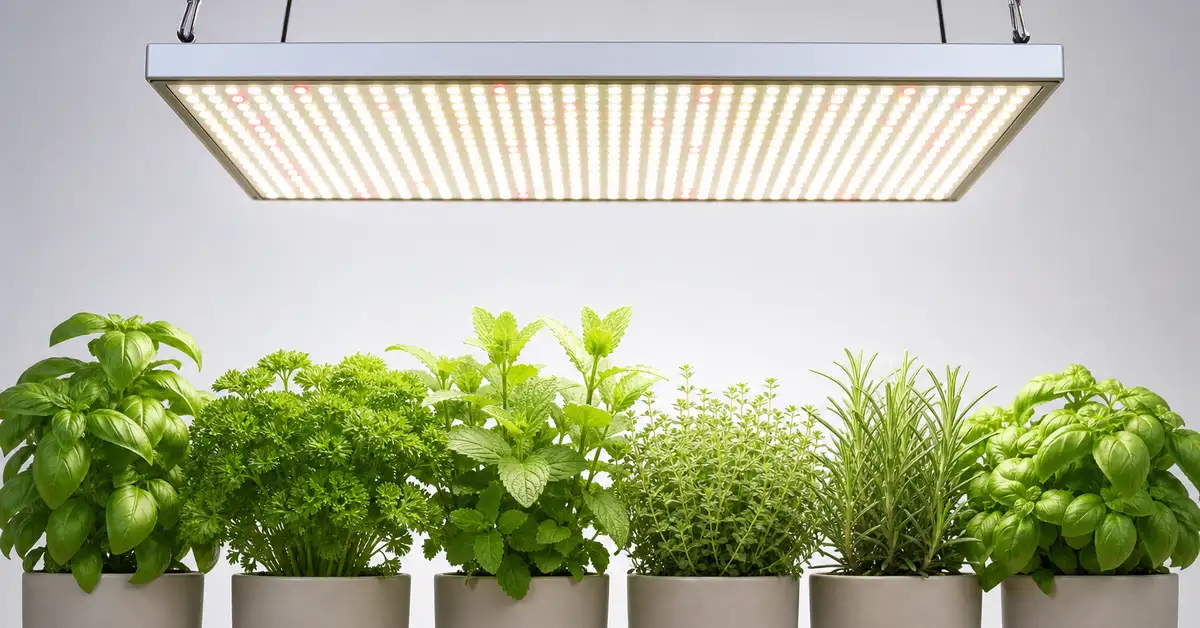
Samsung LM301H EVO diodes · ~100W true power · 2.7 µmol/J efficacy · Spectrum: 3000K + 5000K + 660 nm deep red + 760 nm IR · Coverage: 2×2 ft (bloom) / 3×3 ft (veg) · Dimmable: yes · Price band: $–$$
The Spider Farmer SF1000 EVO is the clearest full-spectrum upgrade for budget-constrained growers. The LM301H EVO chip (Samsung’s latest horticultural LED) delivers a genuine broad-spectrum output — 3000K warm white + 5000K cool white covers the full PAR midrange, 660 nm deep red drives flowering photosynthesis, and the 760 nm IR component adds far-red support for shade-avoidance responses and flowering induction. At 2.7 µmol/J, the SF1000 EVO is measurably more efficient than blurple lights or single-spectrum budget LEDs in the same wattage class. The 100W draw is right-sized for herb shelves, single 2×2 ft tent spaces, and propagation setups. Fanless passive cooling; dimmer box included; GGS controller compatible for timer/PPFD scheduling. Note: verify the SKU is the EVO version (LM301H EVO) at purchase — the standard SF1000 uses a different diode mix.
Pros: Genuine LM301H EVO full-spectrum at budget price; 2.7 µmol/J efficacy; fanless/quiet; dimmable; GGS controller compatible; far-red included. Cons: Two SKUs exist (EVO vs. standard) — confirm at purchase; 100W limits coverage to 2×2 ft bloom; no built-in timer.
VIVOSUN VS3000 — Best Value 300W Full-Spectrum
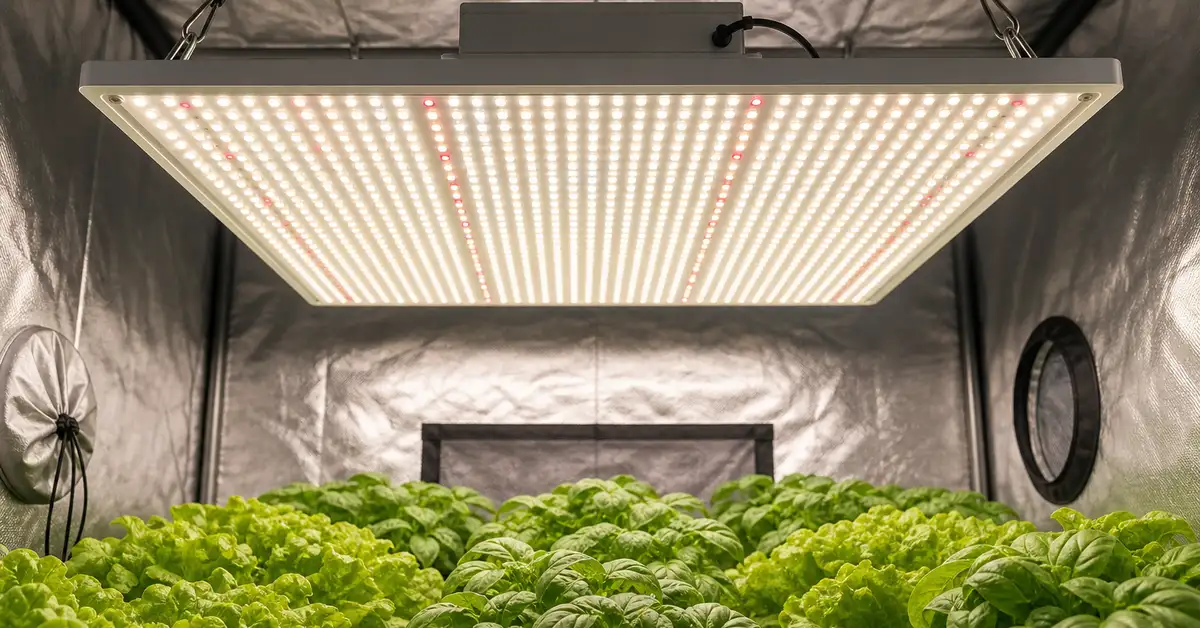
Full-spectrum (white, warm-white, red, far-red) · 300W true power · Coverage: ~3×3 ft · Professional + hobbyist design · Price band: $$
The VIVOSUN VS3000 offers 300W of full-spectrum coverage — white, warm-white, red, and far-red bands — at a $$ price that makes it the value standout in the 300W tier. Designed for both professional and hobbyist indoor growers, the VS3000 delivers high PPFD output across the full photosynthetic range, with the warm-white component ensuring the broad midrange coverage that distinguishes true full-spectrum lights from blurple alternatives. For growers who need 3×3 ft coverage without stepping up to $$$ pricing, the VS3000 hits the right balance of spectrum quality and value. Dimmable; suitable for vegetables, herbs, and flowering plants.
Pros: Full-spectrum at $$ pricing; 300W covers 3×3 ft; includes warm-white and far-red; professional-grade construction; widely available. Cons: Specific efficacy figure (µmol/J) not published by manufacturer — can’t directly compare against LM301H competitors; VIVOSUN customer support is variable.
Spider Farmer SF2000 Evo — Best Full-Spectrum Overall
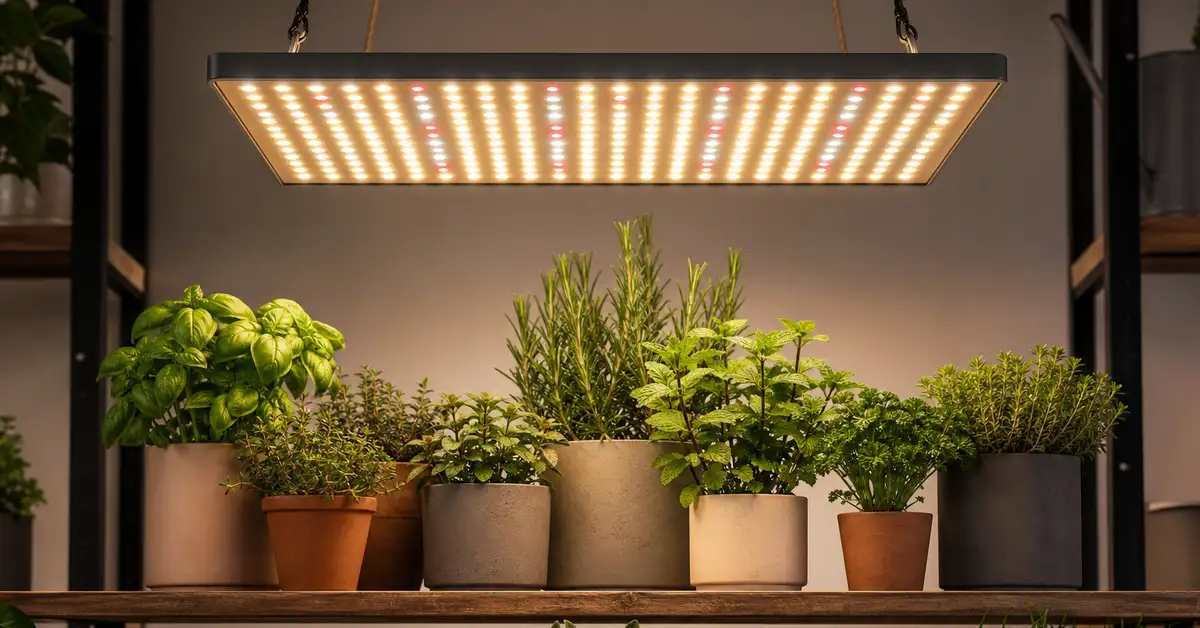
Samsung LM301H diodes · ~200W true power · Spectrum: 3000K + 5000K + 660 nm + 730 nm far-red · Coverage: 2×4 ft (bloom) / 3×5 ft (veg) · Dimmable: yes (0–100%) · Daisy-chain capable · Price band: $$
The Spider Farmer SF2000 Evo is the full-spectrum benchmark at the $$ tier. Samsung LM301H diodes (not LM301B — the 2026 horticultural upgrade) deliver verified broad-spectrum output across 3000K + 5000K white bands plus 660 nm deep red and 730 nm far-red — a spectrum that supports plants from seedling through flowering with scientifically validated wavelength coverage. The 2×4 ft bloom footprint suits rectangular grow tents; 3×5 ft veg footprint is generous. Dimmable 0–100%; daisy-chain capable; fanless passive design. At ~200W with full Samsung LM301H spectrum quality, the SF2000 Evo is the first full-spectrum upgrade that justifies stepping past the SF1000 class when your grow space exceeds 2×2 ft.
Pros: Samsung LM301H full-spectrum (3000K + 5000K + 660nm + 730nm far-red); dimmable; daisy-chain; 2×4 ft bloom; fanless; strong resale value. Cons: Published efficacy figure not widely available in US listings — verify spec sheet at purchase; rectangular form can leave corner shadows in square tents.
AC Infinity IONBOARD S24 — Best Beginner-Friendly Full-Spectrum
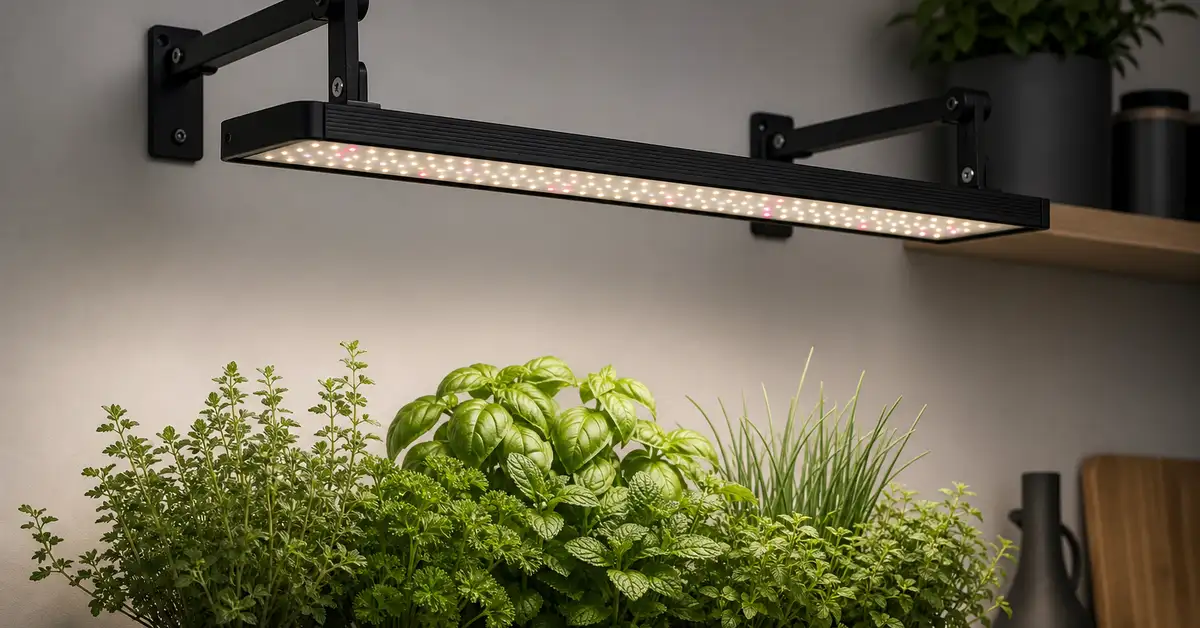
Full-spectrum (660 nm + broad-spectrum white) · 220W true power · Coverage: 2×4 ft · Dimmable: yes · Unibody board design · Price band: $$
The AC Infinity IONBOARD S24 is the easiest entry into full-spectrum growing for beginners. Built on a unibody board design with a plug-and-play setup, it delivers 220W of full-spectrum output across a 2×4 ft footprint — the same coverage class as the SF2000 Evo but with an emphasis on beginner usability. The dimmable driver allows intensity to be matched to plant age and sensitivity. AC Infinity’s reputation for build quality (their fan and environmental control products are widely trusted in the grow community) extends to the IONBOARD line. If you’re setting up your first serious indoor grow in a 2×4 ft tent and want a reliable full-spectrum light with quality manufacturer support, the S24 is the most accessible option in this class.
Pros: AC Infinity build quality; unibody design (compact, clean); dimmable; 2×4 ft coverage; reliable US customer support; beginner-friendly setup. Cons: Specific chip type not widely disclosed in standard listings; at the top of $$ pricing; not the most efficient option in this wattage class.
ViparSpectra XS3000 Pro — Best Compact Full-Spectrum Tent Pick
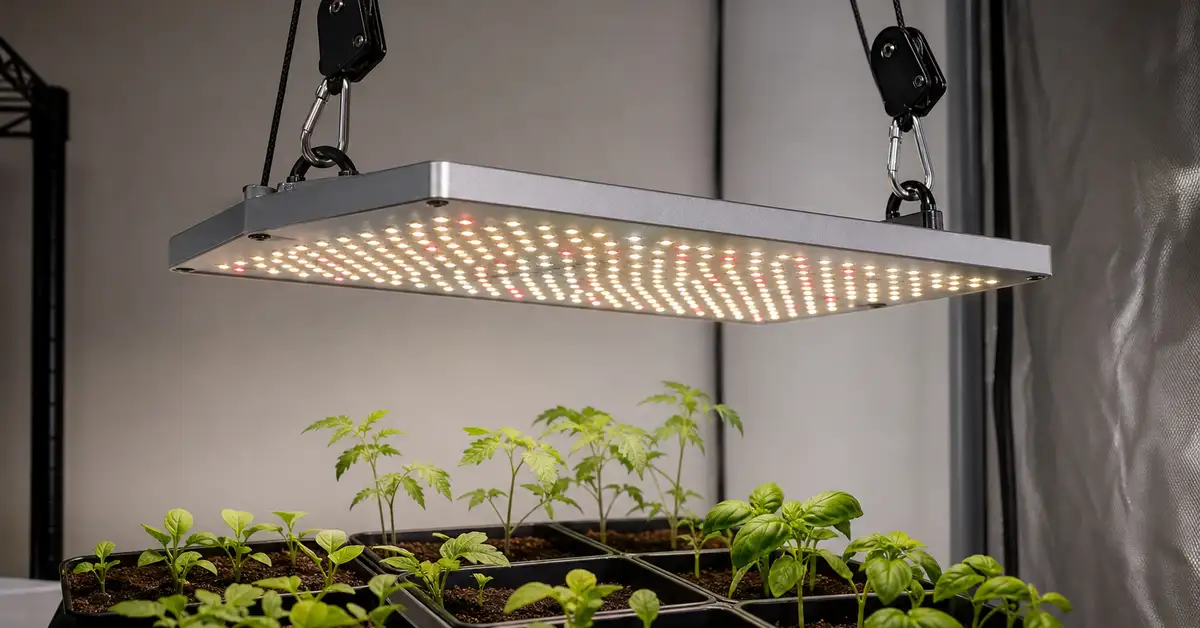
Lens-design full-spectrum · ~300W true power · Coverage: 2.5×2.5 ft (veg, 16″) / 2×2 ft (bloom, 12″) · Price band: $$
The ViparSpectra XS3000 Pro takes a different approach to full-spectrum delivery: a proprietary lens design that concentrates photons more efficiently toward the canopy, allowing a smaller fixture footprint while maintaining high PPFD at the coverage zone. At 16″ hanging height for veg, it covers 2.5×2.5 ft; pulled to 12″ for flowering, it focuses to a 2×2 ft bloom footprint with higher PPFD intensity. This makes it a logical choice for growers with compact square grow tents who want intense light delivery over a precise area rather than diffuse coverage across a larger space. Full-spectrum output covers PAR from blue through red. Dimmable.
Pros: Lens design improves PPFD intensity at canopy; 2.5×2.5 ft veg / 2×2 ft bloom at listed heights; full-spectrum; dimmable; compact for a 300W fixture. Cons: Bloom footprint tighter than 2×4 ft alternatives at the same wattage; lens design benefits are manufacturer-claimed — independent PPFD verification limited; best suited to square tent grows rather than rectangular.
AC Infinity IONBOARD S33 — Best Full-Spectrum for 3×3 Grows
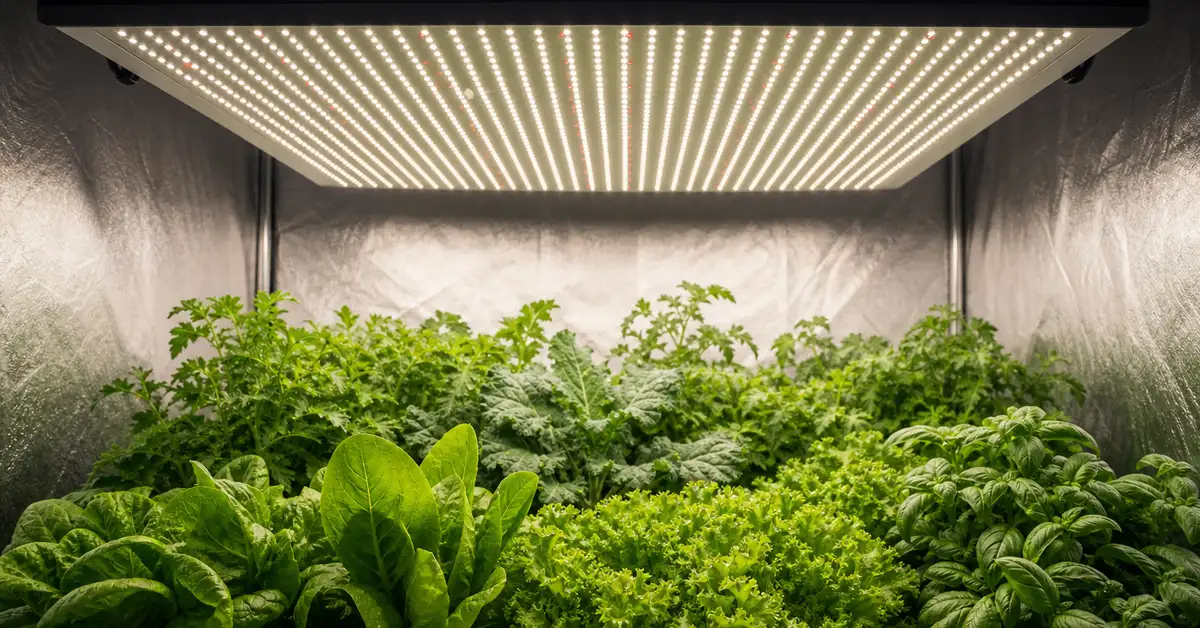
Full-spectrum (660 nm, 6500K) · 260W true power · Coverage: 3×3 ft · Dimmable: yes · Price band: $$
Where the S24 targets 2×4 ft rectangular tents, the AC Infinity IONBOARD S33 is optimised for 3×3 ft square grow spaces. At 260W with a 6500K + 660 nm deep red full-spectrum output, it delivers intense usable light across the full 3×3 ft canopy. The square board form naturally suits the square tent format, reducing corner coverage losses that rectangular panels can produce. Same AC Infinity build quality and dimmable driver as the S24, with the correct fixture geometry for a 3×3 ft setup. For home growers running a 3×3 ft tent and wanting AC Infinity’s ecosystem integration, the S33 is the cleaner choice over the S24 in this footprint.
Pros: Square form matches 3×3 ft tent geometry; AC Infinity build quality; 260W dimmable full-spectrum; 6500K + 660nm spectrum; US support. Cons: Specific diode type not published in standard listings; limited for grows larger than 3×3 ft.
Mars Hydro FC3000 — Best Smart Full-Spectrum
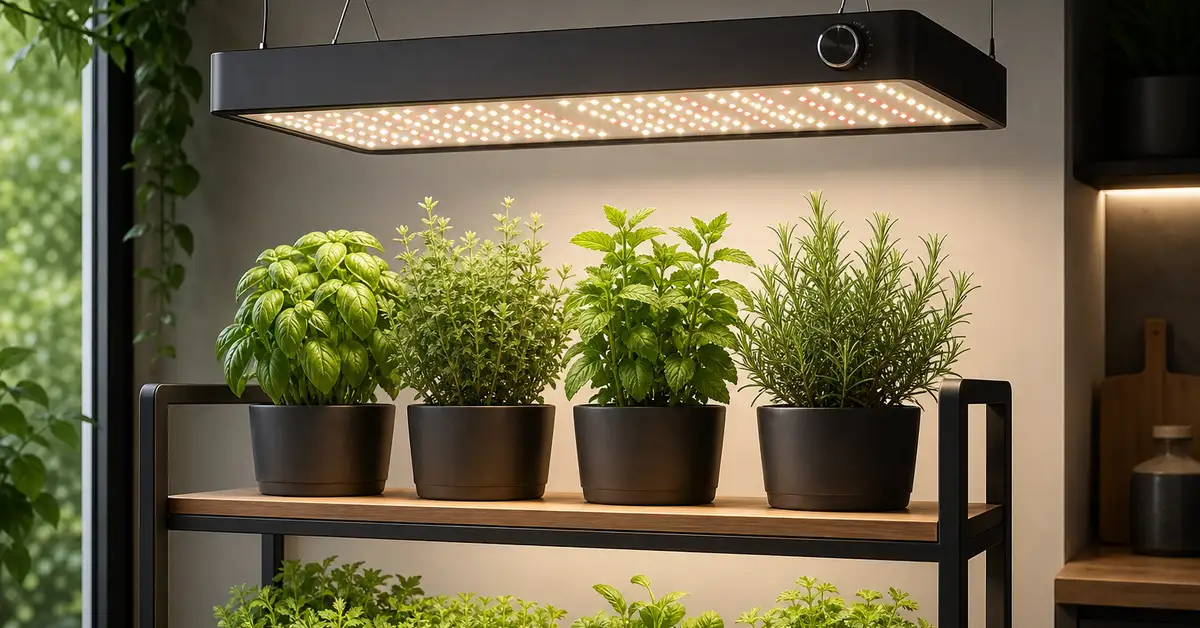
Full-spectrum bar-style · 300W true power · Smart iControl (scheduling + monitoring) · Coverage: 3×3 ft (100×100 cm) · Price band: $$–$$$
The Mars Hydro FC3000 is the smart-home option in the full-spectrum category. The 2026 version adds iControl integration — Mars Hydro’s smart controller that enables programmable dimming schedules, sunrise/sunset simulation, and tent monitoring integration. At 300W with full-spectrum output across a 3×3 ft (100×100 cm) space, it suits the same footprint as the AC Infinity S33 but adds the iControl smart ecosystem that lets you manage multiple lights and environmental controls from a single interface. Bar-style construction (FC series — not FC-E) improves even canopy distribution. For growers who want to automate their light schedules and eventually scale to a multi-light setup with centralised control, the FC3000 is the entry into smart full-spectrum growing.
Pros: iControl smart scheduling and monitoring; bar-style even canopy distribution; 300W; 3×3 ft coverage; Mars Hydro ecosystem integration. Cons: Smart features add cost over non-smart alternatives; FC series (vs FC-E) positioning can be confusing — verify you’re buying the FC3000, not the FC-E3000.
Spider Farmer SE3000 — Best Bar-Style Full-Spectrum
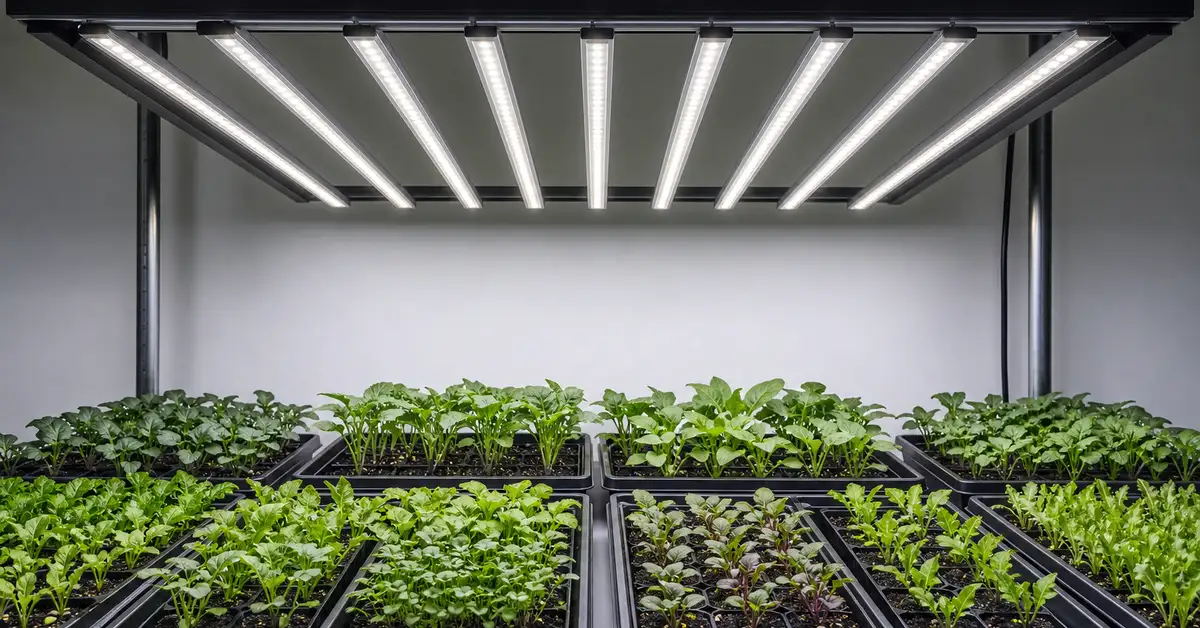
Samsung LM301B diodes · 300W true power · Even PAR distribution (multi-bar) · Detachable driver · Coverage: 3×3 ft (bloom) / ~3.5×3.5 ft (veg) · Price band: $$$
The Spider Farmer SE3000 is where Samsung LM301B quality meets bar-style full-spectrum design. Unlike the SF series quantum boards, the SE3000’s multi-bar layout distributes LEDs across the full coverage area — eliminating the central hotspot that single-board designs produce and delivering even PAR across the entire 3×3 ft canopy. The detachable driver mounts outside the grow space, reducing heat inside the tent and extending diode lifespan. Samsung LM301B diodes provide reliable full-spectrum output with the proven quality Samsung maintains across their horticultural line. For growers who’ve graduated from quantum boards and want the precision canopy distribution that bar-style provides — in a full-spectrum Samsung-verified package — the SE3000 is the step-up pick.
Pros: Multi-bar even PAR distribution; Samsung LM301B full-spectrum; detachable driver; strong community support; 3×3 ft bloom coverage. Cons: $$$ investment; heavier and more complex to hang than single-board alternatives; Samsung LM301B (not LM301H EVO) — solid but not the latest chip generation.
HLG 200 Rspec — Best Premium Mid-Size Full-Spectrum
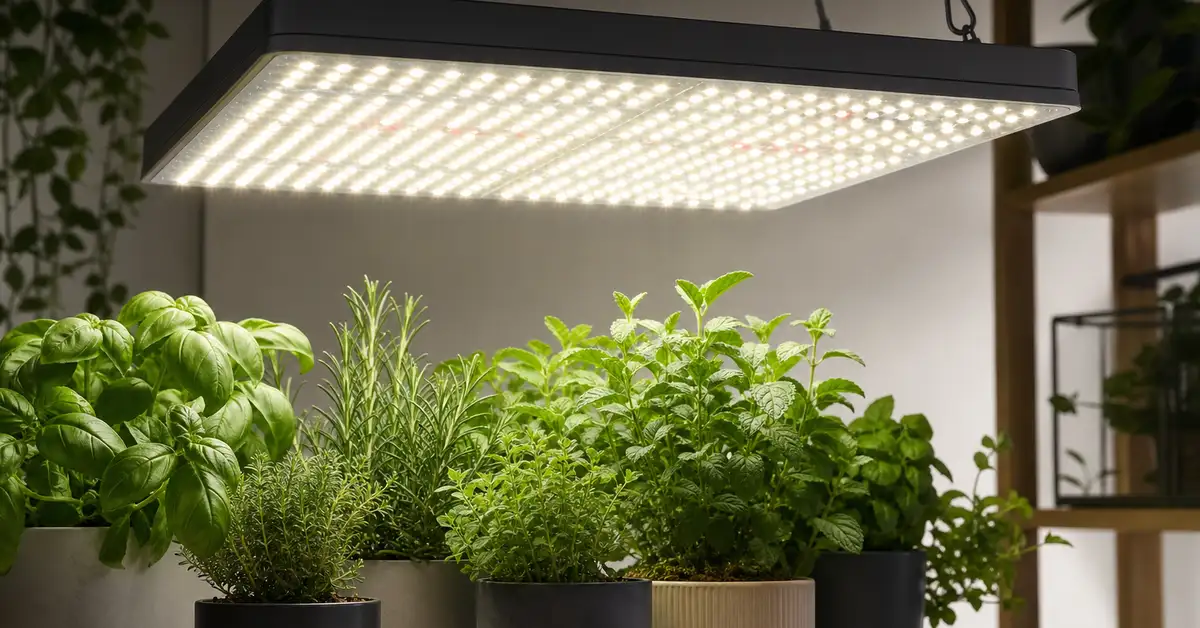
Samsung LM301H + 660 nm deep red · 0–196W adjustable power · Coverage: 2×2 ft or 2×3 ft (bloom) / 3×3 ft (veg) · US-assembled · Price band: $$$
The HLG 200 Rspec brings Horticulture Lighting Group’s quality standard to the mid-size full-spectrum category. Samsung LM301H diodes paired with dedicated 660 nm deep red emitters deliver a precise full-spectrum output that validates HLG’s position as the benchmark for diode quality — LM301H (the horticultural-specific upgrade to LM301B) produces a broader, more balanced spectrum than standard LED alternatives. At 0–196W adjustable output, it can be dialled back for seedlings or pushed to full intensity for flowering. The Rspec variant adds a deep-red channel optimised for late-stage flowering induction. US-assembled, with HLG’s reputation for engineering tolerances that outlast import-only alternatives. Coverage spans 2×2 ft to 2×3 ft bloom and 3×3 ft vegetative, offering flexibility that few mid-size boards match.
Pros: Samsung LM301H (horticultural chip, not commodity LED); Rspec deep-red for flowering; US-assembled quality; adjustable 0–196W; flexible coverage (2×2 through 3×3 ft). Cons: $$$ for the wattage class — you’re paying for chip quality and build; overkill for casual herb growers.
HLG 350 Diablo — Best High-Efficacy Full-Spectrum
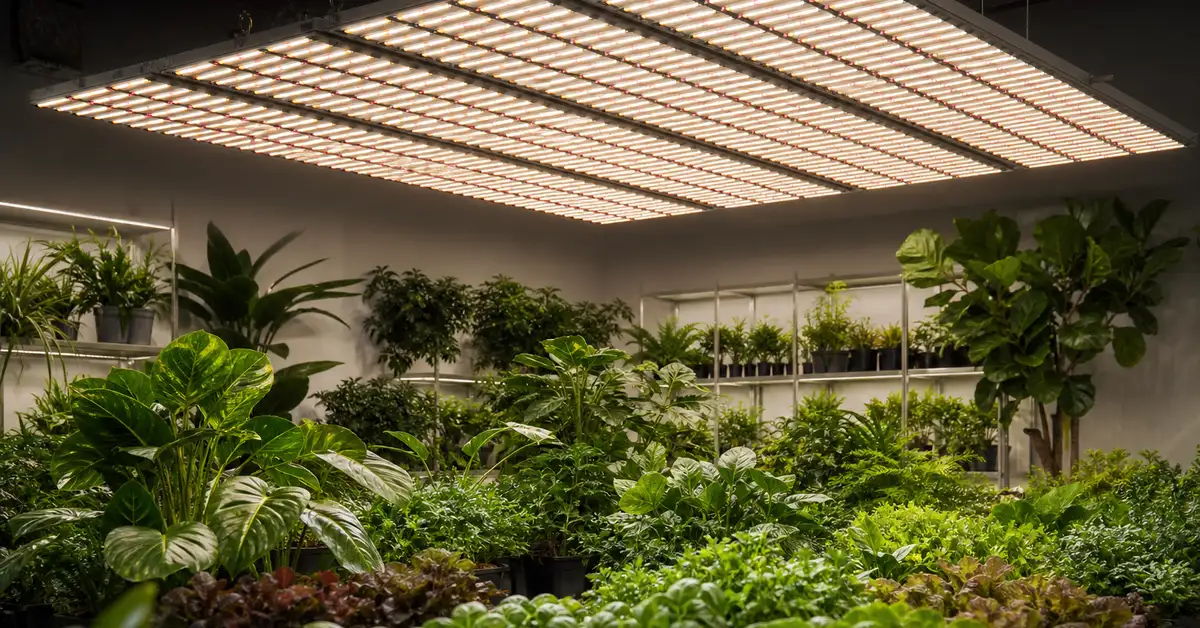
Samsung LM301H EVO + 660 nm · ~350W true power · 2.80 µmol/J efficacy · 950+ µmol/s PPF · UL 8800 / UL 1598 / CSA certified · Dimensions: 35″×9.5″×3.25″ · Coverage: 3×3 ft (bloom) · Price band: $$$
The HLG 350 Diablo is the peak full-spectrum option on this list. At 2.80 µmol/J — among the highest measured efficacy figures in the 300–400W class — it produces 950+ µmol/s of total photon output from Samsung LM301H EVO diodes, the same horticultural-specific chip that powers HLG’s entire 2026 range. The certification stack (UL 8800, UL 1598, CSA) sets it apart from import-only alternatives that lack third-party safety verification. Bar-style (35″ wide) delivers even canopy distribution across a 3×3 ft bloom space with recommended mounting at 15–24″ above canopy. For growers who run demanding crops, track PPFD data, and want the documented-highest efficiency in a full-spectrum fixture with verifiable safety certifications, the Diablo is the one.
Pros: 2.80 µmol/J — verified highest efficacy on this list; 950+ µmol/s PPF; UL 8800 + UL 1598 + CSA certified; Samsung LM301H EVO; US-assembled. Cons: Top-tier $$$ investment; bar-style (35″) suits 3×3 ft spaces, not rectangular tents; weight (10 lbs) requires solid hanging hardware.
Full Specs Comparison
| Product | Diode / Chip | True W | Efficacy | Coverage (bloom) | Price |
|---|---|---|---|---|---|
| SF1000 EVO | Samsung LM301H EVO | ~100W | 2.7 µmol/J | 2×2 ft | $–$$ |
| VIVOSUN VS3000 | Full-spectrum board | 300W | N/A stated | ~3×3 ft | $$ |
| SF2000 Evo | Samsung LM301H | ~200W | N/A stated | 2×4 ft | $$ |
| IONBOARD S24 | Full-spectrum board | 220W | N/A stated | 2×4 ft | $$ |
| XS3000 Pro | Lens-design FS | ~300W | N/A stated | 2×2 ft @ 12″ | $$ |
| IONBOARD S33 | Full-spectrum board | 260W | N/A stated | 3×3 ft | $$ |
| FC3000 | Full-spectrum bar | 300W | N/A stated | 3×3 ft | $$–$$$ |
| SE3000 | Samsung LM301B | 300W | N/A stated | 3×3 ft | $$$ |
| HLG 200 Rspec | Samsung LM301H + 660nm | 0–196W | N/A stated | 2×2 – 2×3 ft | $$$ |
| HLG 350 Diablo | Samsung LM301H EVO | ~350W | 2.80 µmol/J | 3×3 ft | $$$ |
Full-Spectrum Grow Light Buying Guide
What Does “Full-Spectrum” Actually Mean?
In 2026, “full-spectrum” on a product listing can mean almost anything — it’s one of the most misused terms in grow light marketing. A genuinely full-spectrum LED should cover the entire PAR range (400–700 nm) using broad-spectrum white diodes, not just spike at blue (450 nm) and red (660 nm) like older blurple fixtures. The practical test: look for fixtures that list both warm white (2700K–3000K) and cool white (5000K–6500K) diodes alongside dedicated 660 nm deep red emitters. This combination produces a spectrum that genuinely spans from blue through red across the full PAR window. The presence of 730 nm far-red is a premium addition that supports flowering induction and shade-avoidance responses, but is not required for basic full-spectrum output.
Samsung LM301H vs LM301H EVO vs LM301B: Which Chip Matters
Samsung’s LED chip hierarchy matters for full-spectrum quality. LM301B (the original standard) is a general-purpose mid-power LED with good efficacy, still used in many $$$ fixtures. LM301H is Samsung’s horticultural-optimised upgrade — tuned for the PAR wavelengths plants use, with better spectrum balance and higher efficacy than LM301B. LM301H EVO is the current 2026 flagship: enhanced colour rendering, improved spectrum distribution, and the highest measured efficacy in Samsung’s horticultural line (Spider Farmer SF1000 EVO reaches 2.7 µmol/J; HLG 350 Diablo reaches 2.80 µmol/J with LM301H EVO). For a full-spectrum light, LM301H and LM301H EVO fixtures produce measurably better spectrum quality than LM301B alternatives at the same wattage.
Full-Spectrum vs Blurple vs Quantum Board: What to Buy in 2026
Avoid: blurple lights (blue + red only, without white midrange diodes) — these were the dominant LED format pre-2018 and are now obsolete. Plants grown under blurple-only spectrum often show abnormal leaf morphology and reduced yields compared to broad-spectrum equivalents. Buy: full-spectrum quantum boards or bar-style LEDs with verified white diode mix. The terms “full-spectrum” and “quantum board” are not synonymous — quantum board refers to the physical layout (LEDs on a flat board), not the spectrum. A quantum board with blurple diodes is still a blurple light. Verify the diode mix in the spec sheet, not just the marketing description.
Coverage and Wattage: Matching Light to Space
For full-spectrum LEDs in 2026: target 25–50W of true draw per square foot of bloom canopy. A 2×2 ft (4 sq ft) bloom tent needs 100–200W true draw — the SF1000 EVO at ~100W is at the lower end; the HLG 200 Rspec at 196W is at the upper end. A 3×3 ft (9 sq ft) space needs 225–450W — the VS3000 at 300W, SE3000 at 300W, and HLG 350 Diablo at ~350W all suit this footprint. A 2×4 ft (8 sq ft) space needs 200–400W — the SF2000 Evo at ~200W and IONBOARD S24 at 220W are the options on this list. Herbs and light-loving houseplants generally need less intensity than fruiting crops — a 100–200W full-spectrum fixture covers most herb garden setups adequately.
Frequently Asked Questions
What is the best full-spectrum grow light for herbs indoors?
For herb growing, the Spider Farmer SF1000 EVO is the top full-spectrum pick — 100W of Samsung LM301H EVO output covers a herb shelf or 2×2 ft space at efficient intensity. Herbs need 200–400 µmol/m²/s PPFD, which the SF1000 EVO delivers at 12–18″ hanging height. The VIVOSUN VS3000 is the value pick if you’re growing a larger herb collection across 3×3 ft.
Do plants grow better under full-spectrum LEDs than blurple lights?
Yes, in general. Full-spectrum LEDs that cover the complete PAR range (400–700 nm with broad-spectrum white diodes) produce more natural plant growth than blurple fixtures that only spike at blue and red. Plants under broad-spectrum white light develop normal leaf morphology, better internodal spacing, and comparable or better yields versus blurple alternatives at the same wattage. The 2026 evidence strongly favours full-spectrum designs — most serious grow light manufacturers have abandoned blurple in favour of Samsung LM301H/EVO-based full-spectrum fixtures.
How far should a full-spectrum grow light be from plants?
Distance depends on wattage and intensity. As a general guide: 100W full-spectrum LEDs at 12–18″ above the canopy deliver appropriate intensity for herbs and leafy greens (200–400 µmol/m²/s). 200–300W fixtures can typically be hung at 18–24″ for veg and pulled to 12–18″ for flowering. The HLG 350 Diablo specifies 15–24″ mounting height above canopy. When in doubt, use a dimmer to reduce intensity at closer distances rather than raising the fixture — this maintains spectrum quality while avoiding light burn.
Is the Samsung LM301H EVO worth the premium over LM301B?
For full-spectrum applications, yes. The LM301H EVO delivers better efficacy (the SF1000 EVO reaches 2.7 µmol/J vs typical 2.2–2.4 µmol/J for LM301B equivalents) and improved spectrum balance across the PAR range. The premium is meaningful if spectrum quality matters to your grow. For herb and houseplant growers less focused on yield maximisation, LM301B fixtures at the same wattage are still excellent and can save 30–50% on purchase price.
Are UL-certified grow lights worth buying?
UL certification (specifically UL 8800 for horticultural lighting, UL 1598 for luminaires) confirms that an independent safety lab has tested the fixture to US electrical safety standards. Most imported grow lights from Mars Hydro, Spider Farmer, and VIVOSUN are not UL 8800 certified. HLG is the only brand on this list with full UL 8800 certification (the HLG 350 Diablo carries UL 8800 + UL 1598 + CSA). For grow lights used in an enclosed space, certification matters — but in practice, CPSC has not issued recalls on major grow light brands, and reputable imported fixtures from established brands have strong safety records. Certification is a premium for mission-critical or commercial installations.
More from Planted Indoors
- Best Grow Lights of 2026: All Types Compared
- Best LED Grow Lights of 2026
- Best Grow Lights for Herbs & Greens
- Best Grow Lights for Seedlings & Propagation
- Best Grow Lights for Small Spaces
This post was researched and written by Michael Probert. No physical product testing was conducted. Picks are based on manufacturer spec sheets, verified spectrum data, and current 2026 market research. All products CPSC-screened at recalls.gov (July 2026) — no open recalls found.