The best overall grow light for most indoor growers is the Mars Hydro TS 1000 — a true 150-watt LED quantum board with BridgeLux diodes, verified full-spectrum output, and the right footprint for a 2×4 ft growing area. We’ve researched more than 40 models, cross-referenced manufacturer specs with independent PAR data, and screened every pick against CPSC safety records to build a shortlist you can trust.
A grow light is a lamp engineered to emit the specific wavelengths of light plants need to photosynthesize and grow. The best indoor grow lights deliver full-spectrum output — roughly 400–700 nm — at a sufficient intensity (measured in PPFD, or photosynthetic photon flux density) for the plant type and growth stage, replacing or supplementing natural sunlight in low-light homes, apartments, and grow tents.
Below you’ll find eleven honest picks across every price band — from a simple T5 bar for kitchen herbs to a quantum-board panel for a dedicated tent — plus a plain-English buying guide that decodes PAR, PPFD, and wattage so you can choose the right light with confidence. Jump to a pick or read straight through — either way, you’ll leave knowing exactly what to buy.
Transparency first: This guide contains affiliate links. If we’re enrolled in an affiliate program, we may earn a commission at no extra cost to you — it never affects how we research or rank. Read our full affiliate disclosure policy.
Check the Mars Hydro TS 1000 on Amazon →
Our Best Grow Lights: Top Picks at a Glance
Short on time? Here’s our ranked shortlist. Each pick links to the full write-up below.
| Grow Light | Best For | Coverage | Price Band | Our Take |
|---|---|---|---|---|
| Mars Hydro TS 1000 | Best Overall | 2×4 ft (veg) | $75–150 | Top-tier diodes, honest specs, wide availability |
| Spider Farmer SF1000 | Best Runner-Up | 3×3 ft (veg) | $75–150 | Equal quality, daisy-chain feature is a genuine plus |
| VIVOSUN VS1000 | Best Budget Quantum Board | 2×2 to 3×3 ft | $25–75 | Samsung diodes at the lowest price we’d recommend |
| Barrina T8 LED Grow Light | Best for Beginners & Herbs | Shelf / counter | $75–150 | Plug-and-play, slim, no adjustments needed |
| Soltech Solutions Aspect | Best Home Decor Light | 1–2 plants | $150–300 | The one you won’t hide in a closet |
| HLG 65 V2 | Best Small-Space Premium | 2×2 ft | $75–150 | Fanless, high-efficiency, built to last |
| Mars Hydro TSL 2000 | Best Bar-Style LED | 2×4 ft (flower) | $150–300 | Bar-style linear LED for even rectangular coverage |
| Monios-L T5 Grow Light | Best for Seed Starting | Seed trays | $25–75 | Low-intensity, linkable bars — perfect seedling light |
| Phlizon PL2000 | Best Budget Upgrade | 2×4 ft | $75–150 | More punch than a strip light without the price jump |
| Mars Hydro FC-E3000 | Best Mid-Size Tent LED | 3×3 to 3×4 ft | $150–300 | Commercial-grade uniformity in a foldable panel |
| Spider Farmer SF4000 | Best for Large Spaces | 4×4 ft | $300–700 | The benchmark 4×4 LED — consistent, well-documented |
How We Chose the Best Grow Lights
We researched more than 40 grow light models, comparing manufacturer datasheets against independent PAR meter readings published by specialist indoor-growing sources and horticultural lighting researchers. For every shortlisted product, we checked five factors:
- True wattage draw — We ignored “equivalent wattage” marketing figures. Only the actual draw from the wall, measured in watts, tells you how much light energy the fixture delivers and what it costs to run.
- Verified PPFD at a standard distance — We cross-referenced manufacturer PPFD claims with third-party PAR maps where available. Claims without published PAR data were treated with skepticism.
- Diode and driver quality — Samsung LM301B, LM301H, and BridgeLux diodes, along with Osram SSL diodes, are the current benchmarks for efficiency and longevity in home-use LEDs. We weighted products using these components more heavily at comparable price points.
- Build quality and thermal management — A poorly cooled LED degrades fast. We considered whether drivers are reputable (Meanwell is the standard) and whether the heatsink design is adequate.
- CPSC safety record — We screened every product against CPSC’s recalls database at recalls.gov. No open recalls were found for any product in this shortlist. Electrical grow gear — LEDs, heat mats, hydroponic units — carries real safety risk if manufactured to poor standards. Our shortlist is clear.
We did not physically test these lights in a lab. Our conclusions come from verified research, manufacturer specifications, and independent photometric data. If genuine full-spectrum output — not just marketing language — is your priority, see our dedicated best full-spectrum grow lights guide for verified Samsung LM301H and LM301H EVO picks by price band. For full details on how we evaluate indoor growing gear, see our evaluation methodology page.
The 11 Best Grow Lights for Indoor Plants in 2026
Mars Hydro TS 1000 — Best Overall
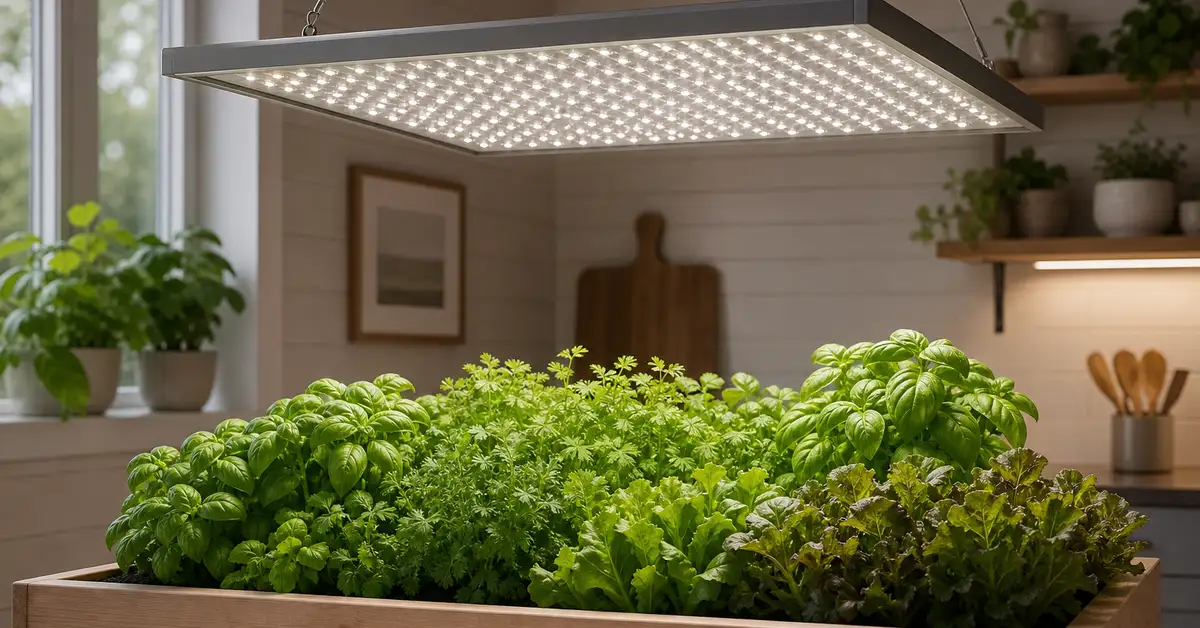
Best for: Most home growers wanting a versatile LED for herbs, leafy greens, seedlings, and small fruiting plants in a 2×2 to 2×4 ft space.
$75–150
The TS 1000 is a quantum-board LED panel using BridgeLux diodes — delivering the same quality-tier output found in lights costing more. Mars Hydro is a well-established brand with transparent spec sheets, genuine US customer support, and consistent independent test results. The full-spectrum output covers 3000K + 5000K + 660nm red + IR, giving a balanced spectrum suitable across the plant life cycle.
- Pros: True 150W draw matches stated specs; BridgeLux diodes at a competitive price; dimmable 0–100%; broad availability and well-documented long-term performance; no open CPSC recalls found.
- Cons: Active cooling fan — not silent (matters for living rooms); footprint larger than some small-space options.
Key specs: 150W true draw | 2×4 ft (veg) / 2×2 ft (flower) | BridgeLux | Full spectrum | Dimmable
Why we picked it: The TS 1000 consistently earns the top spot across independent grow-light evaluations because it delivers accurate, published PPFD figures rather than inflated “equivalent wattage” numbers, and the price-to-output ratio is strong for its tier. For most first-time or intermediate home growers, it hits the sweet spot of quality and cost.
Spider Farmer SF1000 — Best Runner-Up
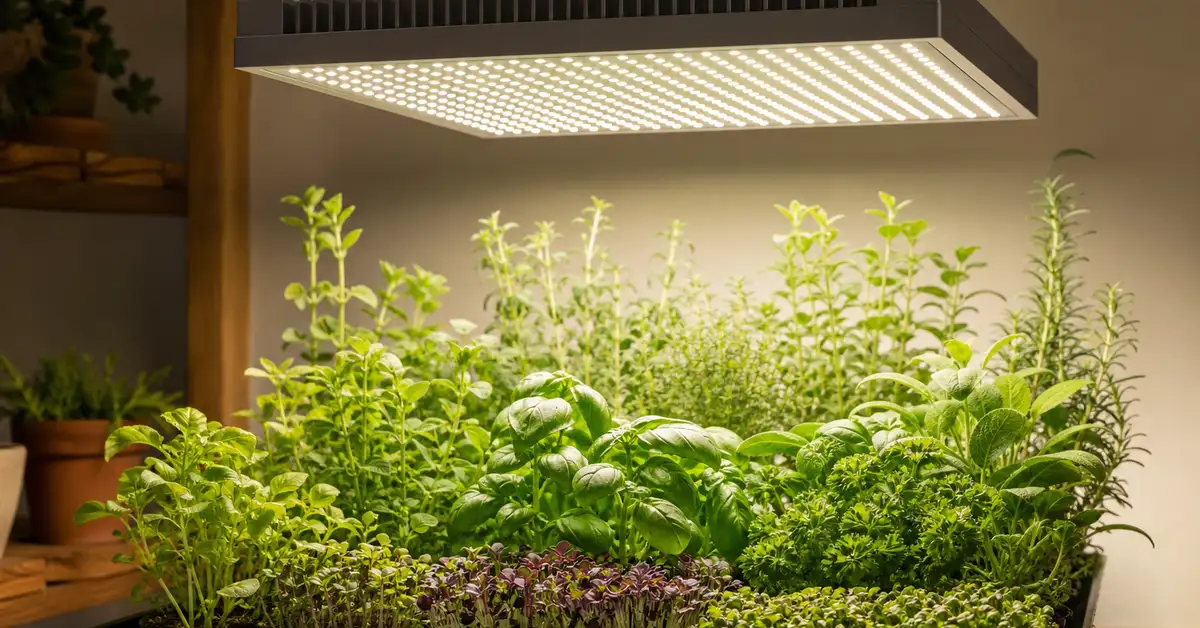
Best for: Growers comparing the TS 1000 who want daisy-chain capability or prefer a fanless design for a 2×2 ft intensive footprint.
$75–150
The Spider Farmer SF1000 is the direct competitor to the Mars Hydro TS 1000 and genuinely a peer, not a lesser alternative. It uses BridgeLux LEDs and an Osram 660nm red diode, with a Meanwell driver — the gold standard in grow-light driver reliability. Veg coverage is 3×3 ft, suiting a square grow area well — a different footprint shape from the TS 1000’s 2×4 ft rectangular coverage.
- Pros: BridgeLux + Osram 660nm diode combination; Meanwell driver (industry benchmark); daisy-chain port for linking multiple lights; fanless — virtually silent; no open CPSC recalls found.
- Cons: Square 3×3 ft veg coverage is better suited to square grow areas; the TS 1000’s 2×4 ft footprint covers rectangular spaces more efficiently at similar wattage; Meanwell driver edges price slightly higher than budget alternatives.
Key specs: 100W true draw | 3×3 ft (veg) / 2×2 ft (flower) | BridgeLux + Osram | Meanwell driver | Fanless (passive cooling)
Why we picked it: The Meanwell driver and fanless design are genuine differentiators. Fanless means silent — important if you’re growing in a bedroom or living space. For a 2×2 ft growing area, the SF1000 is arguably the better choice over the TS 1000.
VIVOSUN VS1000 — Best Budget Quantum Board
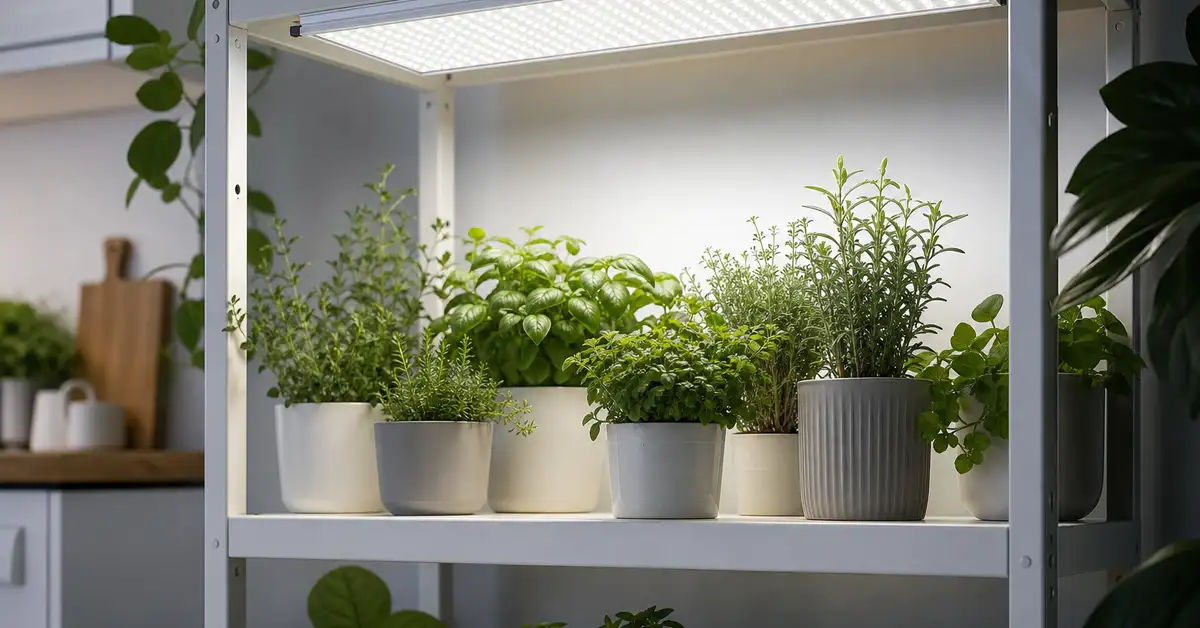
Best for: First-time growers who want a genuine quantum board — not a blurple strip light — without the mid-range price tag.
$25–75
The VIVOSUN VS1000 is a 100-watt LED quantum board using Samsung LM301B diodes at a price point that undercuts the SF1000 and TS 1000 meaningfully. VIVOSUN is one of the largest grow-equipment brands in the US with reliable customer support. The VS1000 produces full-spectrum white light — it looks like a white panel, not the off-putting purple glow of cheap blurple LEDs.
- Pros: Samsung LM301B diodes at a genuine budget price; full-spectrum white light; dimmable knob on the driver; wide availability and brand support; no open CPSC recalls found.
- Cons: Driver is not Meanwell; active cooling fan; coverage slightly smaller than premium lights at the same wattage.
Key specs: 100W true draw | 2×2 to 3×3 ft | Samsung LM301B | Full spectrum | Dimmable
Why we picked it: Most budget grow lights use low-quality diodes that produce low-intensity light. The VS1000 breaks that pattern. If your budget is firm but you want Samsung diodes, this is the honest pick.
Barrina T8 LED Grow Light — Best for Beginners and Kitchen Herbs
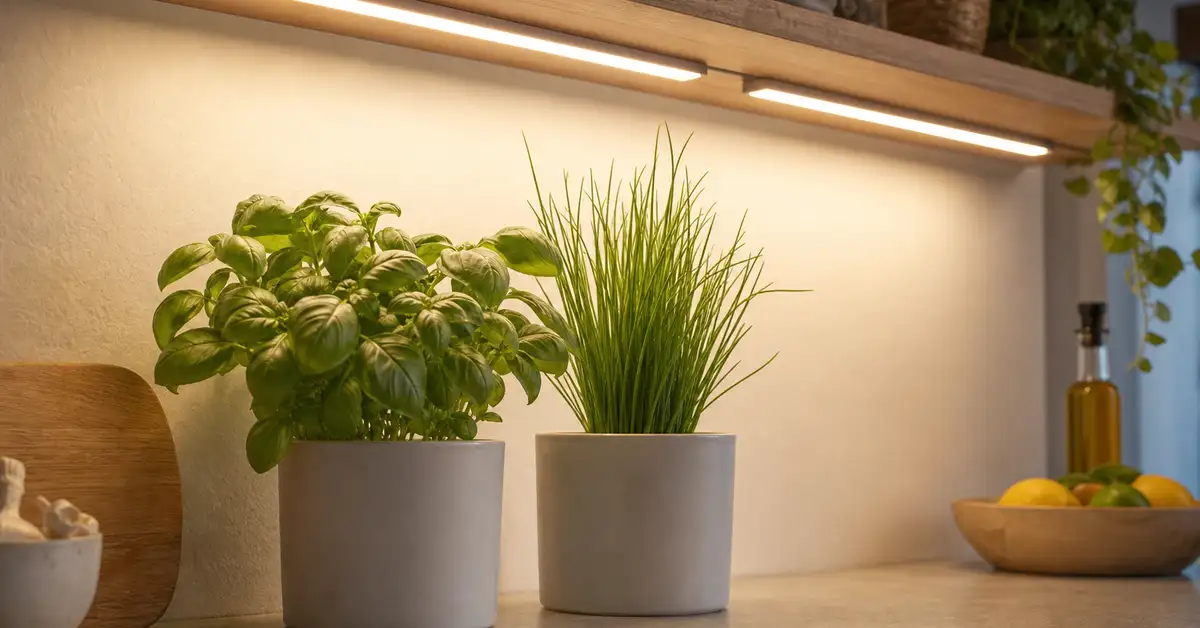
Best for: Anyone growing herbs on a kitchen shelf or countertop who wants a simple, slim, plug-and-play light that requires zero adjustment.
$75–150
Barrina’s T8 grow lights are slim LED bar strips that mount directly underneath a shelf. You get a set of four 4ft bars that link together with a single power cord. No dimming dial, no app, no complexity — plug in, hang above your plants, done. The full-spectrum output (3000K + 6500K + 660nm red) suits herbs like basil, mint, and parsley as well as seedling trays.
- Pros: Zero complexity — the best true plug-and-play on this list; slim profile fits tightly under shelves; linkable bars cover multiple rows from one outlet; cool-running; no open CPSC recalls found.
- Cons: Not suitable for fruiting plants or high-light crops; no dimming; intensity drops quickly with distance — must be mounted close.
Key specs: 168W total (4-bar set, 4×42W — maker-published figure, 2026-09-07) | Full spectrum (3000K + 6500K + 660nm) | Linkable | Slim T8 profile | No fan
Why we picked it: The Barrina T8 is honest about what it is — a shelf light for herbs and seedlings — and it excels in that role. For low-light houseplants and herbs in an apartment, it does the job cleanly without overwhelming the space.
Soltech Solutions Aspect — Best-Looking Grow Light for Home Decor
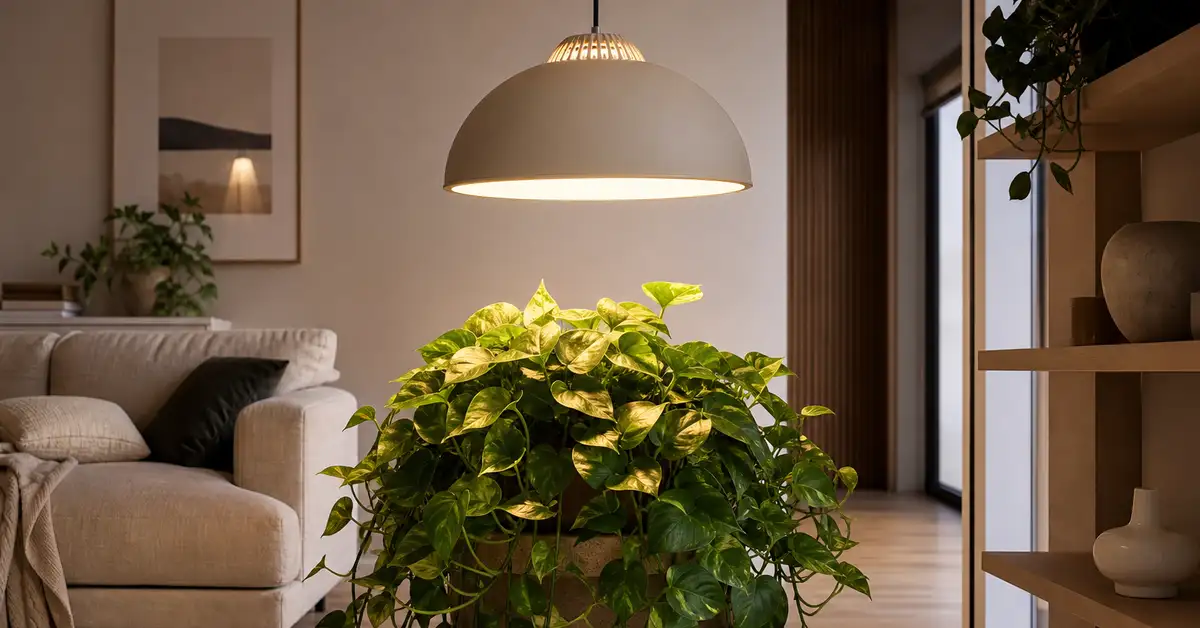
Best for: Plant parents who want a grow light that looks intentional in a living room or bedroom — one you can hang over a statement plant without hiding it.
$150–300
The Soltech Solutions Aspect is a pendant-style LED grow light designed from the ground up to be aesthetically beautiful. It hangs from a cord with a woven textile finish and a minimal aluminum housing — it looks like a quality pendant lamp, not a grow light. Despite the design-first approach, it produces a tuned white spectrum appropriate for most houseplants and herbs in a one-to-two plant footprint. Soltech is a US company with a strong track record in the specialty plant-parent market.
- Pros: The most visually attractive grow light on this list — designed to display; tuned spectrum, no purple glow; completely silent; multiple colorways; no open CPSC recalls found.
- Cons: Lower maximum PPFD than panel lights — not suitable for high-light crops; single-to-two-plant coverage only; premium price for the output relative to panel LEDs.
Key specs: Pendant / hanging mount | Full-spectrum white | Fanless | Suitable for houseplants, herbs, trailing plants
Why we picked it: No other grow light on this list can live in a living room without looking like horticultural equipment. If aesthetics matter and you’re growing one or two feature plants, the Aspect wins in a category of its own.
HLG 65 V2 — Best Small-Space Premium Pick
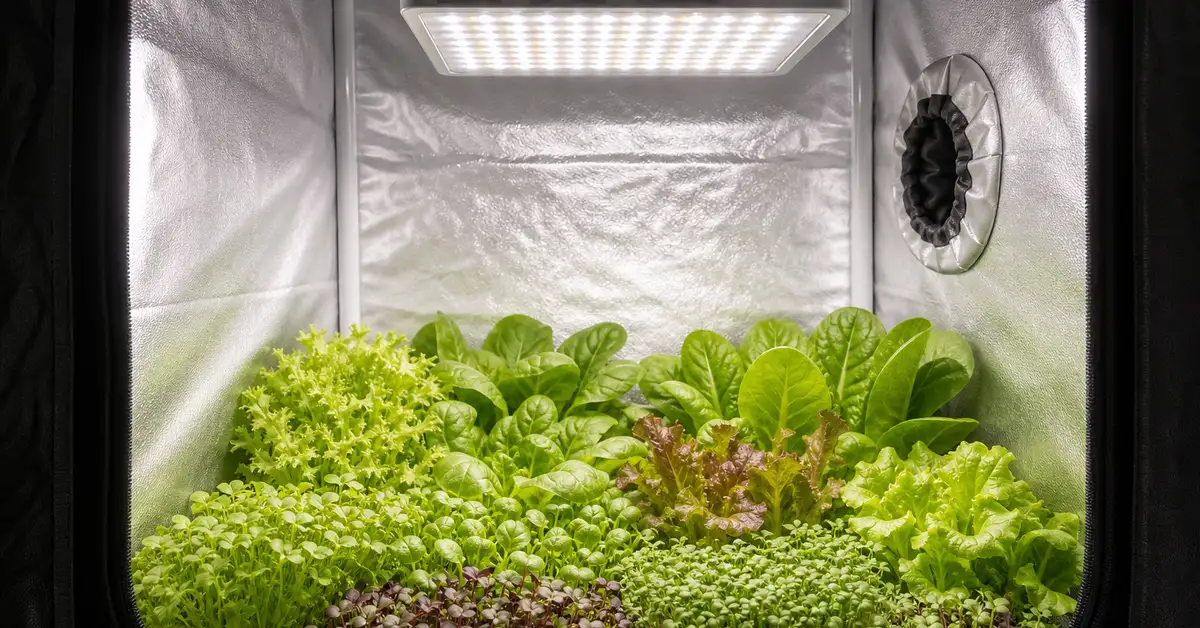
Best for: Serious hobbyists who want the highest-efficiency option for a 2×2 ft space — and don’t mind paying for it.
$75–150
Horticulture Lighting Group (HLG) is a US-based brand that pioneered the commercial-grade quantum board design now imitated by dozens of competitors. The HLG 65 V2 is their smallest panel — 65 true watts, passively cooled (no fan), using their highest-efficiency Samsung diodes. It is built to commercial horticultural standards, miniaturized for the home grower with a 2×2 ft footprint.
- Pros: HLG builds the benchmarks competitors measure against; passive cooling — completely silent, no moving parts to fail; among the highest photon efficacy (µmol/J) in this size class; genuine US warranty support; no open CPSC recalls found.
- Cons: Premium price — noticeably more than the VS1000 at similar wattage; 65W is right for 2×2 ft only; you’d need the 100 V2 for a larger area.
Key specs: 65W true draw | 2×2 ft coverage | Samsung LM301B | Passive cooling (fanless) | 2.35 µmol/J efficacy
Why we picked it: If you want the best-built, most efficient grow light in a 2×2 ft footprint without compromise, this is it. HLG’s efficacy figures are the ones other brands use as the target when they write their marketing copy.
Mars Hydro TSL 2000 — Best Bar-Style LED
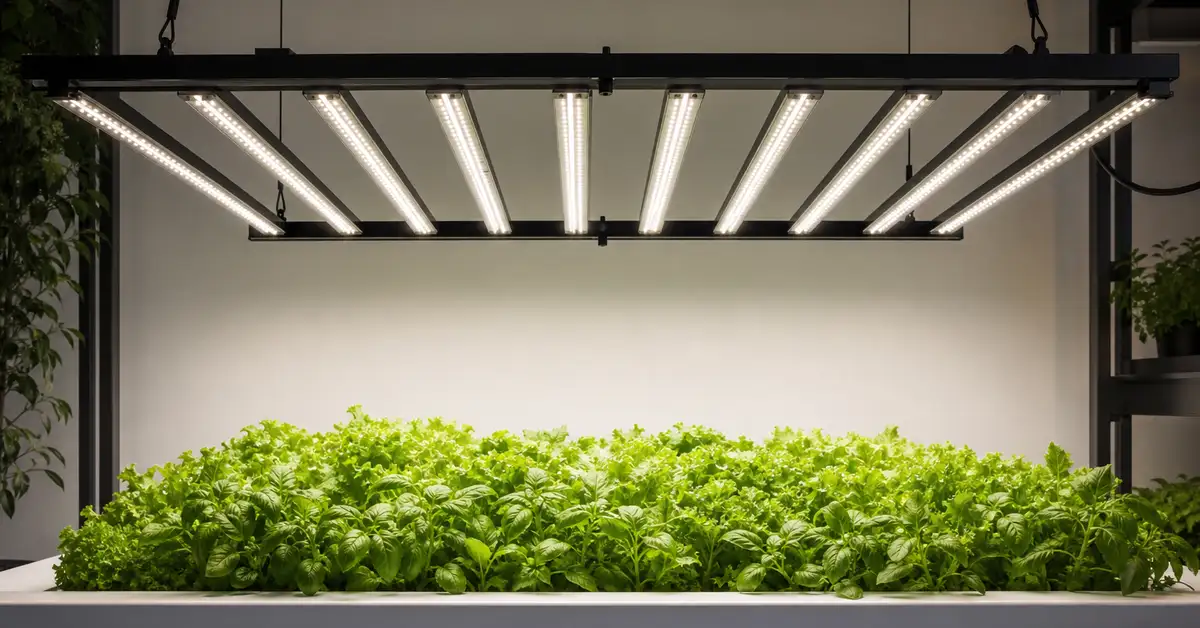
Best for: Growers who want more uniform light distribution across a 2×4 ft rectangular canopy and prefer a bar-style linear fixture over a square panel.
$150–300
The Mars Hydro TSL 2000 is a 300-watt bar-style LED grow light — a linear fixture that distributes light more evenly across a rectangular 2×4 ft footprint than a square panel centered over the same space. It uses BridgeLux diodes (704 chips) and delivers 2.6 µmol/J efficacy with a total PPF of 717 µmol/s. The 2026 update adds Bluetooth connectivity via the MarsPro app for remote dimming and scheduling. Mars Hydro positions the TSL line as a dedicated bar-style option, distinct from their quantum board (TS) and foldable multi-bar (FC-E) series.
- Pros: True 300W draw verified against 2026 Mars Hydro spec sheet; BridgeLux diodes (704 chips); 2.6 µmol/J efficacy; bar-style linear format for rectangular footprint coverage; Bluetooth app control (MarsPro App); waterproof LED casing; no open CPSC recalls found.
- Cons: Third Mars Hydro product in this guide — growers who prefer brand diversity may consider the Spider Farmer SE4500 at a higher price; active cooling fan.
Key specs: 300W true draw | 2×4 ft (flower) / 3×5 ft (veg) | BridgeLux (704 chips) | 2.6 µmol/J | 717 µmol/s PPF | Bluetooth dimmable (MarsPro App) | Waterproof LED casing
Why we picked it: Bar-style LEDs genuinely outperform square panels for rectangular footprints on light uniformity. The TSL 2000 delivers that advantage at a primary-source-verified price within its band, with confirmed BridgeLux diodes and 2026 spec data from Mars Hydro’s official product page. It fills the bar-style slot without reaching the price of the foldable FC-E3000.
Monios-L T5 LED Grow Light — Best for Seed Starting
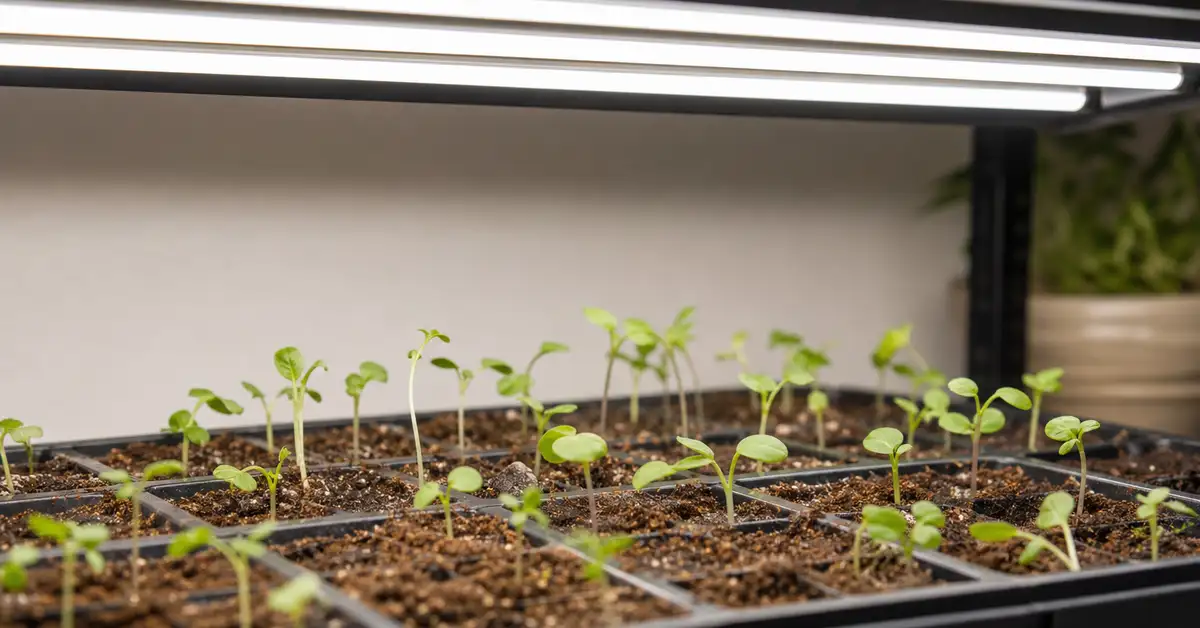
Best for: Anyone germinating seeds or growing out seedlings who needs low-intensity, wide coverage — not high PPFD — for a standard seed-starting tray setup.
$25–75
Seed starting does not need the PPFD levels that fruiting plants require — in fact, too much light at germination stage can stress young seedlings. The Monios-L T5 series is a set of linkable 2ft LED bars designed to sit just a few inches above seed trays. They emit a balanced white spectrum at low intensity, stay cool, and link together to cover a standard 1020 seed tray from a single power cord.
- Pros: Right intensity for germination — not overpowering for seedlings; linkable bars cover standard 1020 seed trays cleanly; extremely low heat; very affordable; no open CPSC recalls found.
- Cons: Not suitable for mature plants or high-light crops; must be mounted very close to seedlings (2–4 inches) for effective delivery.
Key specs: 2ft T5-style LED bars | Linkable | Full-spectrum white | Low intensity (suitable for seedlings at 2–4 inch mounting distance)
Why we picked it: Beginners often buy a high-powered panel for seed starting, then overshoot seedling light requirements. The Monios-L is intentionally the right tool for this specific job. Pair it with the TS 1000 or SF1000 for when seedlings graduate to the grow stage.
Phlizon PL2000 — Best Budget Step-Up
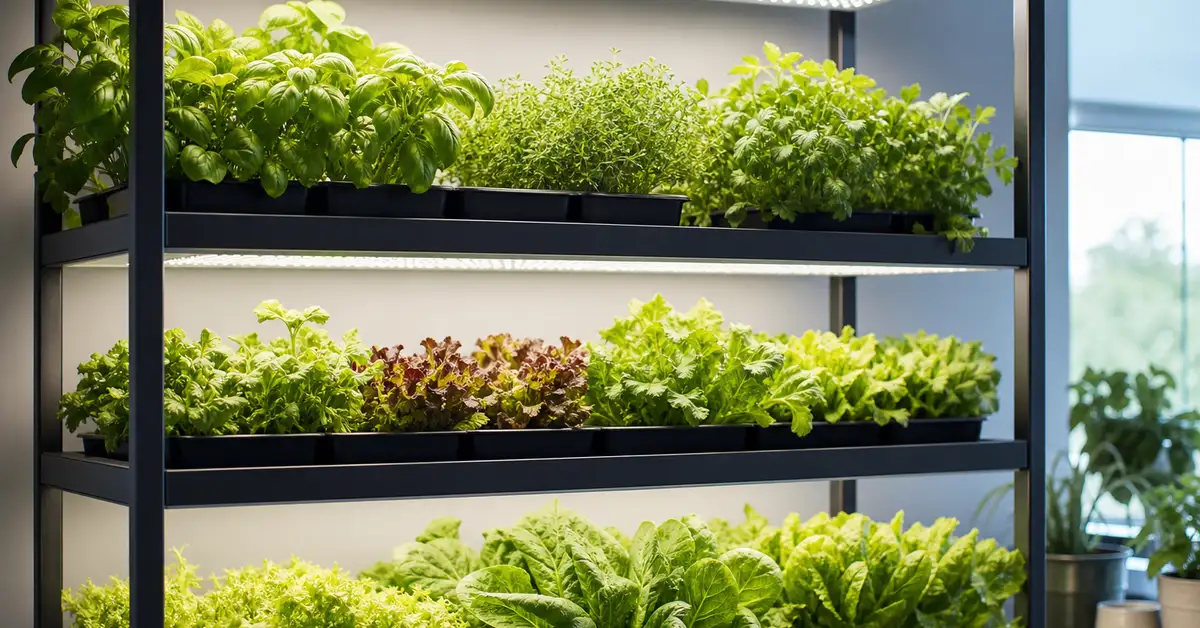
Best for: Growers currently using a cheap blurple strip light who want a meaningful upgrade without moving fully into the mid-range price bracket.
$75–150
Phlizon is a well-established US grow light brand with a solid reputation for value-tier LED panels. The PL2000 is a full-spectrum LED panel using a white-light diode configuration (not blurple), with a true wattage draw higher than most lights in its price class. It’s a genuine step up over cheap strip lights and blurple LEDs without requiring a mid-range investment.
- Pros: Full-spectrum white light — no purple glow; dimmable with built-in dial; meaningful output step-up over cheap strip lights; established US brand with genuine after-sales support; no open CPSC recalls found.
- Cons: Diodes and driver are not in the Samsung/Meanwell tier of the TS 1000 or SF1000; published PPFD data less rigorously verified than premium competitors.
Key specs: Full-spectrum LED panel | Dimmable | 2×4 ft coverage | Active cooling | Model name as published by the maker/listing, 2026-09-07: “Phlizon PL2000”
Why we picked it: For the grower ready to invest more than entry-level without committing to a pricier panel, the PL2000 is an honest, low-risk upgrade. It won’t match the HLG or Spider Farmer on efficiency, but it will outperform anything at the price tier below it.
Mars Hydro FC-E3000 — Best for Mid-Size Grow Tents
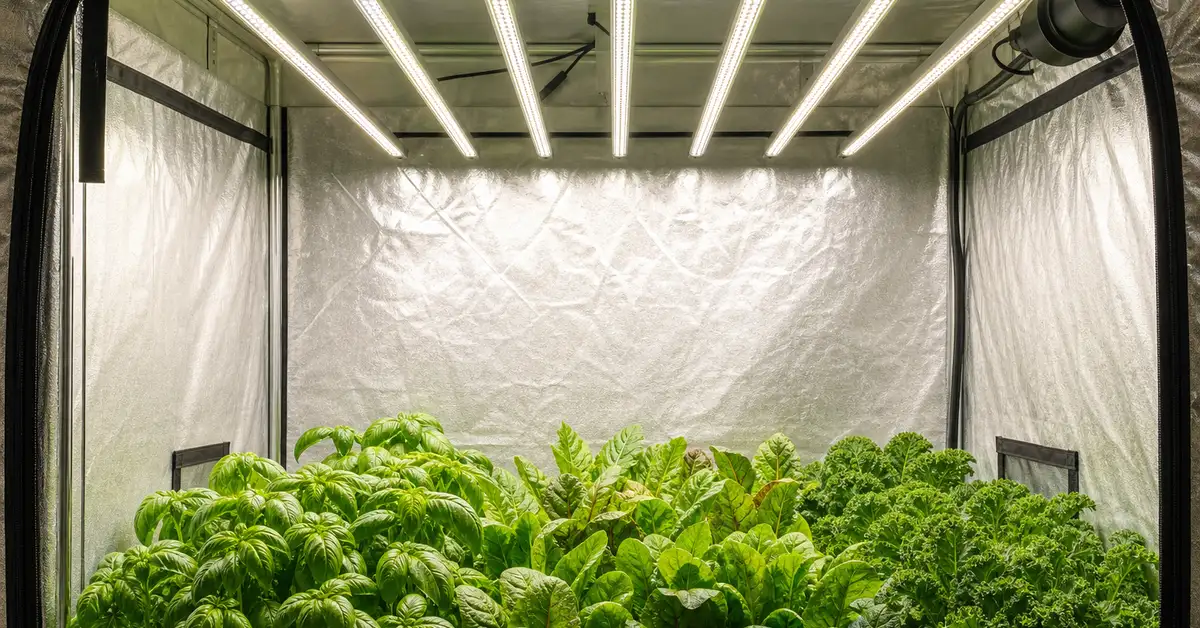
Best for: Growers with a 2×4 or 3×3 ft grow tent who need commercial-grade PPFD uniformity without a four-figure budget.
$150–300
The Mars Hydro FC-E3000 is Mars Hydro’s foldable commercial-style LED — a bar-style system that unfolds to distribute light evenly across a 3×3 to 3×4 ft footprint. At 300 true watts, it delivers high PPFD suitable for fruiting and flowering plants in a tent, while the foldable design makes storage and positioning easier than a rigid panel of equivalent size.
- Pros: Foldable bar design — easier to position and store than a rigid panel; high PPFD uniformity across the footprint; BridgeLux diodes; Meanwell driver; dimmable; no open CPSC recalls found.
- Cons: Premium price — a significant step up from mid-range; 300W running cost is meaningful; calculate your electricity cost before committing.
Key specs: 300W true draw | 3×3 to 3×4 ft coverage | BridgeLux | Meanwell driver | Foldable bar design | Dimmable
Why we picked it: For serious hobbyists running a tent and wanting to grow herbs, greens, and fruiting plants at scale, the FC-E3000 offers verified PPFD uniformity at a price that is high but still below the commercial LED ceiling. The foldable bar design is a practical win over rigid panels in enclosed grow spaces.
Spider Farmer SF4000 — Best for Large Spaces and 4×4 Tents
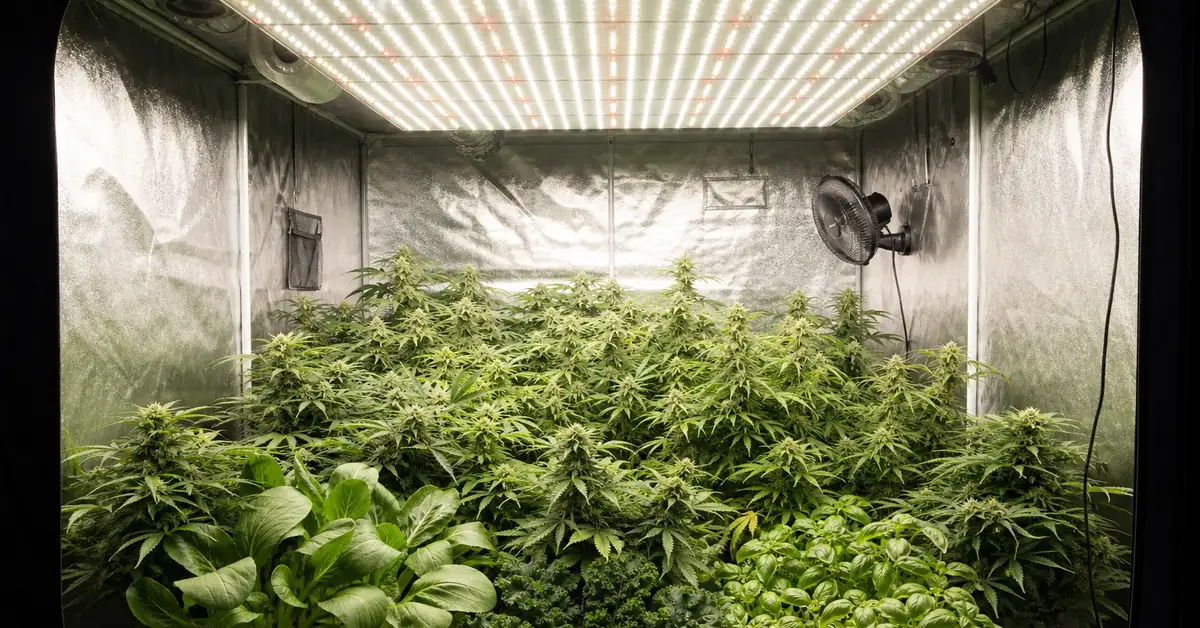
Best for: Dedicated indoor growers running a 4×4 ft tent or larger who want the benchmark LED at this footprint with well-documented, independently verified specs.
$300–700
The Spider Farmer SF4000 is the de facto benchmark 4×4 grow light. At 450 true watts with BridgeLux LEDs and a Meanwell driver, it produces the PPFD levels needed for fruiting plants over a full 4×4 ft footprint. Spider Farmer’s SF series is one of the most independently reviewed grow-light lines available — finding third-party PAR maps and long-term grow reports is straightforward.
- Pros: The most well-documented 4×4 LED on the market; BridgeLux + Meanwell driver; dimmable with daisy-chain capability; covers a true 4×4 ft at bloom-level PPFD; no open CPSC recalls found.
- Cons: 450W is a serious running cost — calculate your electricity before committing; premium price; weight requires robust hanging hardware.
Key specs: 450W true draw | 4×4 ft (bloom) / 5×5 ft (veg) coverage | BridgeLux | Meanwell driver | Dimmable | Daisy-chain capable
Why we picked it: If you’re running a 4×4 tent, the SF4000 is the honest pick. It’s the standard against which other 4×4 lights are measured, with third-party PAR data widely published and consistent with Spider Farmer’s claims — that external validation is exactly what we look for.
Full Comparison Table
| Grow Light | Best For | True Wattage | Coverage | Diodes | Price Band |
|---|---|---|---|---|---|
| Mars Hydro TS 1000 | Best Overall | 150W | 2×4 ft (veg) | BridgeLux | $75–150 |
| Spider Farmer SF1000 | Best Runner-Up | 100W | 3×3 ft (veg) | BridgeLux + Osram | $75–150 |
| VIVOSUN VS1000 | Best Budget | 100W | 2×2 to 3×3 ft | Samsung LM301B | $25–75 |
| Barrina T8 LED | Herbs & Beginners | 168W (set) | Shelf / counter | Full-spectrum LED | $75–150 |
| Soltech Aspect | Home Decor | Low wattage | 1–2 plants | Tuned full-spectrum | $150–300 |
| HLG 65 V2 | Premium 2×2 ft | 65W | 2×2 ft | Samsung LM301B | $75–150 |
| Mars Hydro TSL 2000 | Bar-Style LED | 300W | 2×4 ft (flower) | BridgeLux | $150–300 |
| Monios-L T5 | Seed Starting | Low | Seed trays | Full-spectrum LED | $25–75 |
| Phlizon PL2000 | Budget Upgrade | ~200W | 2×4 ft | Full-spectrum LED | $75–150 |
| Mars Hydro FC-E3000 | Mid-Size Tent | 300W | 3×3 to 3×4 ft | BridgeLux | $150–300 |
| Spider Farmer SF4000 | Large Spaces | 450W | 4×4 ft (bloom) | BridgeLux | $300–700 |
Price bands are numeric USD ranges: under $25 · $25–75 · $75–150 · $150–300 · $300–700 · $700+. No live prices or star ratings displayed; see individual Amazon listings for current pricing.
Grow Light Buying Guide: What Actually Matters
Types of Grow Lights (and Why LED Wins in 2026)
There are three main grow light types you’ll encounter: LED, T5 fluorescent, and HPS/MH (high-pressure sodium and metal halide). In 2026, LED dominates for home growers because it delivers the best balance of output, energy efficiency, lifespan (50,000+ hours), and running heat. Full-spectrum LEDs using Samsung LM301B/H, BridgeLux, or Osram diodes are the benchmark for quality.
T5 fluorescent lights remain a solid choice for seedlings and propagation where high PPFD isn’t required — and are being largely replaced by T5-style LED equivalents (like the Barrina and Monios-L above) that run cooler and more efficiently. HPS and MH are old-school technology with high heat output and significant energy consumption — not recommended for home growers in 2026 unless you’re running a large tent with proper ventilation.
Understanding PAR, PPFD, and Wattage
These three terms cause more confusion than anything else in grow light shopping. Here’s the plain-English version:
- Wattage: How much electricity the light draws from your wall. Always look for “true wattage” or “actual draw” — not “equivalent” or “replaces X watts HPS.” A 150W LED that draws 150W from the wall is honest. A “600W equivalent” LED that draws 100W from the wall is a 100W LED.
- PAR (Photosynthetically Active Radiation): The range of light wavelengths (400–700nm) that plants use for photosynthesis. Most white-light LEDs cover this range. Blurple lights target specific peaks within PAR but miss the full range plants prefer.
- PPFD (Photosynthetic Photon Flux Density): The actual intensity of PAR light hitting your plants, measured in micromoles per square meter per second (µmol/m²/s). This is the number that matters for plant growth. Seedlings need roughly 100–300 µmol/m²/s; herbs and leafy greens 200–400; fruiting plants 400–900+. A grow light with published PPFD data at a specific distance is a more credible product than one with no published data.
How Much Light Does Your Plant Actually Need?
| Plant Type | Light Level | PPFD Range (approx.) |
|---|---|---|
| Seedlings / Germination | Low–Medium | 100–300 µmol/m²/s |
| Herbs (basil, mint, parsley) | Medium | 200–400 µmol/m²/s |
| Leafy greens (lettuce, spinach) | Medium | 200–400 µmol/m²/s |
| Low-light houseplants | Low | 50–150 µmol/m²/s |
| Fruiting plants (tomatoes, peppers) | High | 400–900 µmol/m²/s |
Run your grow light for 12–16 hours per day for most plants. Use a simple plug-in timer — maintaining a consistent daily photoperiod matters more than the exact number of hours.
What to Watch Out For (Red Flags)
- Inflated “equivalent wattage”: A light labeled “1000W LED” that draws 100W from the wall is a 100W LED. It is not equivalent to a 1000W HPS in any meaningful way. Always look for the true draw figure.
- No published PPFD data: Reputable lights publish PAR maps showing PPFD across the coverage area at a specific distance. If a listing has no PPFD data, treat output claims with skepticism.
- Amazon rebrands: Many grow lights on Amazon are the same factory unit with a different badge. Brands like Mars Hydro and Spider Farmer have genuine US presence, warranty, and support — the suspiciously cheap “1500W LED” with zero reviews does not.
- No CPSC recall screen: We checked every product in this guide against CPSC’s recalls.gov database. Our shortlist is clear of open recalls. Electrical grow gear carries real safety risk if manufactured to poor standards.
Frequently Asked Questions About Grow Lights
How many watts of grow light do I need?
A general rule is 20–50 true watts per square foot of growing area, depending on plant type. Herbs and leafy greens need less (20–30W/sq ft); fruiting plants need more (40–50W/sq ft). For a 2×2 ft herb garden, a 100W true-draw LED is appropriate. Always use true wattage — ignore “equivalent” figures.
How far should a grow light be from my plants?
High-powered LED panels (150W+) should generally be hung 18–24 inches above plants. T5 bars and low-power lights should be 4–12 inches away. Most grow lights publish a recommended hanging height in their spec sheet — follow that first, then adjust based on plant response: stretching toward the light means it needs to be closer; bleaching or leaf curl means back it off.
How many hours a day should a grow light be on?
Most indoor plants do well with 14–16 hours of light per day. Herbs, leafy greens, and seedlings thrive at 14–16 hours. Fruiting plants that require a flowering trigger may need a 12/12 light/dark cycle. Use a plug-in timer — maintaining a consistent daily photoperiod matters more than the exact number of hours.
Are LED grow lights better than fluorescent?
Yes, for most home growers in 2026. Modern LED grow lights deliver higher output per watt consumed, last significantly longer (50,000+ hours vs. 10,000–20,000 for T5 fluorescent), run cooler, and have dropped substantially in price. T5 fluorescents remain solid for seedlings and propagation where high intensity is not needed.
What is the difference between a grow light and a regular light?
Regular household bulbs are designed for human vision, not plant photosynthesis. They produce light in a narrow range and at much lower intensity than plants need for robust growth. Grow lights are engineered to emit the full spectrum of wavelengths (400–700nm) plants need for photosynthesis — and at the intensity required to actually drive growth, not just keep a plant alive.
Can any plant grow under a grow light?
Yes, but matching light intensity to plant type is essential. Low-light houseplants grow well under modest T5 bars. Herbs and leafy greens need moderate PPFD (200–400 µmol/m²/s). Fruiting plants like tomatoes and peppers need high PPFD (400–900+ µmol/m²/s). The key variable is intensity and the daily light integral (DLI) it delivers over time.
Do I need a grow light if I have a sunny window?
It depends on the window and the season. South-facing windows in the US can deliver useful light on clear days — adequate for herbs in summer. But window light is inconsistent, drops off sharply a few feet from the glass, and provides no light for 12+ hours per day. If your plants are stretching toward the window, losing color, or producing poorly, a grow light is the right solution even in a bright room.
The Bottom Line: Which Grow Light Should You Buy?
For most home growers, the Mars Hydro TS 1000 remains the best overall grow light in 2026 — honest specs, BridgeLux diodes, and a price that makes sense for the output it delivers. If you’re growing in a 2×2 ft space and want silence, the Spider Farmer SF1000 (fanless, Meanwell driver) edges it out at that footprint. For herbs on a kitchen shelf with minimal fuss, the Barrina T8 is the right tool.
Scaling up to a tent? The Mars Hydro FC-E3000 (3×3 to 3×4 ft) or Spider Farmer SF4000 (4×4 ft) are the benchmarks for their respective sizes — both with independently verified PAR data that separates honest grow lights from marketing claims. Pairing either with the right enclosure matters too — see our best grow tents guide for 12 verified picks by size and budget.
Whatever you choose: prioritize true wattage, published PPFD data, and reputable diodes. Any grow light that can’t answer those three questions clearly deserves a pass.
More from Planted Indoors
- Best Grow Tents of 2026: 12 Verified Picks by Size & Budget
- Indoor Growing Gear: What You Actually Need
- Best Indoor Gardening Systems: Smart & Hydroponic Gardens
- Best LED Grow Lights of 2026
- Best Full-Spectrum Grow Lights of 2026
- Best Grow Lights for Seedlings
- Best Grow Lights for Herbs
- Best Grow Lights for Small Spaces
- Best Grow Lights for Monstera
- Best Low-Light Indoor Plants