The best LED grow light for most home growers is the Mars Hydro TS 1000 — BridgeLux diode performance across a 2.5×2.5 ft canopy at a mid-range price that works whether you’re growing herbs on a shelf or running a compact tent. For bar-style output in a 2×4 ft space, the TSL 2000 is the upgrade worth paying for. For serious 3×3 tent grows, the FC-E3000 at 2.8 µmol/J is the efficiency benchmark at its price tier.
An LED grow light is a light-emitting diode fixture producing the 400–700 nm photosynthetically active radiation (PAR) plants need. Modern full-spectrum LEDs outperform older HPS and fluorescent — top 2026 units reach 2.7–2.85 µmol/J efficacy versus ~1.7 µmol/J for typical HPS. This guide covers quantum board and bar-style LED panels — for the full comparison including T5 strip lights and pendant LEDs, see our complete grow lights guide.
At a Glance: Best LED Grow Lights for 2026
| # | Product | Award | Type | True W | Bloom coverage | Price |
|---|---|---|---|---|---|---|
| 1 | Mars Hydro TS 1000 | Best Overall LED | Quantum board | ~150W | 2.5×2.5 ft | $$ |
| 2 | VIVOSUN VS1000 | Best Value LED | Quantum board | ~100W | 2×2 ft | $ |
| 3 | Spider Farmer SF2000 | Best Mid-Size Panel | Quantum board | ~200W | 2×4 ft | $$ |
| 4 | Mars Hydro TSL 2000 | Best Bar-Style LED | Bar-style | 300W | 2×4 ft | $$ |
| 5 | Spider Farmer SF1000 | Best Beginner LED | Quantum board | ~100W | 2×2 ft | $$ |
| 6 | Mars Hydro FC-E3000 | Best for 3×3 Tents | Bar (detachable) | 300W | ~2.6×2.6 ft | $$–$$$ |
| 7 | Spider Farmer SF4000 | Best for 4×4 Tents | Quantum board | 450W | 4×4 ft | $$–$$$ |
| 8 | Phlizon PL2000B | Best Budget Mid-Power | LED panel | ~200W | 3×3 ft (veg) | $–$$ |
| 9 | HLG 65 V2 RSpec | Best Premium Small-Space | LED board | 65W | 2×2 ft | $$$ |
| 10 | Spider Farmer SE3000 | Best Premium Bar-Style | Bar-style | 300W | 3×3 ft | $$$ |
| 11 | Mars Hydro FC-E4800 | Best Large-Coverage LED | Bar (detachable) | 480W | 4×4 ft | $$$ |
How We Chose These LED Grow Lights
We evaluated each fixture on: verified true wattage; PAR/PPFD vs stated coverage; diode platform from manufacturer spec sheets (not retailer copy); coverage accuracy; build quality; and price-band value. Key finding: Mars Hydro and Spider Farmer both transitioned budget/mid-range lines from Samsung LM301B to BridgeLux in 2025–2026. Samsung LM301B is now reserved for HLG across their range and Spider Farmer SE series. All products CPSC-screened — no open recalls (June 2026). No physical testing. Author: Michael Probert. No expert reviewer.
Best LED Grow Lights Reviewed
Transparency first: This guide contains affiliate links. If we’re enrolled in an affiliate program, we may earn a commission at no extra cost to you — it never affects how we research or rank. Read our full affiliate disclosure policy.
Mars Hydro TS 1000 — Best Overall LED Grow Light
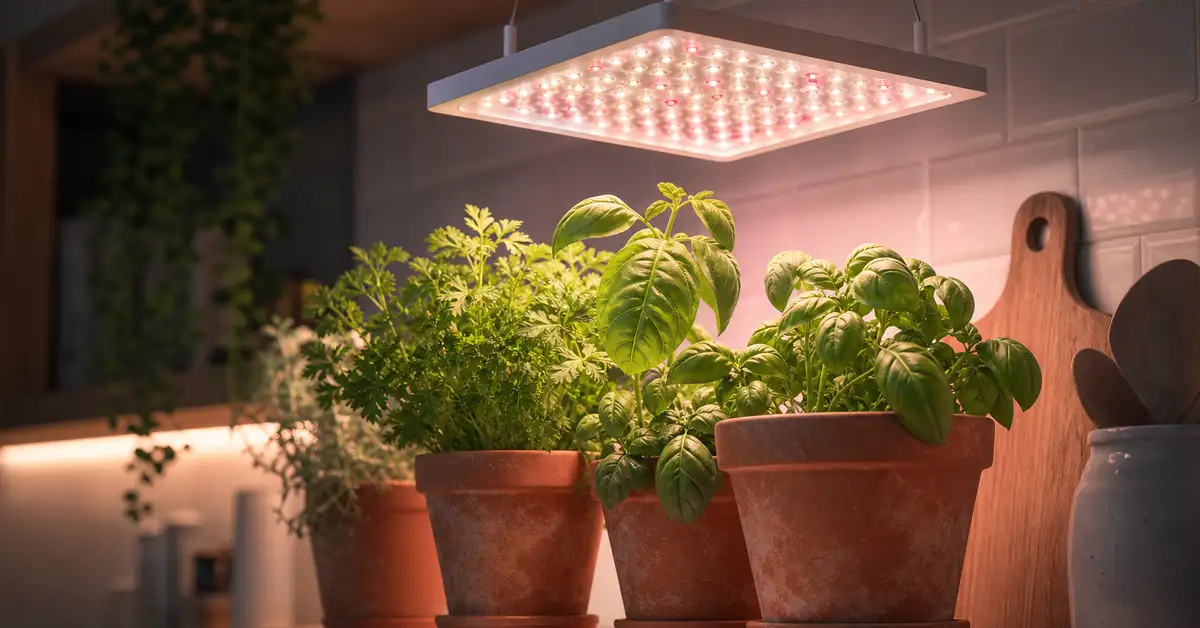
BridgeLux diodes · ~150W true power · PPF 343 µmol/s · 2.29 µmol/J efficacy · Coverage: 2.5×2.5 ft (bloom) / 3×3 ft (veg) · Price band: $$
The Mars Hydro TS 1000 is our top overall pick because it delivers honest quantum-board performance at a mid-range price. Mars Hydro updated this line to BridgeLux diodes in 2025–2026 — the TS 1000 now runs at ~2.29 µmol/J, competitive for its price band. Coverage suits a 2.5×2.5 ft flowering tent or a 3×3 ft vegetative space, making it practical for herb shelves, small tents, and grow-cabinet setups alike. Passive cooling (no fan noise), dimmable driver, and a clean hanging kit round it out.
Pros: Honest BridgeLux diode upgrade; passive/quiet; dimmable; even canopy coverage; widely available. Cons: 2.5×2.5 ft bloom footprint is limiting for bigger grows; heavier than bar-style alternatives for shelf mounting.
VIVOSUN VS1000 — Best Value LED Grow Light
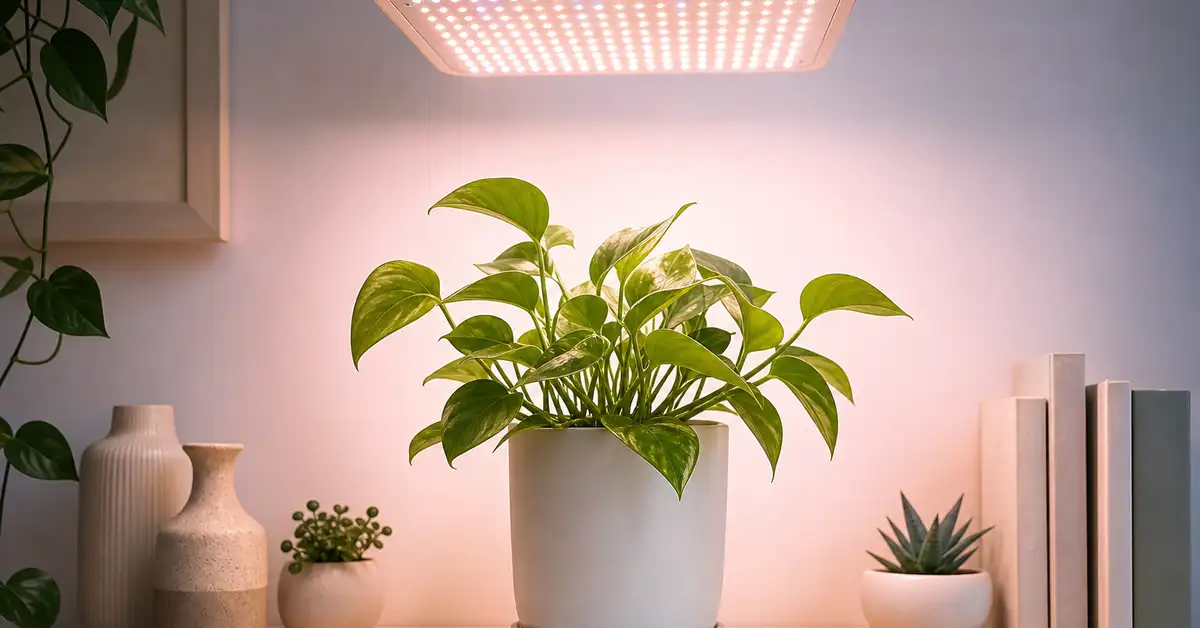
Samsung LM301B diodes · ~100W true power · Coverage: 2×2 ft (bloom) / 3×3 ft (veg) · Price band: $
The VIVOSUN VS1000 is the strongest entry-level option at the $ band. Unlike the BridgeLux transition seen on Mars Hydro and Spider Farmer budget lines, VIVOSUN retained Samsung LM301B diodes on this SKU — a slight diode-quality edge at this tier. At ~100W true draw, it suits herb shelves, propagation trays, and 2×2 ft tent grows. Simple dimmable knob; no app required; easy setup for first-time growers.
Pros: Samsung LM301B at $ price; dimmable; lightweight; beginner-friendly. Cons: 100W limits bloom coverage to ~2×2 ft; no Bluetooth or app control.
Spider Farmer SF2000 — Best Mid-Size Quantum Board
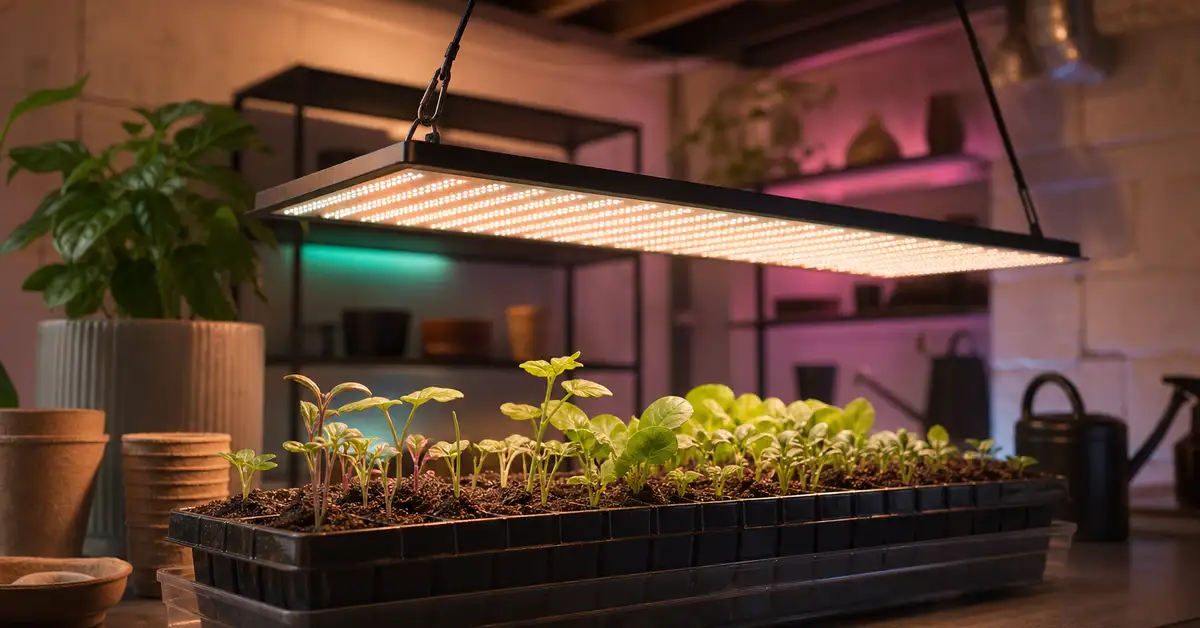
BridgeLux diodes (2026 update) · ~200W true power · 2.7 µmol/J efficacy · Coverage: 2×4 ft (bloom) / 3×5 ft (veg) · Price band: $$
Spider Farmer updated the SF2000 to BridgeLux in 2026, hitting 2.7 µmol/J — meaningfully better than the old Samsung LM301B version at the same price band. A 2×4 ft bloom footprint covers a proper grow tent or two-shelf rack. Fanless, dimmable (0–100%), daisy-chain capable. Spec note: some retailer stock may be old Samsung-diode versions — verify the spec sheet lists BridgeLux at purchase.
Pros: 2.7 µmol/J after BridgeLux update; fanless; dimmable; daisy-chain ready; 2×4 ft coverage. Cons: Transition stock risk (verify diode spec); rectangular form can leave corner shadows in square tents.
Mars Hydro TSL 2000 — Best Bar-Style LED Grow Light
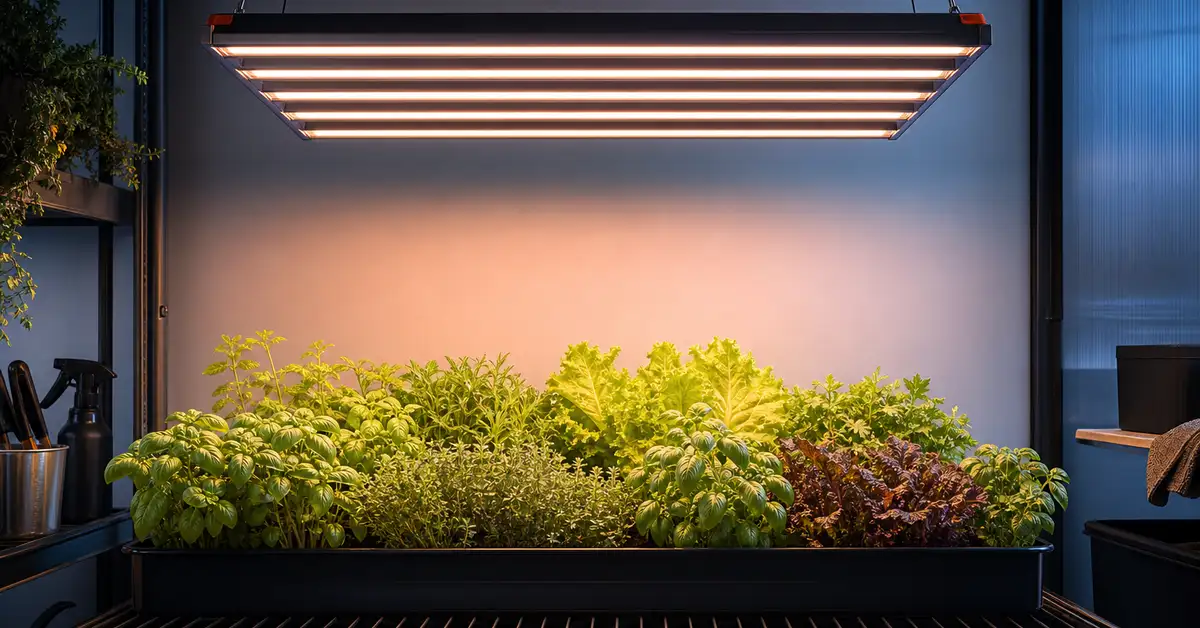
BridgeLux diodes (704 chips) · 300W true power · 717 µmol/s PPF · 2.6 µmol/J efficacy · Coverage: 2×4 ft (bloom) / 3×5 ft (veg) · Bluetooth app control · Price band: $$
The Mars Hydro TSL 2000 is the bar-style upgrade that justifies paying more than the panel alternatives. At 300W with 2.6 µmol/J and 717 µmol/s PPF, it delivers measurably better canopy penetration than equivalent-wattage quantum boards — bar-style layouts produce more even PAR distribution across a 2×4 ft tent. The 2026 Bluetooth update adds MarsPro App scheduling and dimming control. BridgeLux diodes throughout (704 chips). A solid choice for growers who want bar-style output without the premium price of the FC series.
Pros: Bar-style canopy penetration; 2.6 µmol/J at $$ price; 2026 Bluetooth/app control; 3×5 ft veg footprint. Cons: Linear bar form means it’s sized for 2×4 ft bloom, not square tents; heavier hanging setup than a single panel.
Spider Farmer SF1000 — Best LED for Beginners
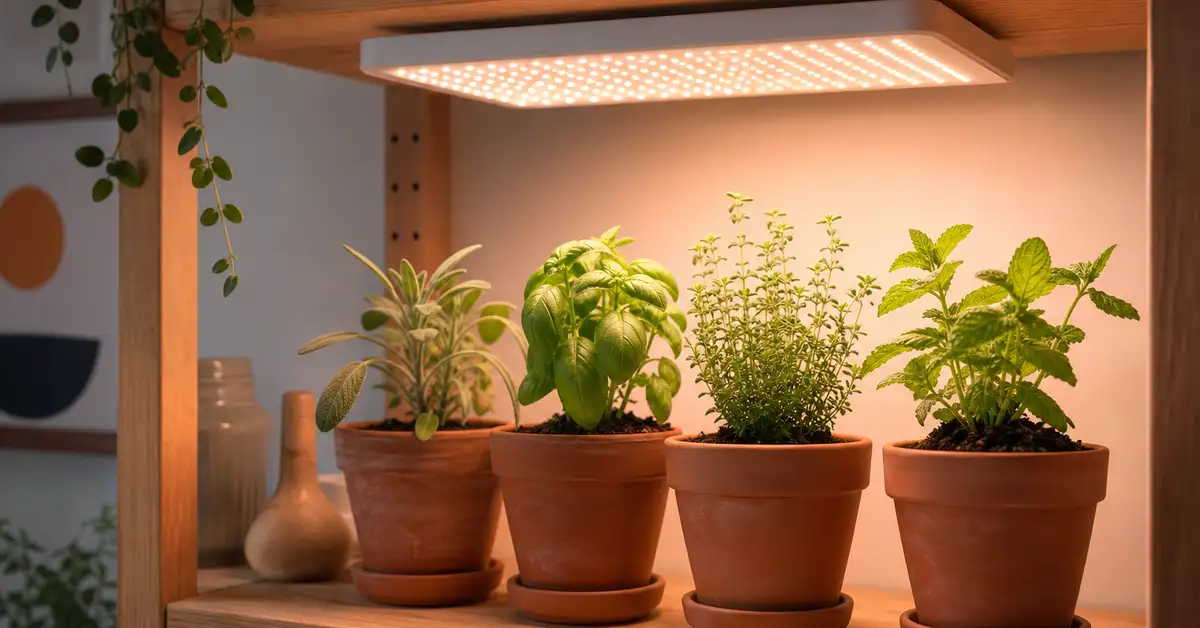
BridgeLux + Osram diodes (standard version) · ~100W true power · Coverage: 2×2 ft (bloom) / 3×3 ft (veg) · Price band: $$
The Spider Farmer SF1000 is the best pick for growers setting up their first proper tent. The standard 2026 version uses BridgeLux + Osram diodes; an SF1000 EVO variant with Samsung LM301H EVO exists but verify which SKU you’re ordering. At ~100W, it covers a 3×3 ft vegetative space or a 2×2 ft bloom tent cleanly — enough for a starter herb or small-plant grow. Fanless passive cooling means no noise, which matters for apartment growers.
Pros: Fanless (silent); compact; well-built for the price; 3×3 ft veg coverage; good for first-time tent growers. Cons: Two SKUs (standard BridgeLux/Osram vs EVO Samsung) — verify spec at purchase; 2×2 ft bloom limits production; step up to SF2000 for a 2×4 ft tent.
Mars Hydro FC-E3000 — Best LED for 3×3 Tents
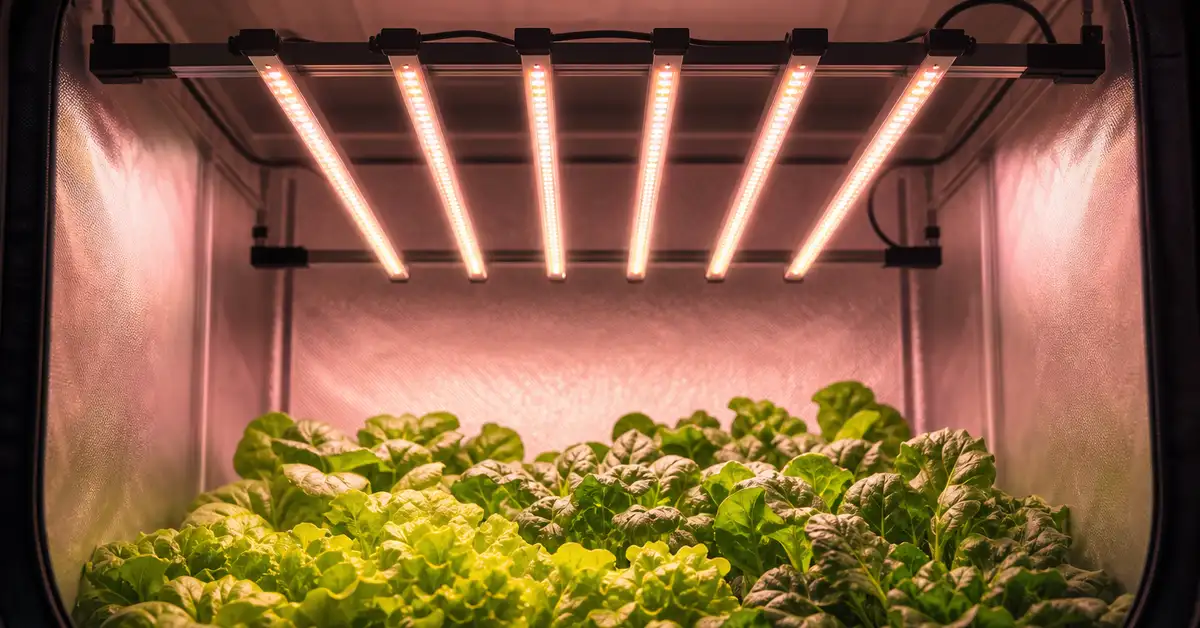
BridgeLux diodes · 300W true power · ~840 µmol/s PPF · 2.8 µmol/J efficacy · Detachable bar design · Coverage: ~2.6×2.6 ft (bloom) / 3×3 ft (veg) · Price band: $$–$$$
The Mars Hydro FC-E3000 is the efficiency benchmark at its price tier: 2.8 µmol/J is among the best measurements we found below the $$$ bracket. The detachable multi-bar design (FC-E series — distinct from the premium FC series) allows flexible bar spacing for even canopy coverage in a 3×3 ft tent. Note: the FC-E series uses BridgeLux diodes, not the Samsung LM301B found in the premium FC (non-E) line. For growers who want serious efficiency in a 3×3 ft tent without spending $$$ on the FC series, this is the one.
Pros: 2.8 µmol/J at $$–$$$ price; detachable bars for coverage flexibility; strong 3×3 ft tent fit; CPSC screened (no open recalls, June 2026). Cons: FC-E uses BridgeLux (not Samsung LM301B like the premium FC line) — know the distinction; slightly heavier setup than single-board alternatives.
Spider Farmer SF4000 — Best LED for 4×4 Tents
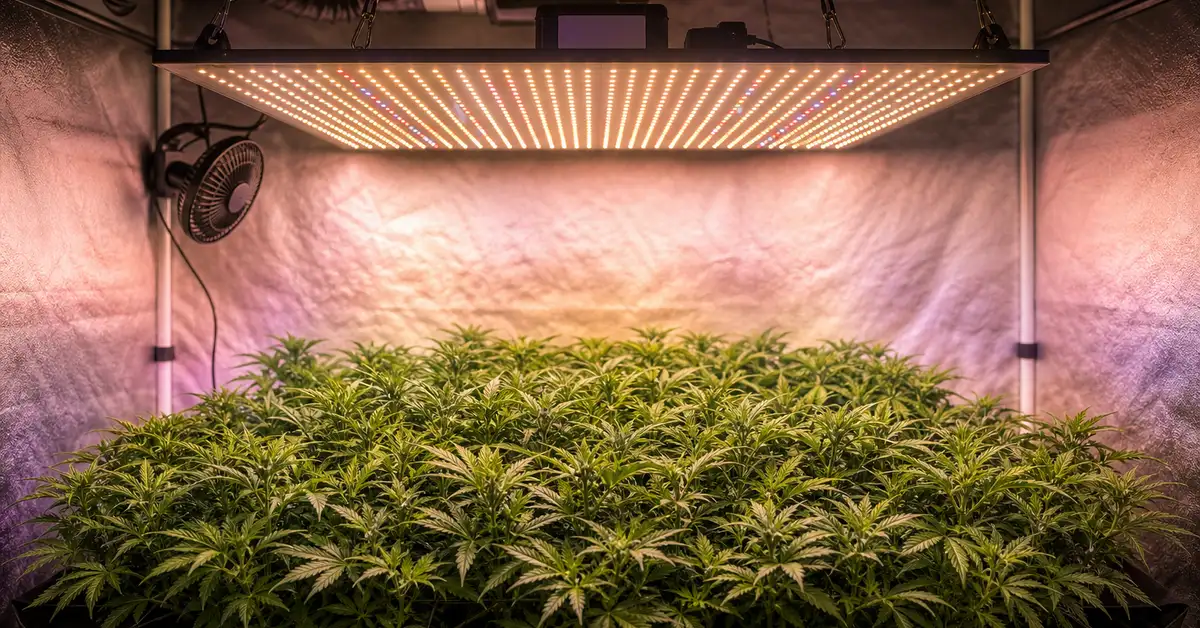
BridgeLux diodes · 450W true power · Coverage: 4×4 ft (bloom) / 5×5 ft (veg) · Price band: $$–$$$
For growers stepping up to a 4×4 ft tent, the Spider Farmer SF4000 is the most popular and well-supported option at the $$–$$$ boundary. Spider Farmer updated it to BridgeLux diodes in 2026 with a wattage correction from earlier specs — true draw is 450W (not the 400W cited in older listings). At that draw it covers a 4×4 ft flowering tent fully and a 5×5 ft veg space comfortably. Fanless passive design at 450W is impressive. CPSC-screened: no open recalls (June 2026).
Pros: 4×4 ft bloom coverage; 450W honest true draw; fanless at high wattage; BridgeLux 2026 update; widely supported community. Cons: Heavier than bar-style at this wattage; some older retailer listings still cite 400W — verify spec sheet; $$–$$$ investment.
Phlizon PL2000B — Best Budget Mid-Power LED
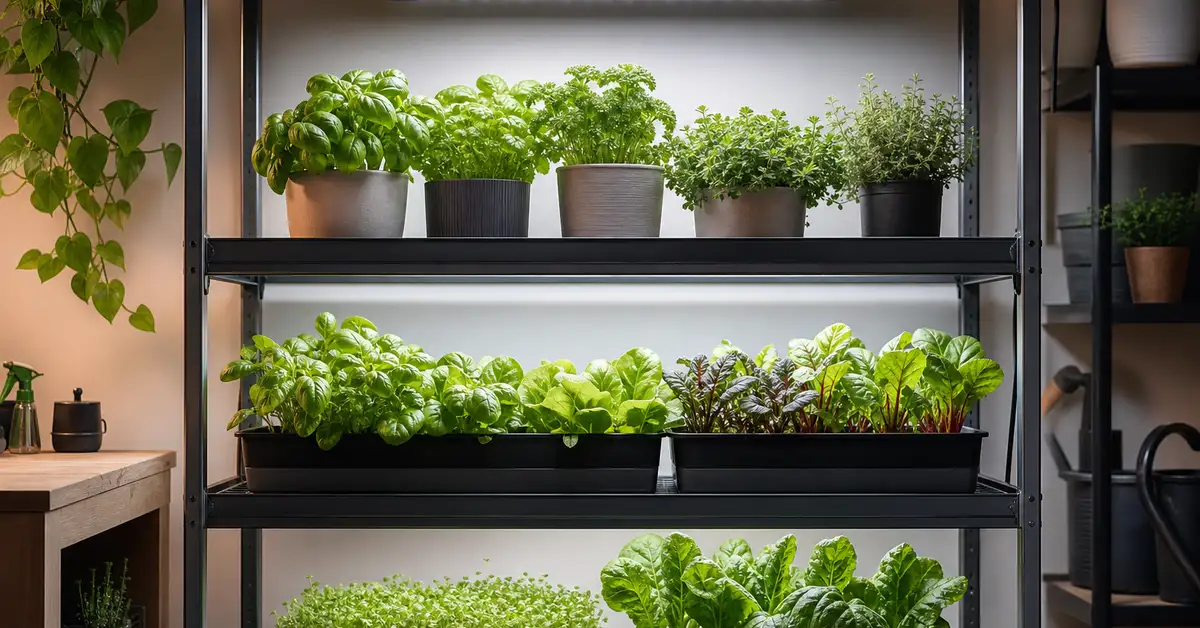
LED panel · ~200W true power · Coverage: 3×3 ft (veg) / 2×2.5 ft (bloom) · Price band: $–$$
The Phlizon PL2000B sits at the $ end of the $–$$ band, making it the choice when budget is the hard constraint at the 200W tier. Efficacy doesn’t match the BridgeLux-updated Spider Farmer or Mars Hydro equivalents, but for growers who primarily need consistent coverage for herbs, microgreens, or light-loving houseplants rather than maximising yield, it does the job without the premium. Bar-style within the panel format (dual-bar layout).
Pros: $ end of $–$$ at 200W; dual-bar layout in a panel form; adequate for herbs and microgreens; easy hanging. Cons: Efficacy below the BridgeLux-updated equivalents; bloom coverage is modest (~2×2.5 ft); less established brand vs Spider Farmer/Mars Hydro for support.
Horticulture Lighting Group HLG 65 V2 RSpec — Best Premium Small-Space LED
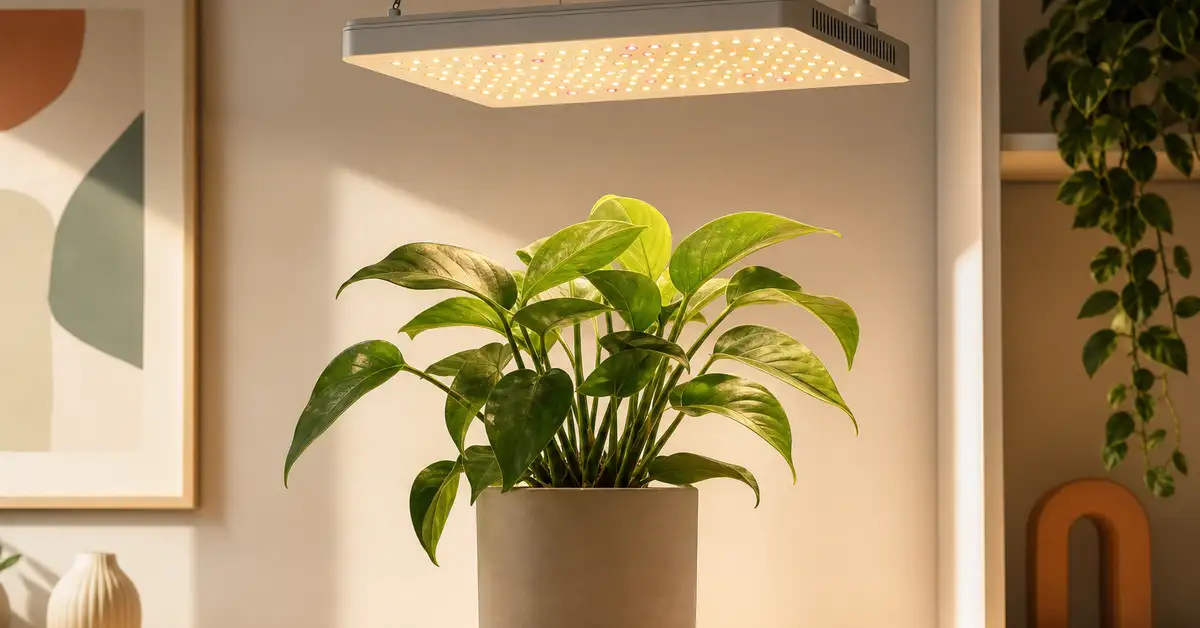
Samsung LM301B diodes · 65W true power · 2.35 µmol/J efficacy · Coverage: 2×2 ft · US-assembled · Price band: $$$
The HLG 65 V2 RSpec is the only genuinely US-assembled option on this list and the quality premium is real — build tolerances and driver quality are noticeably tighter than import-only brands. At 65W and 2.35 µmol/J with Samsung LM301B diodes, it’s not the most efficient on the list, but it’s the most reliable for mission-critical small-space grows where downtime matters. The RSpec adds a deep-red channel that supports late-stage flowering. For a 2×2 ft space where you want it to run for years without drama, HLG is the benchmark.
Pros: US-assembled (HLG is the quality standard); Samsung LM301B verified; RSpec deep-red channel; designed to run reliably for years; 2×2 ft perfectly sized. Cons: $$$ for 65W output — you’re paying for build quality and reliability, not raw efficacy per dollar; overkill for casual herb growing.
Spider Farmer SE3000 — Best Premium Bar-Style LED
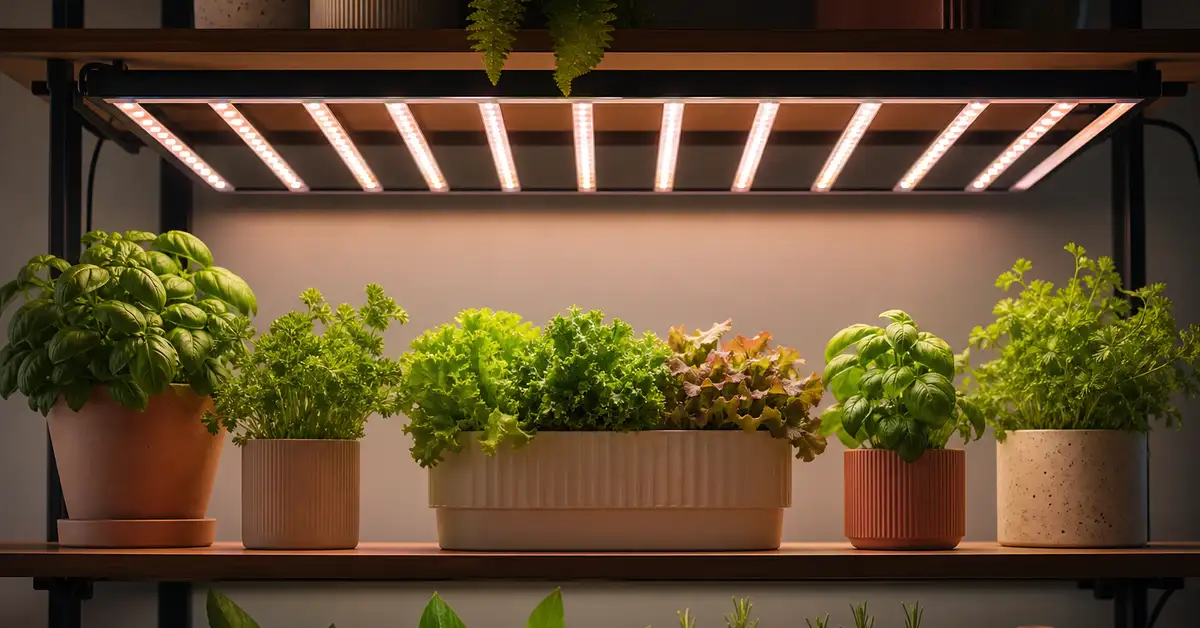
Samsung LM301B diodes · 300W true power · 2.75 µmol/J efficacy · Bar-style · Coverage: 3×3 ft (bloom) · Price band: $$$
The Spider Farmer SE3000 is where Samsung LM301B meets bar-style design at the premium tier. At 2.75 µmol/J, it’s among the most efficient bar-style units on the market at $$$ — fractionally behind the Mars Hydro FC series but with the Samsung diode quality that matters for precision light recipes. For growers who want proven bar-style canopy penetration in a 3×3 ft tent and are willing to pay premium for Samsung diode provenance, the SE3000 is the pick. US support is better established than some import-only alternatives.
Pros: Samsung LM301B in a bar-style format; 2.75 µmol/J; excellent 3×3 ft bloom coverage; strong community support. Cons: $$$ investment; 300W bar-style is heavier and more complex to hang than a single board; 3×3 ft bloom only — don’t stretch it to 4×4.
Mars Hydro FC-E4800 — Best Large-Coverage LED
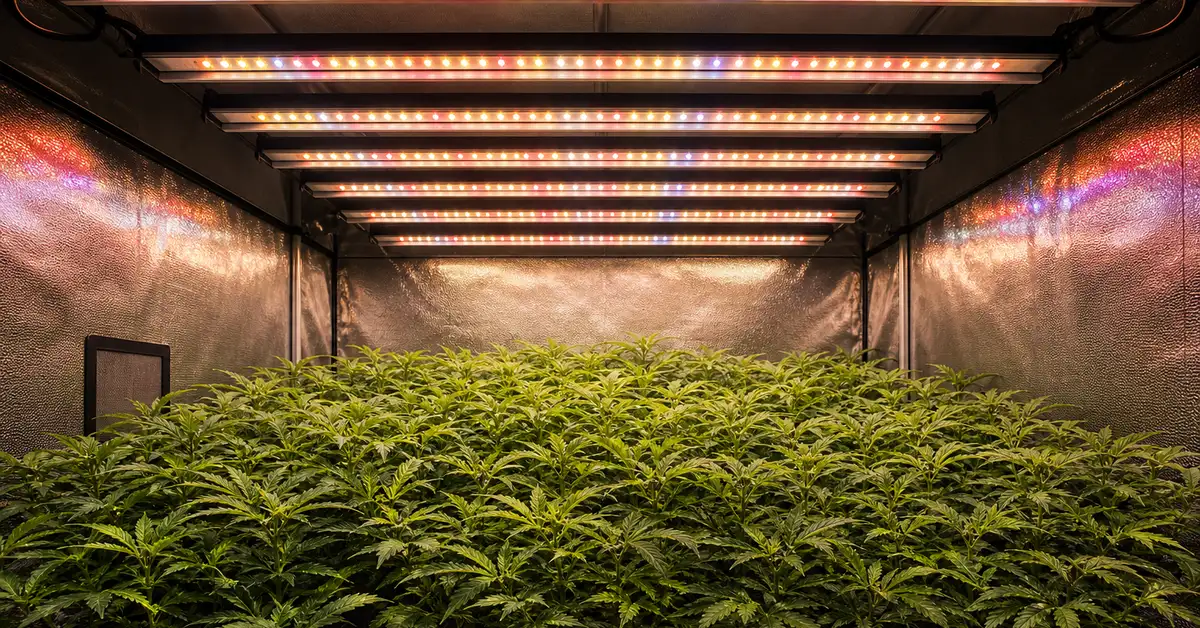
BridgeLux diodes · 480W true power · 2.8 µmol/J efficacy · ~1,344 µmol/s PPF · Detachable bar design · Coverage: 4×4 ft (bloom) / 5×5 ft (veg) · Price band: $$$
The Mars Hydro FC-E4800 is the large-coverage pick for serious 4×4 ft tent growers who want maximum efficiency at $$$ without stepping into the ultra-premium FC (non-E) bracket. At 2.8 µmol/J and ~1,344 µmol/s PPF (derived from specs), it matches the FC-E3000’s efficiency at double the wattage and coverage. The detachable multi-bar design enables uniform canopy distribution across a 4×4 ft bloom space. BridgeLux diodes throughout (FC-E series — same note as FC-E3000: not the Samsung LM301B found in the premium FC line). CPSC-screened: no open recalls (June 2026).
Pros: 2.8 µmol/J efficiency at 480W; genuine 4×4 ft bloom coverage; detachable bars for canopy flexibility; strong value vs ultra-premium alternatives. Cons: BridgeLux (not Samsung LM301B); heavy setup at 480W; FC-E vs FC distinction matters — know which line you’re buying.
Full Specs Comparison
| Product | Diode | True W | Efficacy | Bloom coverage | Type | Price |
|---|---|---|---|---|---|---|
| Mars Hydro TS 1000 | BridgeLux | ~150W | 2.29 µmol/J | 2.5×2.5 ft | Quantum board | $$ |
| VIVOSUN VS1000 | Samsung LM301B | ~100W | N/A stated | 2×2 ft | Quantum board | $ |
| Spider Farmer SF2000 | BridgeLux (2026) | ~200W | 2.7 µmol/J | 2×4 ft | Quantum board | $$ |
| Mars Hydro TSL 2000 | BridgeLux (704 chips) | 300W | 2.6 µmol/J | 2×4 ft | Bar-style | $$ |
| Spider Farmer SF1000 | BridgeLux + Osram | ~100W | N/A stated | 2×2 ft | Quantum board | $$ |
| Mars Hydro FC-E3000 | BridgeLux | 300W | 2.8 µmol/J | ~2.6×2.6 ft | Bar (detachable) | $$–$$$ |
| Spider Farmer SF4000 | BridgeLux | 450W | N/A stated | 4×4 ft | Quantum board | $$–$$$ |
| Phlizon PL2000B | LED panel | ~200W | N/A stated | ~2×2.5 ft | Panel | $–$$ |
| HLG 65 V2 RSpec | Samsung LM301B | 65W | 2.35 µmol/J | 2×2 ft | Board | $$$ |
| Spider Farmer SE3000 | Samsung LM301B | 300W | 2.75 µmol/J | 3×3 ft | Bar-style | $$$ |
| Mars Hydro FC-E4800 | BridgeLux | 480W | 2.8 µmol/J | 4×4 ft | Bar (detachable) | $$$ |
LED Grow Light Buying Guide
Bar-Style vs Quantum Board: Which Should You Choose?
Quantum boards distribute LEDs across a single flat panel — effective, well-proven, and the dominant format at the $ and $$ bands. Bar-style fixtures spread LEDs across multiple linear bars, producing more even PAR distribution and better canopy penetration at equivalent wattages. For grows where maximum yield per square foot matters (flowering tents), bar-style is worth the extra cost. For herb shelves, seedlings, and veg, a quantum board at the same wattage is usually sufficient and simpler to mount.
Understanding PAR, PPFD, and PPE
PAR (Photosynthetically Active Radiation) covers 400–700 nm light wavelengths plants use. PPFD (Photosynthetic Photon Flux Density) measures PAR delivered to a surface in µmol/m²/s — the number that matters for your plants. PPE (Photon Efficacy), stated in µmol/J, tells you how efficiently the fixture converts watts into PAR photons. A fixture at 2.8 µmol/J produces ~65% more PAR per watt than an older HPS at 1.7 µmol/J. Target PPFD for herbs and greens: 200–400 µmol/m²/s. For flowering: 600–900 µmol/m²/s.
Wattage Guide by Space
A general guideline for LED grow lights: 25–50W of true LED draw per square foot of canopy. A 2×2 ft (4 sq ft) space needs 100–200W true draw. A 3×3 ft (9 sq ft) space needs 225–450W. A 4×4 ft (16 sq ft) space needs 400–800W. These are ranges — efficacy matters as much as raw wattage. A 300W fixture at 2.8 µmol/J outperforms a 400W fixture at 1.9 µmol/J in usable plant light delivered.
BridgeLux vs Samsung LM301B: What Changed in 2026
Mars Hydro and Spider Farmer transitioned their budget and mid-range lines from Samsung LM301B to BridgeLux diodes in 2025–2026. Samsung LM301B remains in: HLG (across their range), Spider Farmer SE series, Mars Hydro FC series (non-E), and VIVOSUN VS1000. BridgeLux diodes are now standard in: Mars Hydro TS/TSL/FC-E series, Spider Farmer SF/SF2000/SF4000. The 2026 BridgeLux-equipped versions of these fixtures match or exceed older Samsung-equipped versions at the same wattage — the diode transition is a spec improvement, not a downgrade.
Frequently Asked Questions
What is the best LED grow light for beginners?
The VIVOSUN VS1000 is the best LED grow light for first-time growers who need to keep cost at the $ band. If your budget allows $$, the Spider Farmer SF1000 offers a fanless, well-supported introduction to proper LED growing with BridgeLux + Osram diodes. Both cover a 2×2 ft to 3×3 ft space — right for a starter tent or shelf grow.
How many watts do I need for a 4×4 grow tent?
A 4×4 ft (16 sq ft) tent needs 400–800W of true LED wattage for a productive flowering canopy. The Spider Farmer SF4000 at 450W is well-supported for this footprint. The Mars Hydro FC-E4800 at 480W is the higher-efficiency option. Avoid undersizing — most growers who struggle with a 4×4 ft tent are running 200–300W fixtures designed for 2×4 ft spaces.
Are quantum board LEDs better than bar-style LEDs?
Neither is categorically better — it depends on the grow. Quantum boards are simpler, lighter, and well-proven for herb shelves, seedlings, and compact grows. Bar-style fixtures distribute LEDs across multiple bars, producing more even canopy coverage and better light penetration in taller flowering grows. For maximising yield in a tent grow, bar-style is worth the premium. For herb growing and seed-starting, a quantum board at the same wattage works just as well.
What does PPFD mean and why does it matter for plants?
PPFD (Photosynthetic Photon Flux Density) measures the amount of PAR light reaching a specific surface point, expressed in µmol/m²/s. It is the most directly relevant number for plant growth — more than wattage or lumen output. Herbs and greens typically need 200–400 µmol/m²/s at the canopy. Fruiting plants and flowers need 600–900 µmol/m²/s or more.
How long should LED grow lights be on each day?
Most indoor plants grow best with 12–16 hours of LED light per day. Herbs and leafy greens: 14–16 hours. Seedlings: 16–18 hours. Flowering plants on a 12/12 schedule: 12 hours on / 12 hours off. Use a simple outlet timer — consistent light cycles matter more than fine-tuning exact hours within these ranges.
Is BridgeLux as good as Samsung LM301B in 2026?
In the 2026 product generations from Mars Hydro and Spider Farmer, the BridgeLux-equipped versions match or improve on their older Samsung LM301B equivalents in measured efficacy. The Mars Hydro FC-E series reaches 2.8 µmol/J. Compare efficacy (µmol/J figures) rather than diode brand names.
More from Planted Indoors
- Best Grow Lights of 2026: All Types Compared
- How to Use Grow Lights: Setup, Distance, and Light Schedules
- How Much Light Do Indoor Plants Need?
- When to Use Grow Lights: The Complete Grower’s Guide
- Best Full-Spectrum Grow Lights of 2026
- Best Grow Lights for Seedlings
- Best Grow Lights for Herbs
- Best Grow Lights for Small Spaces
- Best Low-Light Indoor Plants
This post was researched and written by Michael Probert. No physical product testing was conducted. Picks are based on manufacturer spec sheets, verified PAR/PPFD data, and published grower community research. All products CPSC-screened at recalls.gov (June 2026) — no open recalls found.