The best low-light indoor plants are pothos, snake plant, and ZZ plant — all three survive 50–100 foot-candles (fc), the actual light level in most interior rooms away from windows. For growers who want to go further — extending the range of plants they can grow, or supporting herbs and edibles where natural light is insufficient — a supplemental grow light opens up far more options. But for pure shade tolerance, nothing beats the 16 plants below.
“Low light” indoors means something different than it sounds. Most rooms described as “low light” measure 25–100 fc (270–1,076 lux) — enough for the toughest survivors, but not for most flowering plants or edibles. A north-facing window delivers 50–200 fc (538–2,152 lux); a well-lit south-facing window room interior may reach 200–400 fc. True darkness (under 10 fc) won’t support plant life at all. The plants below are specifically selected for survival and reasonable growth at 50–250 fc — the real-world range of low-to-moderate interior lighting.
What “Low Light” Actually Means: The Numbers
Plants measure light in foot-candles (fc) or lux (1 fc ≈ 10.76 lux) or, for grow light applications, µmol/m²/s PPFD. As a practical guide:
- Very low light (under 50 fc / 538 lux): Only the most tolerant species survive — no growth, maintenance only. Most interior corridors and windowless offices fall here.
- Low light (50–100 fc / 538–1,076 lux): North-facing rooms, interior positions 10+ feet from windows. Pothos, ZZ, and snake plant survive; most others decline.
- Medium-low light (100–250 fc / 1,076–2,690 lux): Interior rooms with indirect light from windows. Most of the plants below thrive here.
- Supplemental grow light (100–400 µmol/m²/s PPFD): A compact grow light brings any of the plants below to their full potential, and enables herbs and edibles in spaces with no natural light. See our best grow lights for small spaces guide for budget-friendly options.
The 16 Best Low-Light Indoor Plants
Pothos (Epipremnum aureum)
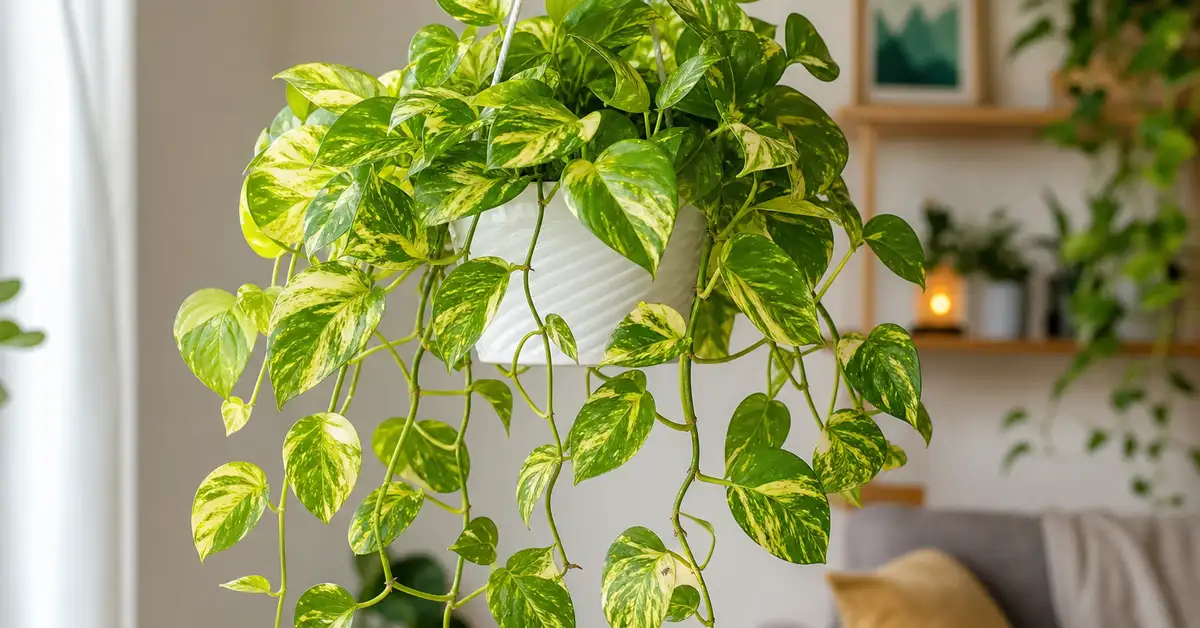
Light: 50–150 fc (survives lower) · Watering: Allow soil to dry between waterings · Toxicity: Toxic to cats and dogs (ASPCA) — causes oral irritation, vomiting, difficulty swallowing. Keep away from pets.
Pothos is the gold standard for low-light tolerance. Trailing vines maintain their variegated golden-green color at 50–100 fc where most other plants simply stop growing. NASA’s Clean Air Study (1989) identified pothos as one of the most effective indoor air-purifying plants, though the study’s practical implications for home air quality are debated in current research. For a beginner who wants a nearly indestructible trailing plant in a dim corner or hanging basket away from windows, pothos is the recommendation. Multiple cultivars available: ‘Golden Pothos’ (most common), ‘Marble Queen’ (white-variegated, slightly slower), ‘Neon’ (chartreuse, loses intensity in low light).
Snake Plant (Dracaena trifasciata, formerly Sansevieria)
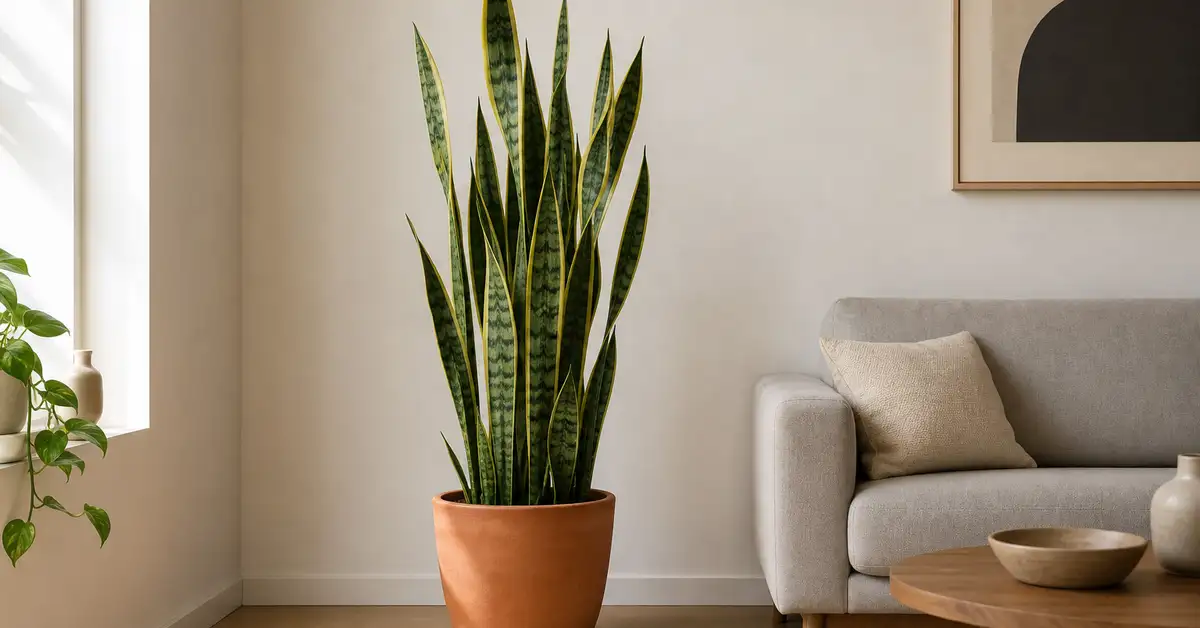
Light: 50–250 fc (extremely adaptable) · Watering: Every 2–6 weeks (extremely drought tolerant) · Toxicity: Toxic to cats and dogs (ASPCA) — causes nausea, vomiting, diarrhea. Keep away from pets.
Snake plant is the most forgiving indoor plant in common cultivation — it tolerates neglect, low light, irregular watering, and poor soil that would kill most other species. Upright architectural form makes it suitable for corners, hallways, and office spaces where trailing plants wouldn’t work. In very low light (under 50 fc), growth essentially stops but the plant survives indefinitely. For active growth and to maintain the tight banding on variegated cultivars, 100–250 fc is optimal. Multiple cultivars: ‘Laurentii’ (yellow-edged), ‘Moonshine’ (silver-gray), ‘Cylindrica’ (cylindrical leaves).
ZZ Plant (Zamioculcas zamiifolia)
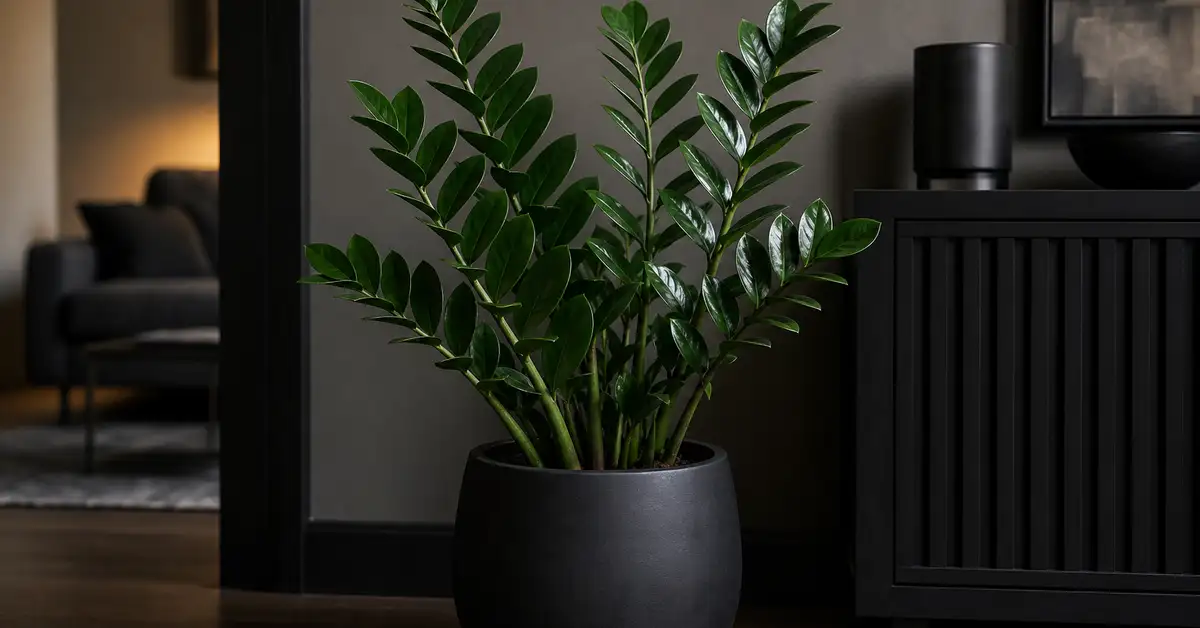
Light: 50–150 fc · Watering: Every 2–4 weeks (rhizomatous water storage) · Toxicity: Toxic to cats, dogs, and humans — all parts contain calcium oxalate crystals causing skin irritation, oral pain, and gastrointestinal upset. Wash hands after handling.
ZZ plant’s glossy, dark-green leaves and drought tolerance make it the second most recommended plant for truly dark indoor spaces. The rhizomatous root system stores water, enabling survival through extended neglect. Growth is slow in low light but the plant is almost impossible to kill through underwatering. The ‘Raven’ cultivar (near-black foliage) is increasingly available and performs identically to the standard species. ZZ is not suitable for homes with cats, dogs, or young children who might chew on plants.
Peace Lily (Spathiphyllum wallisii)
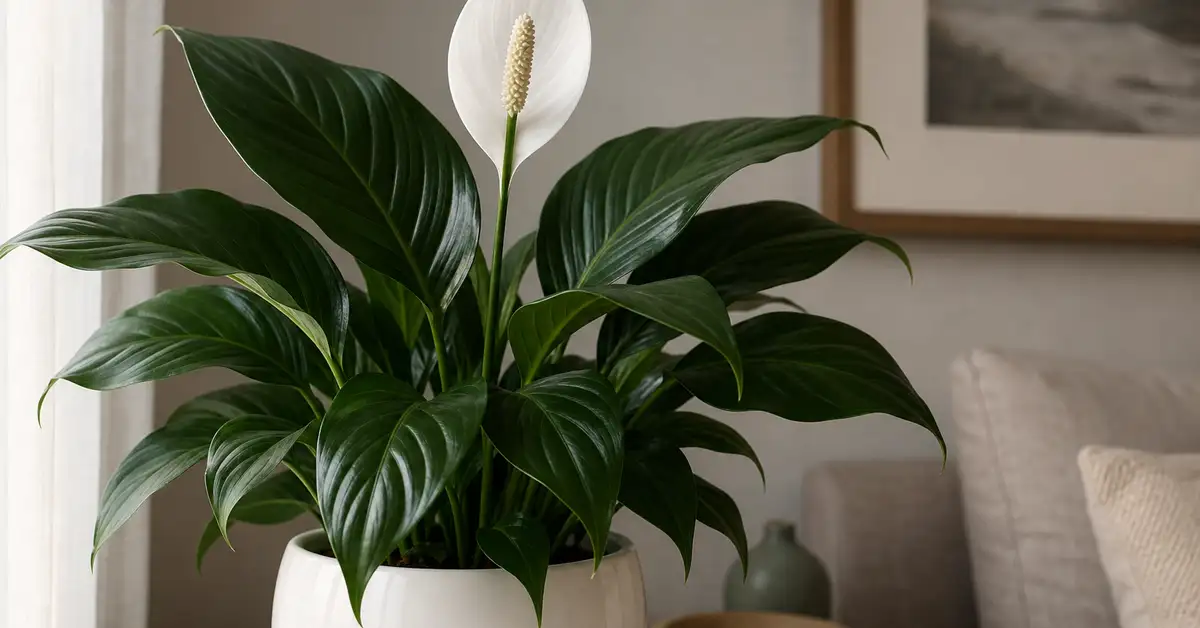
Light: 75–200 fc · Watering: Weekly (droops visibly when thirsty — reliable indicator) · Toxicity: Toxic to cats, dogs, and mildly to humans — contains calcium oxalate. Keep away from pets and small children.
Peace lily is one of the few low-light plants that flowers without bright light — white spathes appear reliably in medium-low light, making it more visually rewarding than most other shade-tolerant species. It droops dramatically when it needs water, then recovers quickly after watering, which makes it an unusually communicative plant for beginners. Ideal for bathrooms with natural light or rooms with north-facing windows where most flowering plants fail. Widely available and inexpensive.
Chinese Evergreen (Aglaonema)
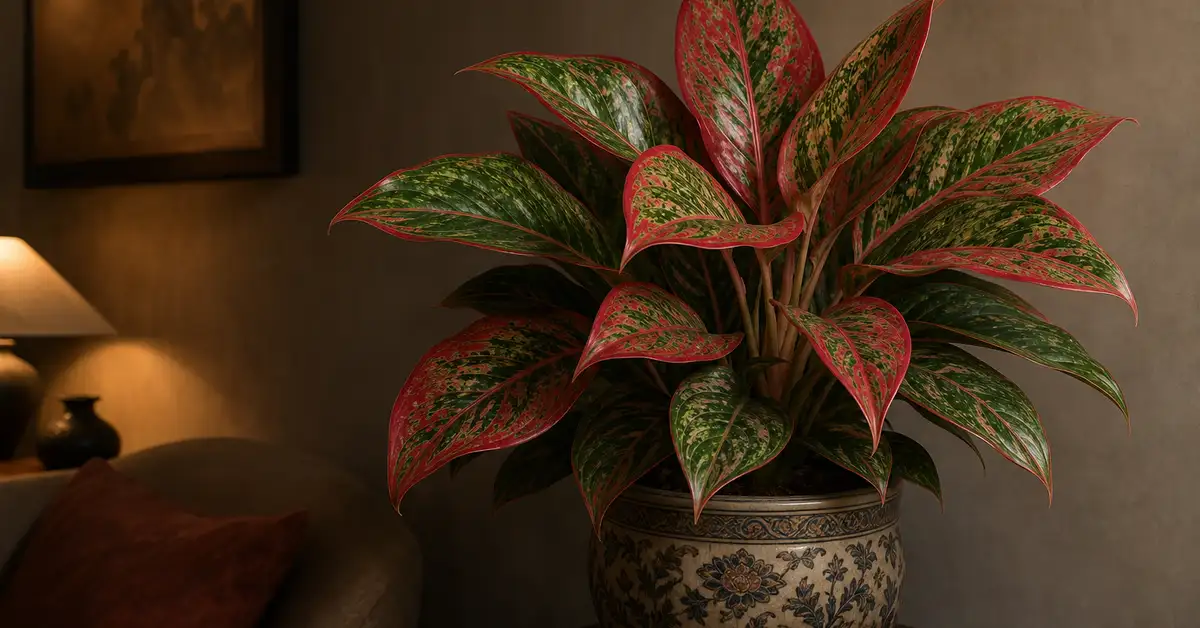
Light: 75–200 fc (darker cultivars tolerate 50 fc) · Watering: Allow soil surface to dry between waterings · Toxicity: Toxic to cats and dogs (ASPCA) — calcium oxalate crystals.
Chinese evergreen offers the most cultivar diversity of any plant on this list — leaf colors range from deep green through silver-gray, pink, red, and variegated combinations. As a rule, darker-leaved cultivars tolerate lower light than pink or red ones (which need at least medium light to maintain color). Aglaonema is extremely adaptable, handling air conditioning, dry air, and inconsistent watering better than most tropical plants. For adding color and variety to a low-light interior without grow lights, Aglaonema cultivars are the best tool.
Cast Iron Plant (Aspidistra elatior)
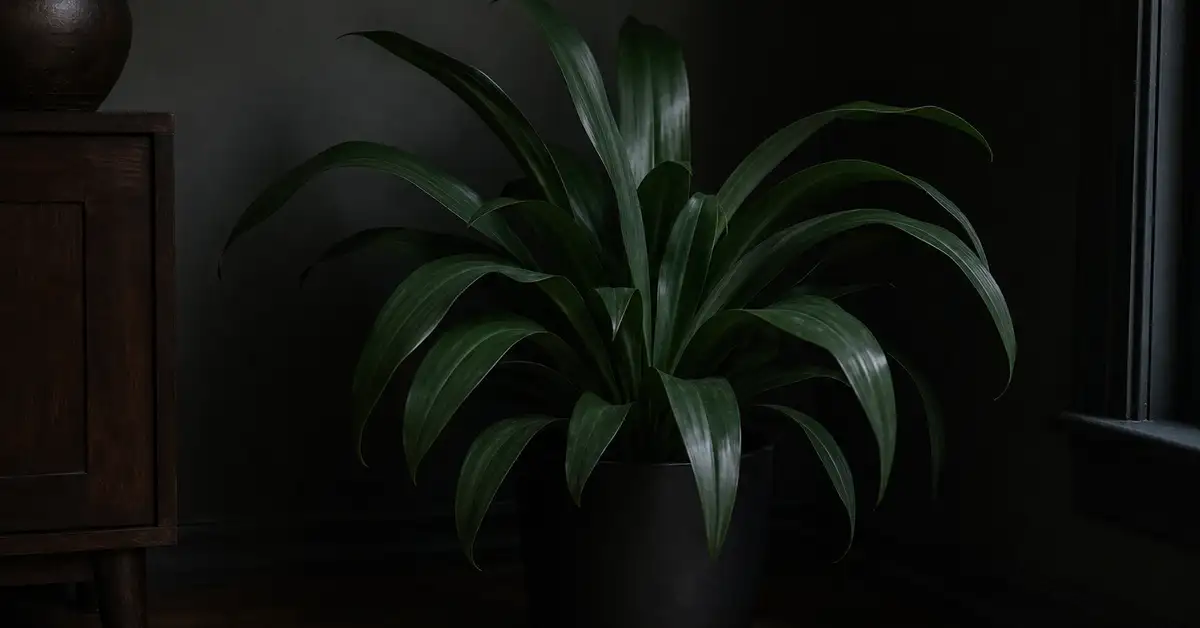
Light: 25–100 fc (the lowest-light tolerant plant on this list) · Watering: Monthly or less · Toxicity: Non-toxic to cats, dogs, and humans (ASPCA).
Cast iron plant earns its common name — it survives conditions that would kill everything else: deep shade, temperature extremes, drought, irregular watering, and neglect. Growth is very slow (one or two leaves per year), but it maintains its deep-green, strap-like foliage in interior spaces as dark as 25 fc. One of the few truly pet-safe options for very dark rooms. Not widely available in mainstream garden centers — seek out specialist nurseries or online sellers for the best cultivar selection.
Heartleaf Philodendron (Philodendron hederaceum)
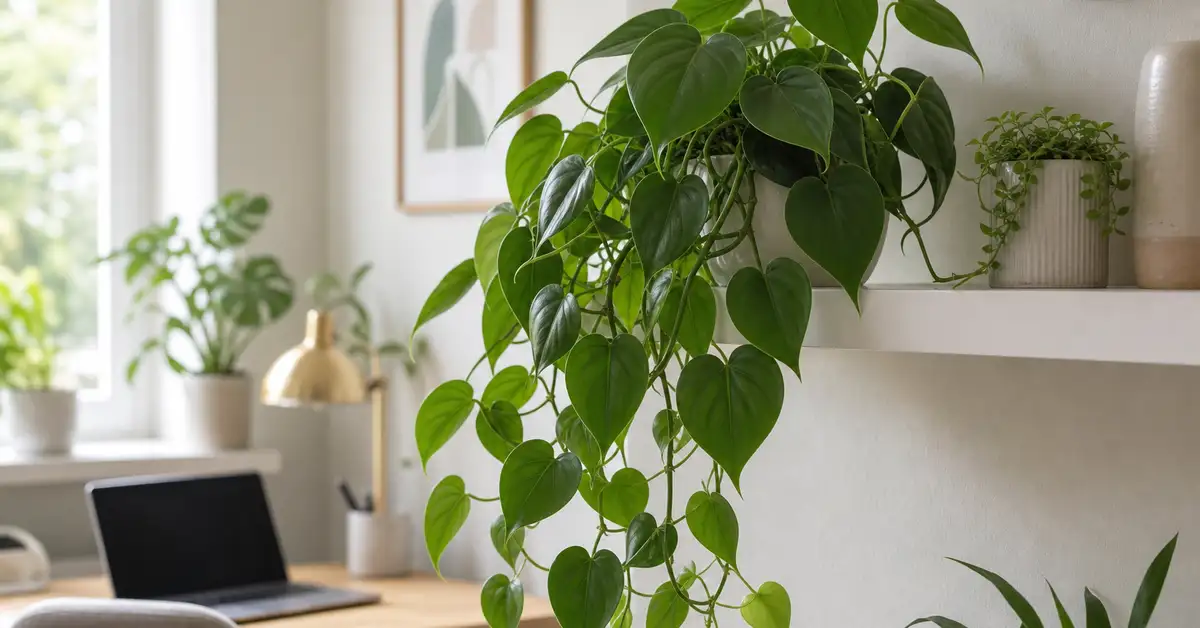
Light: 75–200 fc · Watering: Allow top inch of soil to dry · Toxicity: Toxic to cats, dogs, and humans — calcium oxalate crystals.
Heartleaf philodendron is the easy-care trailing alternative to pothos — similar growth habit and light requirements, with softer matte-green heart-shaped leaves. In low light it grows more slowly and the leaves become larger (a stress adaptation to capture more light). For shelf and hanging basket growing where you want trailing foliage without the sheen of pothos, heartleaf philodendron fills the niche well. Fast-growing in medium-low light; propagates easily in water from cuttings.
Parlor Palm (Chamaedorea elegans)
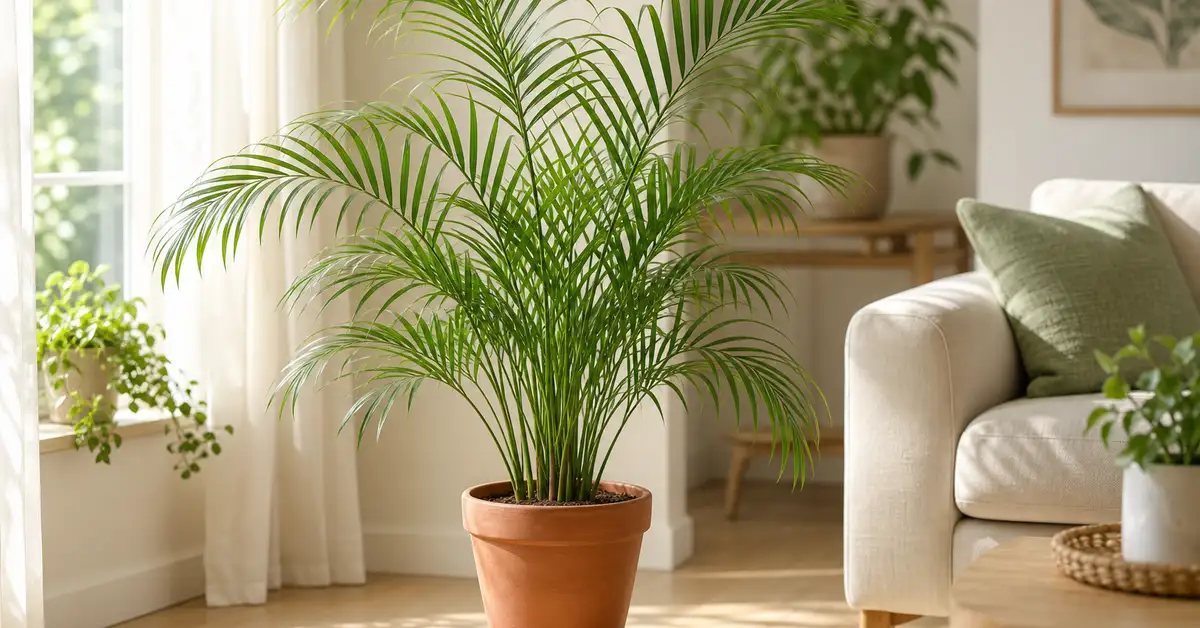
Light: 75–250 fc · Watering: Weekly; allow top inch to dry · Toxicity: Non-toxic to cats, dogs, and humans (ASPCA).
Parlor palm is one of the most shade-tolerant true palms — it evolved as an understory plant in Central American rainforests, making it unusually adapted to indirect interior light. Slow-growing but long-lived; a well-tended parlor palm can reach 4–6 ft indoors over several years. One of the best pet-safe floor plant options. Prefers consistent moisture and humidity — a pebble tray with water beneath the pot helps in dry heated interiors.
Spider Plant (Chlorophytum comosum)
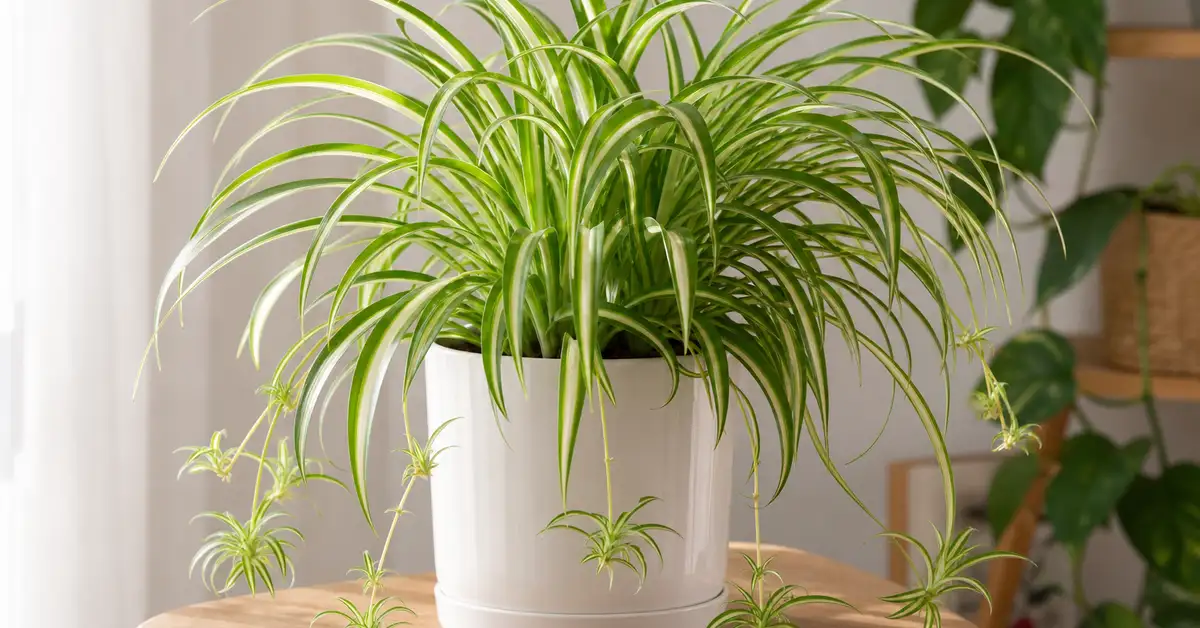
Light: 75–200 fc · Watering: Weekly; drought tolerant once established · Toxicity: Non-toxic to cats, dogs, and humans (ASPCA). Mildly attractive to cats — they may chew on it.
Spider plant is one of the few variegated plants that maintains its white-striped color at low light levels. Produces cascading “spiderettes” (offshoots) that can be propagated in water — a perpetual supply of free plants. Extremely tolerant of neglect; one of the best plants for a beginner’s first attempt. Well-suited to hanging baskets in rooms with indirect light.
Bird’s Nest Fern (Asplenium nidus)
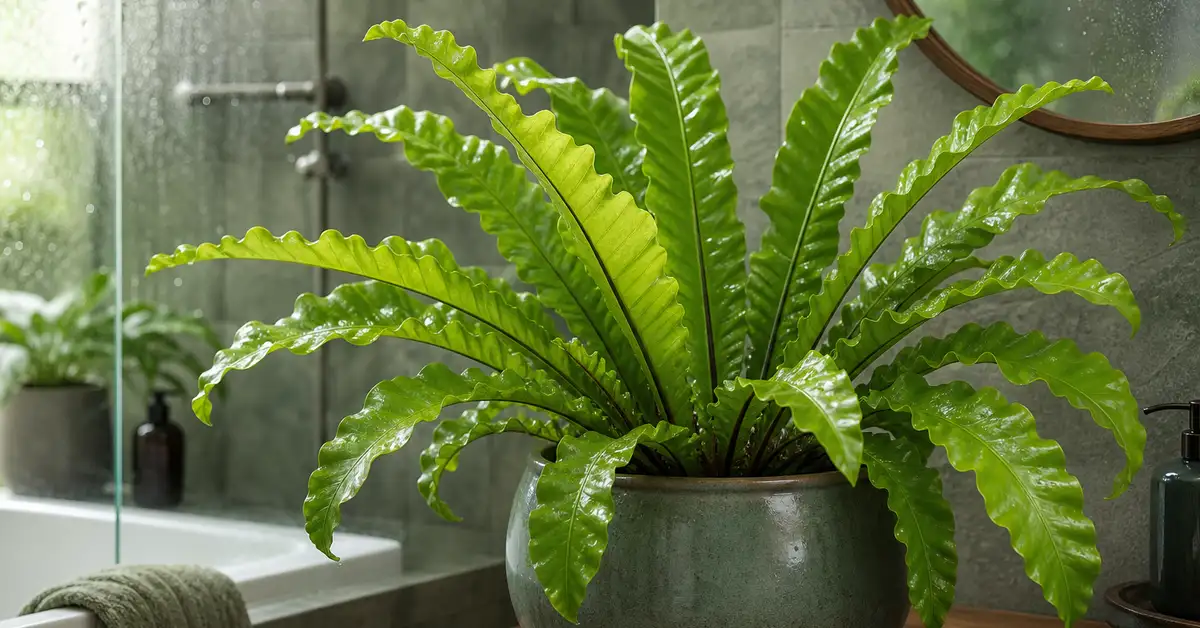
Light: 75–200 fc · Watering: Keep soil consistently moist; avoid watering directly into the crown · Toxicity: Non-toxic to cats, dogs, and humans (ASPCA).
Bird’s nest fern is the most forgiving fern for indoor growing — it tolerates lower humidity and less consistent moisture than Boston fern or maidenhair fern, while maintaining its distinctive bright-green, wavy-edged fronds. The rosette form makes it an architectural centerpiece for a bathroom shelf or low-light corner. Fronds emerge from a central crown; touching the emerging fronds can cause damage. Prefers humid environments — naturally well-suited to bathrooms.
Prayer Plant (Maranta leuconeura)
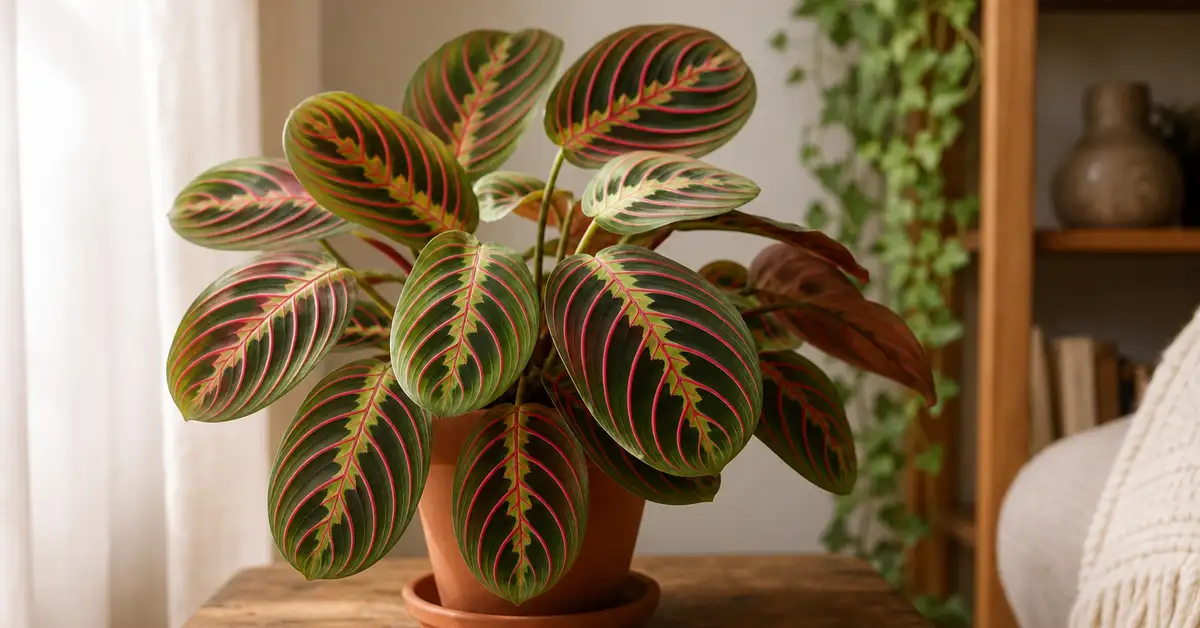
Light: 75–200 fc · Watering: Keep consistently moist; sensitive to fluoride — use filtered or distilled water if possible · Toxicity: Non-toxic to cats, dogs, and humans (ASPCA).
Prayer plant is named for the way its leaves fold upward in the evening (“praying”) and open flat in daylight. The tricolor variegation (green, yellow, and red markings) is the most striking foliage pattern of any plant on this list. Sensitive to fluoride in tap water; filtered or collected rainwater improves performance. One of the best pet-safe plants with decorative foliage.
Boston Fern (Nephrolepis exaltata)
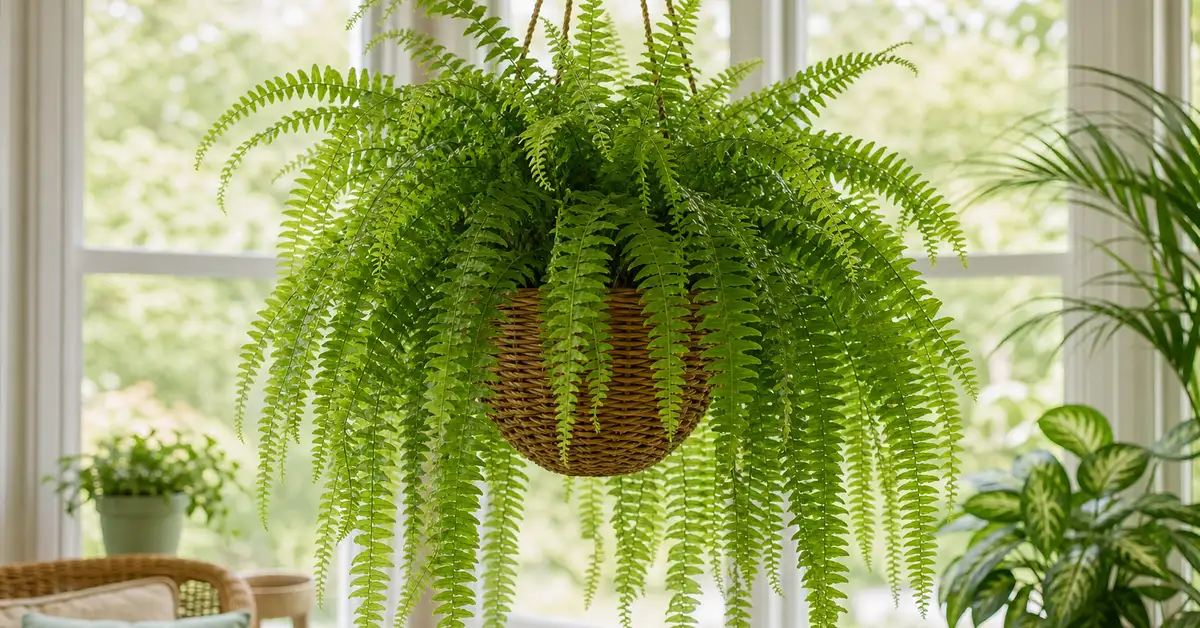
Light: 75–200 fc · Watering: Keep consistently moist; prefers humidity above 50% · Toxicity: Non-toxic to cats, dogs, and humans (ASPCA).
Boston fern is the classic hanging basket fern — dramatic arching fronds, fast growth in the right conditions, and genuinely pet-safe. The main challenge is humidity: in centrally heated dry interiors, fronds brown and drop unless a pebble tray with water or regular misting is provided. Best in bathrooms with natural light or kitchens where humidity is naturally higher. Recovers from severe wilting with thorough watering and increased humidity.
Dracaena (Dracaena fragrans, D. marginata)
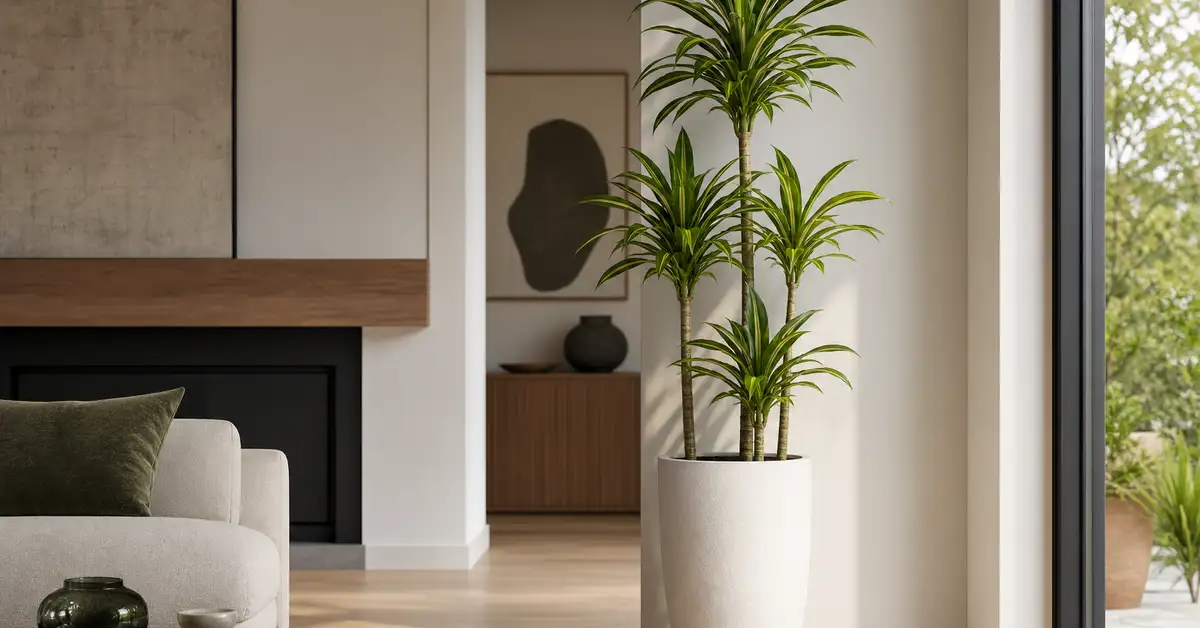
Light: 75–200 fc (adaptable) · Watering: Allow soil to dry between waterings; sensitive to fluoride · Toxicity: Toxic to cats and dogs (ASPCA) — causes vomiting (with blood possible in cats), depression, dilated pupils. Keep strictly away from pets.
Dracaena species are among the most commonly available low-light houseplants and one of the few species that grows into a floor-level tree form under interior conditions. D. fragrans (‘Corn Plant’) tolerates the lowest light of the genus; D. marginata (dragon tree) is more architectural. Both are sensitive to fluoride and salts in tap water — brown leaf tips indicate this problem. One of the most toxic plants on this list to cats; not suitable for cat-owning households.
Anthurium (Anthurium andraeanum)
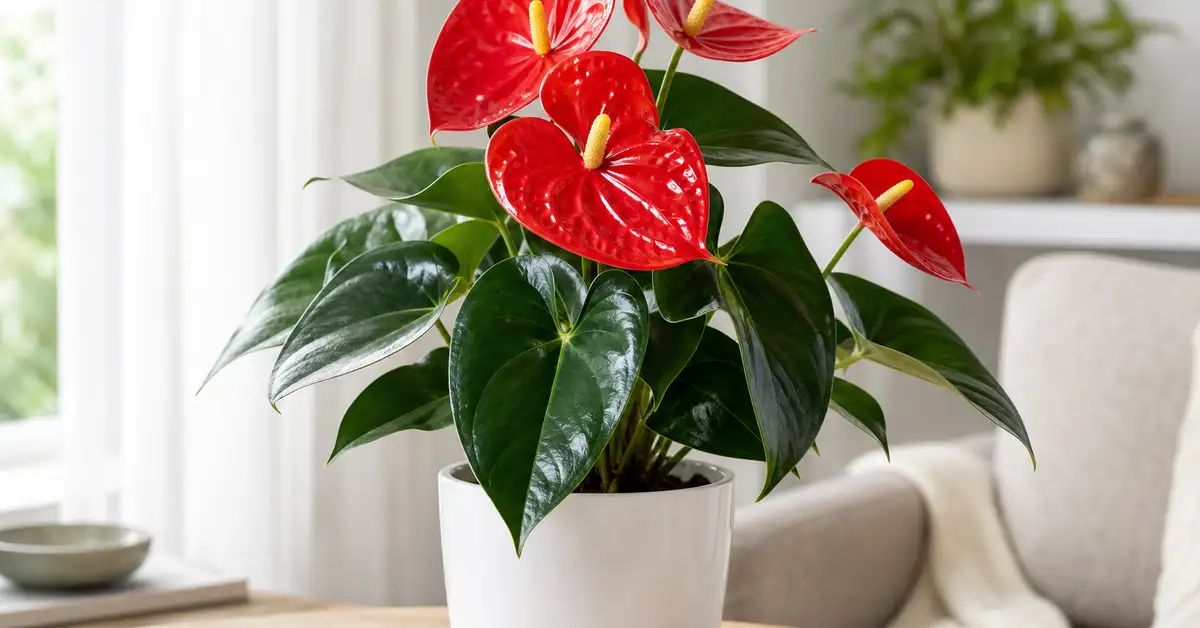
Light: 100–250 fc (needs more light than others to flower) · Watering: Allow top inch to dry; prefers humidity · Toxicity: Toxic to cats, dogs, and humans — calcium oxalate crystals cause severe oral irritation.
Anthurium survives at 100 fc but needs 150–250 fc to produce its distinctive waxy spathes reliably. In very low light it will remain as a foliage plant without flowering. In medium-low light near a north or east window, it flowers repeatedly throughout the year. If natural light is insufficient for flowering, a small clip grow light on a timer restores flowering performance — see our small-space grow light guide.
Maidenhair Fern (Adiantum)
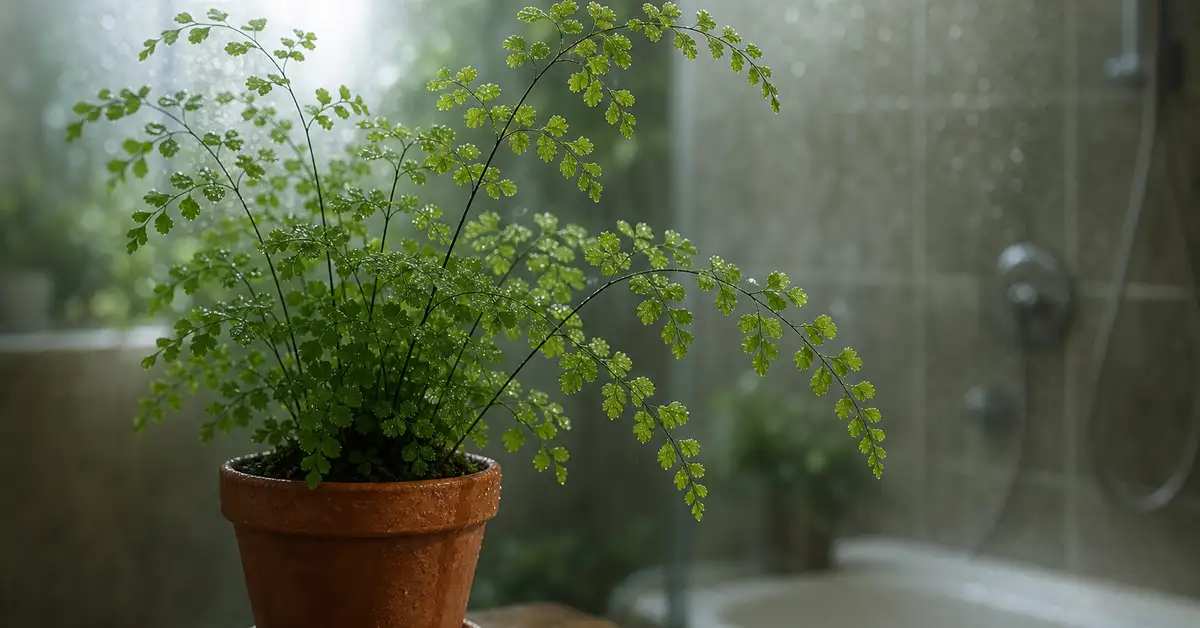
Light: 75–150 fc · Watering: Keep consistently moist — does not tolerate drying out · Toxicity: Non-toxic to cats, dogs, and humans (ASPCA).
Maidenhair fern is the most visually delicate fern commonly available — fine, fan-shaped fronds on wiry black stems. It requires consistent moisture, high humidity, and protection from dry air and drafts. In the right conditions (a steamy bathroom, a kitchen with frequent cooking), it thrives at 75–150 fc. Best for experienced growers who enjoy a challenge, or anyone with a suitable humid microclimate indoors.
Lucky Bamboo (Dracaena sanderiana)
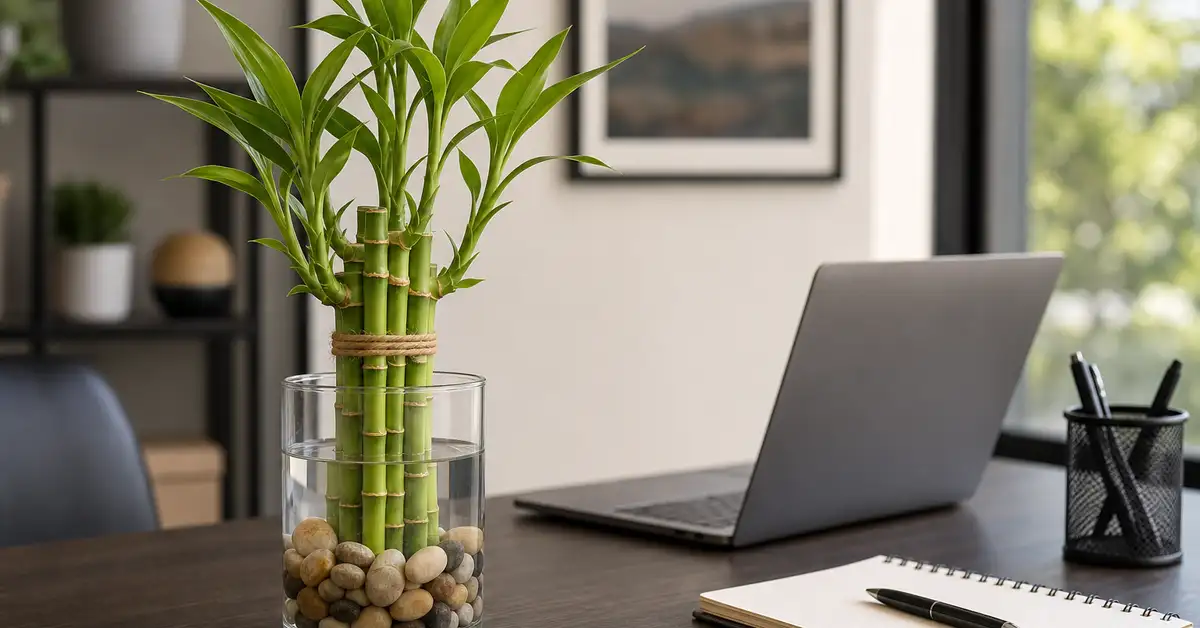
Light: 50–150 fc · Watering: Grow in water or moist soil; change water every 2 weeks if growing in a vase · Toxicity: Toxic to cats and dogs (ASPCA) — causes depression, incoordination, vomiting, weakness. Not actual bamboo.
Despite the name, lucky bamboo is a Dracaena, not a true bamboo — it grows as a water plant in the distinctive woven or straight stalk arrangements sold in florists and gift shops. Tolerates very low light (50 fc) in water culture; grows more vigorously at 100–150 fc. Change the water every 1–2 weeks to prevent algae. Toxic to cats and dogs — keep out of reach.
When Low-Light Plants Aren’t Enough: Adding a Grow Light
The 16 plants above survive and grow at the light levels found in typical interiors. But if you want to grow herbs, edibles, or flowering tropicals in a room with limited natural light — or if you want to push the species above to their full potential — a supplemental grow light changes what’s possible.
A 9W screw-in grow bulb in an existing lamp brings most of the plants above to active growth mode in even a windowless room. A compact strip light under a shelf enables a productive kitchen herb garden where the windowsill isn’t south-facing. Our guides:
- Best Grow Lights for Small Spaces — starting in our $ Budget tier, including screw-in bulbs that fit any lamp socket
- Best Grow Lights for Herbs — kitchen-sized lights matched to culinary herb PPFD requirements
- Best Grow Lights for Seedlings — for growers starting from seed
- Best Grow Lights of 2026: All Types Compared — complete guide for larger indoor setups
Frequently Asked Questions
What is the most low-light tolerant indoor plant?
Cast iron plant (Aspidistra elatior) and ZZ plant (Zamioculcas zamiifolia) are the two most low-light tolerant plants in common cultivation. Both survive at 25–50 fc — the light level of interior rooms with no direct window access. Snake plant (Dracaena trifasciata) and pothos (Epipremnum aureum) are close behind, surviving at 50 fc with minimal decline.
Can houseplants survive with just artificial light?
Yes — many of the plants on this list grow well under standard LED lighting used in homes and offices. Most low-light houseplants need at least 50 fc (538 lux) for 10–12 hours per day. A standard 60W equivalent LED bulb provides approximately 40–80 fc at 3 feet — just sufficient for survival-level low-light plants. Dedicated grow lights deliver higher PPFD with spectrum optimized for plant growth. Our small-space grow light guide covers budget-friendly options.
Which low-light indoor plants are safe for cats and dogs?
Non-toxic low-light plants on this list (per ASPCA): cast iron plant, spider plant, parlor palm, bird’s nest fern, Boston fern, prayer plant, and maidenhair fern. Always verify with the ASPCA plant toxicity database. Toxic low-light plants to avoid in pet households include: pothos, snake plant, ZZ plant, Chinese evergreen, peace lily, philodendron, dracaena, anthurium, and lucky bamboo.
How do I know if my plant is getting enough light?
Plants signal insufficient light through: elongated, stretched internodes (etiolation); pale or yellowing leaves; loss of variegation; very slow or halted growth; and dropping of lower leaves. A light meter app gives an accurate fc or lux reading — far more reliable than visual assessment.
More from Planted Indoors
- Best Grow Lights for Small Spaces
- Best Grow Lights for Kitchen Herbs
- Best Grow Lights for Starting Seeds
- Best Full-Spectrum Grow Lights of 2026
- Best Grow Lights of 2026: All Types Compared
Toxicity information sourced from the ASPCA Animal Poison Control Center. This guide provides general information only — consult a veterinarian or poison control center if ingestion occurs. Written by Michael Probert. Research completed July 2026.