The best overall indoor gardening system for most households is the Gardyn Home Kit — a 30-plant vertical smart hydroponic wall with camera-assisted AI monitoring and a genuinely capable app, built for buyers who want serious yield without becoming a hobbyist. We researched manufacturer specifications, editorial reviews, and current market and brand-status data across twelve leading countertop and vertical hydroponic systems, and screened every pick against CPSC’s recall database, to build a shortlist you can trust in 2026.
“Smart garden” and “indoor hydroponic system” cover a wide range of products — from a three-pod countertop unit that sits on a windowsill to an eight-foot vertical tower that can replace a meaningful chunk of your grocery run. Search behavior increasingly treats these as one buying decision rather than two separate categories, so this guide covers both: compact countertop smart gardens (AeroGarden, Click & Grow, Rise Gardens’ Personal unit) and larger vertical or tented hydroponic systems (Gardyn, Rise Gardens’ Family system, Lettuce Grow, Tower Garden, Aerospring), plus honest budget picks (iDOO, LetPot).
Below you’ll find twelve picks across every price band and capacity tier, plus a plain-English buying guide and an honest answer to the most-searched question in this category: is AeroGarden still in business? Jump to a pick or read straight through.
Transparency first: This guide contains affiliate links. If we’re enrolled in an affiliate program, we may earn a commission at no extra cost to you — it never affects how we research or rank. Read our full affiliate disclosure policy.
Check the Gardyn Home Kit on Amazon →
Our Best Indoor Gardening Systems: Top Picks at a Glance
Short on time? Here’s our ranked shortlist. Each pick links to the full write-up below.
| System | Best For | Capacity | Price Band | Our Take |
|---|---|---|---|---|
| Gardyn Home Kit | Best Overall | ~30 plant sites | $$$ | AI-monitored smart wall with the most complete ecosystem |
| AeroGarden Bounty Elite | Best Overall Countertop | 9 pods | $$ | Wi-Fi, touchscreen, and the strongest countertop light output |
| Click & Grow Smart Garden 9 | Best for Beginners | 9 pods | $$ | About as close to “no-fail” as indoor gardening gets |
| Click & Grow Smart Garden 3 | Best Compact / Small-Space Pick | 3 pods | $ | Tiny footprint, same low-maintenance formula |
| AeroGarden Harvest XL | Best Classic Countertop | 6 pods | $$ | No app required — just plug in and grow |
| Rise Gardens Personal Garden | Best Countertop With Room to Grow | ~8–12 sites | $–$$ | An entry point into a modular ecosystem you can expand later |
| Rise Gardens Family System | Best Vertical / Large-Capacity System | Up to 108 plants | $$–$$$ | Horizontal tiers, serious warranty, serious yield |
| Lettuce Grow Farmstand (Medium) | Best Design & Lifestyle System | 24 plant ports | $$–$$$ | The one that actually looks good in a living room |
| Tower Garden FLEX | Best for Indoor/Outdoor Flexibility | 20+ plants | $$–$$$ | Move it to the patio in summer, back inside for winter |
| Aerospring Indoor Hydroponic System 2.0 | Best Enclosed Tent System | 27 plants | $$$ | Near-greenhouse capability for a dedicated grow corner |
| iDOO 12–20 Pod System | Best Value Countertop Garden | 12–20 pods | $ | The most plant sites per dollar in this guide |
| LetPot LPH-Max 21-Pod | Best High-Capacity Budget Pick | 21 pods | $–$$ | App control and real capacity without the premium price tag |
How We Chose the Best Indoor Gardening Systems
We researched manufacturer specifications, editorial reviews, and current market data across leading smart-garden and hydroponic brands, cross-referencing product claims against primary manufacturer sources wherever possible. For every shortlisted product, we checked five factors:
- Verified capacity and lighting specs — Plant/pod count, LED wattage, water reservoir size, and footprint were checked directly against manufacturer product pages rather than marketing copy alone.
- Brand and ecosystem stability — Several of these systems lock you into proprietary pods, seedlings, or subscriptions. We checked whether each brand is currently shipping, restocking consumables, and supporting existing customers — a real concern in this category after AeroGarden’s 2024–2025 closure and relaunch (more on that below).
- Price-per-plant-site value — We considered hardware cost relative to plant capacity so budget and premium picks are judged on their own terms, not against each other.
- Warranty and support — Longer warranties (Rise Gardens’ 3-year coverage, for example) and documented replacement-parts ecosystems (LetPot, iDOO) were weighted as positive signals for long-term reliability.
- CPSC safety record — We screened every product in this guide against the Consumer Product Safety Commission’s recall database at recalls.gov. No open recalls were found for any product in this shortlist. Electrical grow gear — pumps, LED drivers, heating elements — carries real safety risk if manufactured to poor standards, so this check runs on every pick, every time we update this guide.
We did not physically test these systems in a side-by-side lab. Our conclusions come from verified research, manufacturer specifications, and reputable editorial reviews. For full details on how we evaluate indoor growing gear, see our evaluation methodology page. Our author Michael Probert grows herbs and seedlings indoors and contributes real-world context to these assessments.
Price bands in this guide: $ = Budget, $$ = Mid-Range, $$$ = Premium — relative to this guide’s own product spread, not fixed dollar amounts.
The 12 Best Indoor Gardening Systems in 2026
Gardyn Home Kit — Best Overall
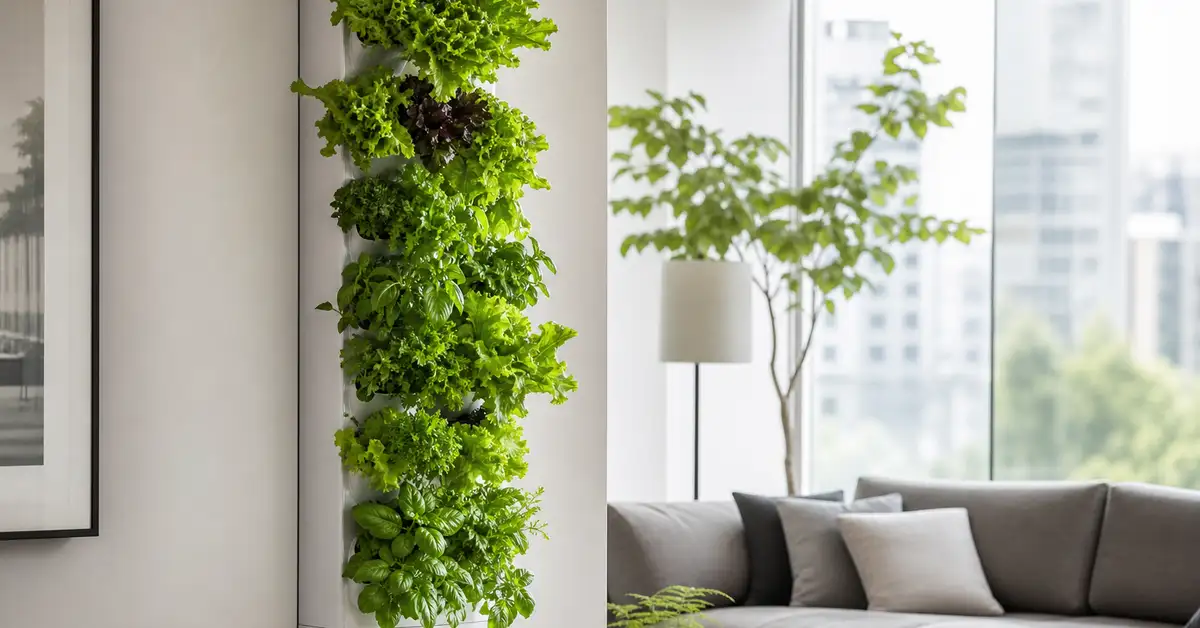
Best for: Households that want serious, ongoing yield — around 30 plants at a time — with the least manual monitoring of any system in this guide.
$$$ Premium
Gardyn’s Home Kit is a vertical hydroponic column that supports roughly 30 plant sites via proprietary yCube pods, with full-spectrum LED lighting built into the column and embedded cameras that let an AI service watch for yellowing leaves, pests, or nutrient issues and flag them in the companion app. It’s the most “hands-off” large-capacity system we reviewed — most day-to-day operation is automated, and users are mainly responsible for harvesting, pruning, and periodic nutrient top-offs.
- Pros: Highest plant capacity-to-footprint ratio among smart (non-industrial) systems; camera-assisted monitoring genuinely reduces guesswork; broad pod variety including some fruiting crops; no open CPSC recalls found.
- Cons: Premium hardware price plus an ongoing yCube subscription for pod refills; proprietary pod ecosystem; a living-room-sized footprint is required.
Key specs: ~30 plant sites | Full-spectrum LED | Integrated cameras + AI monitoring | App-controlled | Subscription pod refills available
Why we picked it: No other system in this guide combines Gardyn’s plant capacity with genuine smart-home-grade automation. For buyers willing to accept a subscription model and a premium price, it delivers the most produce for the least hands-on effort.
AeroGarden Bounty Elite — Best Overall Countertop Smart Garden
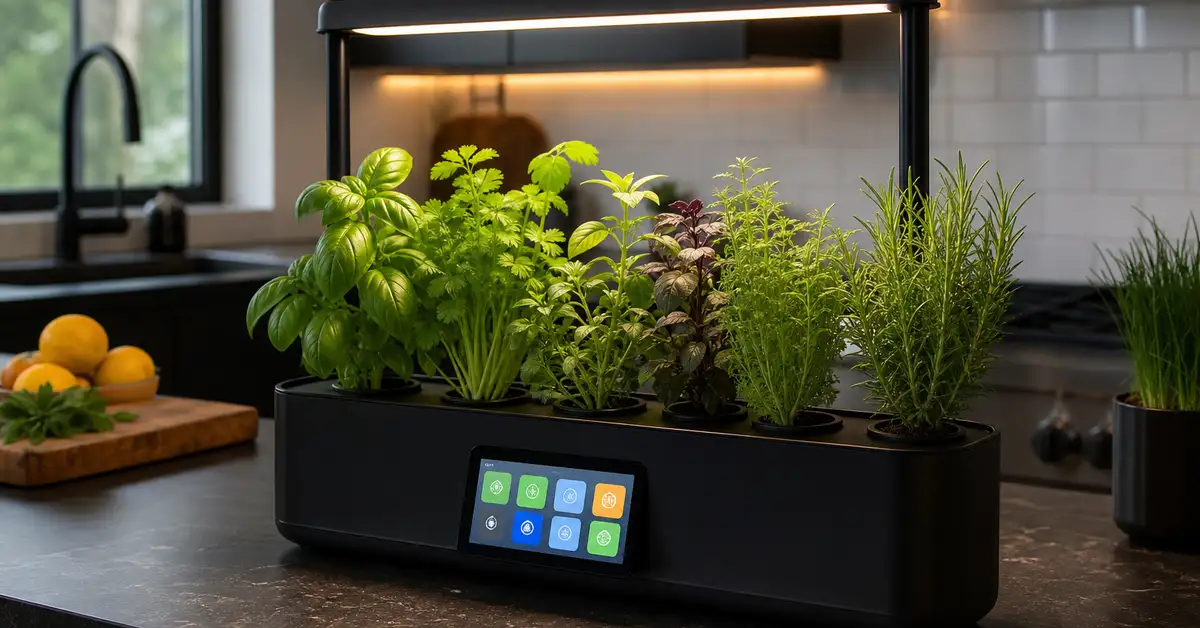
Best for: Buyers who want the most capable countertop system — Wi-Fi, touchscreen, and enough light output to grow more than herbs.
$$ Mid-Range
The Bounty Elite is AeroGarden’s flagship countertop unit: nine pods, a 50W full-spectrum LED array, a color touchscreen, and Wi-Fi connectivity with app control for light scheduling, vacation mode, and low-water alerts. It’s the most fully-featured countertop garden we reviewed, with enough light intensity to support compact fruiting plants alongside herbs and greens.
- Pros: Strong 50W LED output for a countertop unit; Wi-Fi and app control including vacation mode; widely recognized brand with a mature seed-pod ecosystem; no open CPSC recalls found.
- Cons: AeroGarden underwent a public closure announcement in late 2024 and a 2025 relaunch under new ownership — worth a read before you buy (see our FAQ below); larger footprint than simpler countertop rivals.
Key specs: 9 pods | 50W full-spectrum LED | Up to ~24″ grow height | Wi-Fi + touchscreen + app | Vacation mode
Why we picked it: Feature-for-feature, the Bounty Elite is the most capable countertop system available, and AeroGarden’s manufacturer site and seed-pod ecosystem are active and shipping as of 2026. We recommend confirming current warranty terms at checkout given the brand’s recent ownership change.
Click & Grow Smart Garden 9 — Best for Beginners
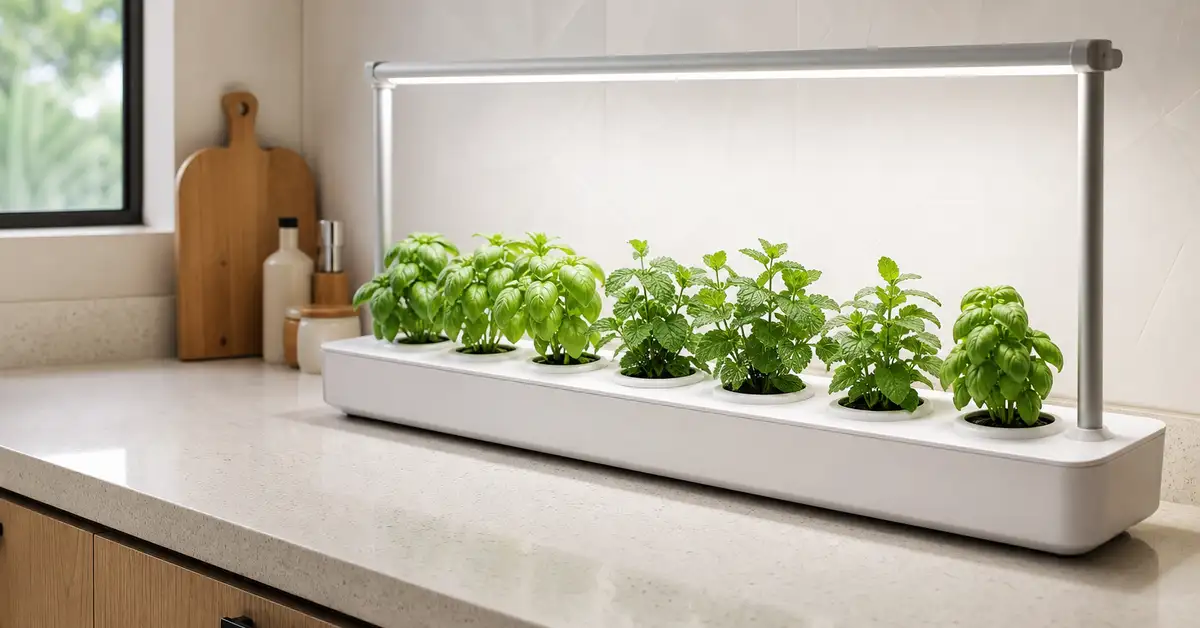
Best for: First-time growers who want the simplest possible ownership experience — fill the tank, insert pods, and mostly forget about it.
$$ Mid-Range
The Smart Garden 9 uses passive capillary watering and pre-seeded plant pods rather than an active pump — see our explainer on how hydroponics works for more on the difference — which means fewer moving parts and less to maintain. Its 4-liter tank runs up to a month between refills, and the ~13W LED system keeps energy costs low. It’s a deliberately low-tech, high-reliability design.
- Pros: Extremely low maintenance; one of the most energy-efficient systems in this guide; one-year hassle-free warranty; no open CPSC recalls found.
- Cons: Locked into Click & Grow’s own plant pods; lower light intensity than active-pump systems, so it’s better suited to herbs and small greens than fruiting plants.
Key specs: 9 plant pods | ~13W LED | 4L water tank | ~1 month autonomous watering | 1-year warranty
Why we picked it: For someone who has never grown anything indoors before, the Smart Garden 9’s near-zero learning curve makes it the easiest recommendation in this guide, even though the Bounty Elite offers more raw capability.
Click & Grow Smart Garden 3 — Best Compact / Small-Space Pick
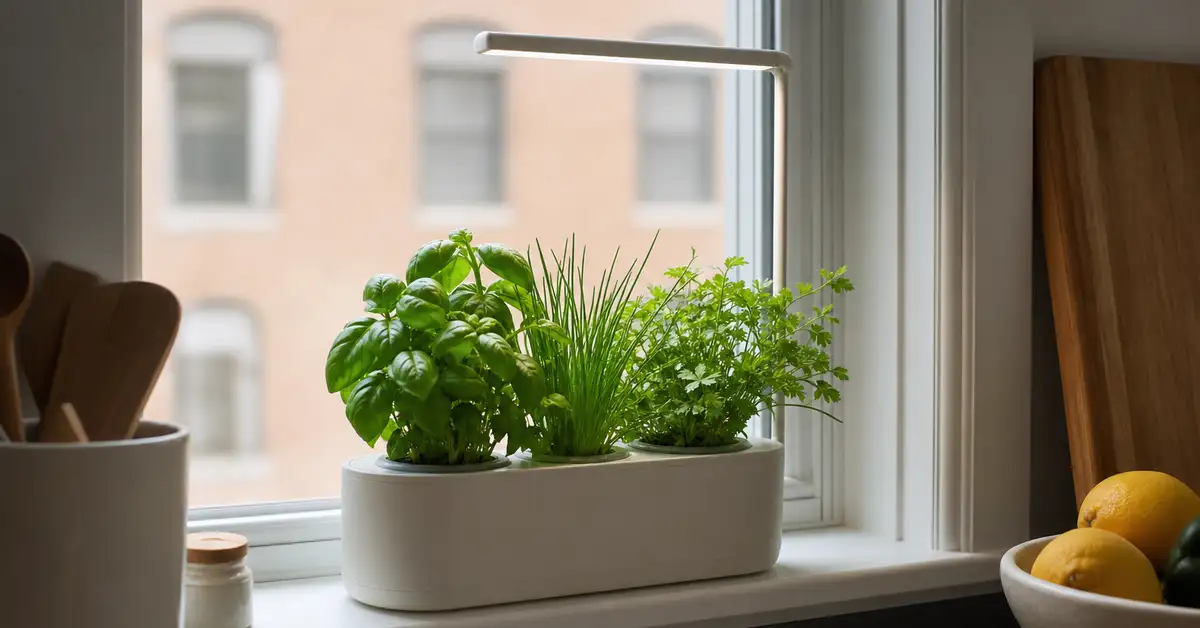
Best for: Apartments, dorms, and tight kitchen counters where even a nine-pod system won’t fit.
$ Budget
The Smart Garden 3 shrinks Click & Grow’s low-maintenance formula down to a roughly 300mm-wide footprint with a 1.5-liter tank and an 8W LED system — enough for three herb or small-green pods without a noticeable dent in your electric bill.
- Pros: Smallest true footprint in this guide; same passive, low-maintenance watering as the Smart Garden 9; genuinely low running cost; no open CPSC recalls found.
- Cons: Only three plant sites; same proprietary pod ecosystem as the Smart Garden 9.
Key specs: 3 plant pods | 8W LED | 1.5L water tank | ~300mm wide | 1-year warranty
Why we picked it: If space is the deciding factor, the Smart Garden 3 is the easiest way into indoor hydroponics without giving up Click & Grow’s low-maintenance design.
AeroGarden Harvest XL — Best Classic Countertop (No App Required)
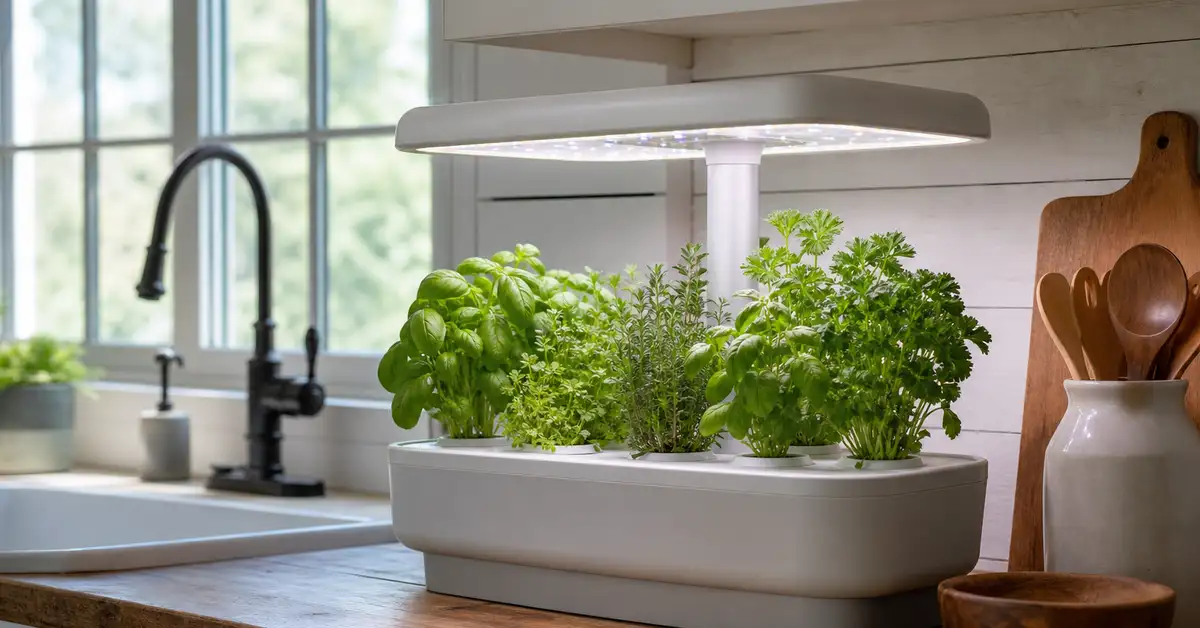
Best for: Buyers who want AeroGarden’s core growing experience without Wi-Fi, an app, or a touchscreen to manage.
$$ Mid-Range
The Harvest XL is AeroGarden’s standard six-pod countertop format: a 25W LED grow light, adjustable lamp height up to about 24.7″, and simple on-device controls with reminders for water and nutrients — no app pairing required.
- Pros: Simple, reliable operation with no app dependency; adjustable lamp height accommodates taller herbs and greens; strong brand recognition and parts availability; no open CPSC recalls found.
- Cons: No Wi-Fi or remote monitoring; same brand-history caveat as the Bounty Elite applies (see FAQ).
Key specs: 6 pods | 25W LED | Up to ~24.7″ adjustable height | No app required
Why we picked it: Not every buyer wants a smart-home device on their kitchen counter. The Harvest XL delivers AeroGarden’s proven growing mechanics in the simplest possible package.
Rise Gardens Personal Garden — Best Countertop With Room to Grow
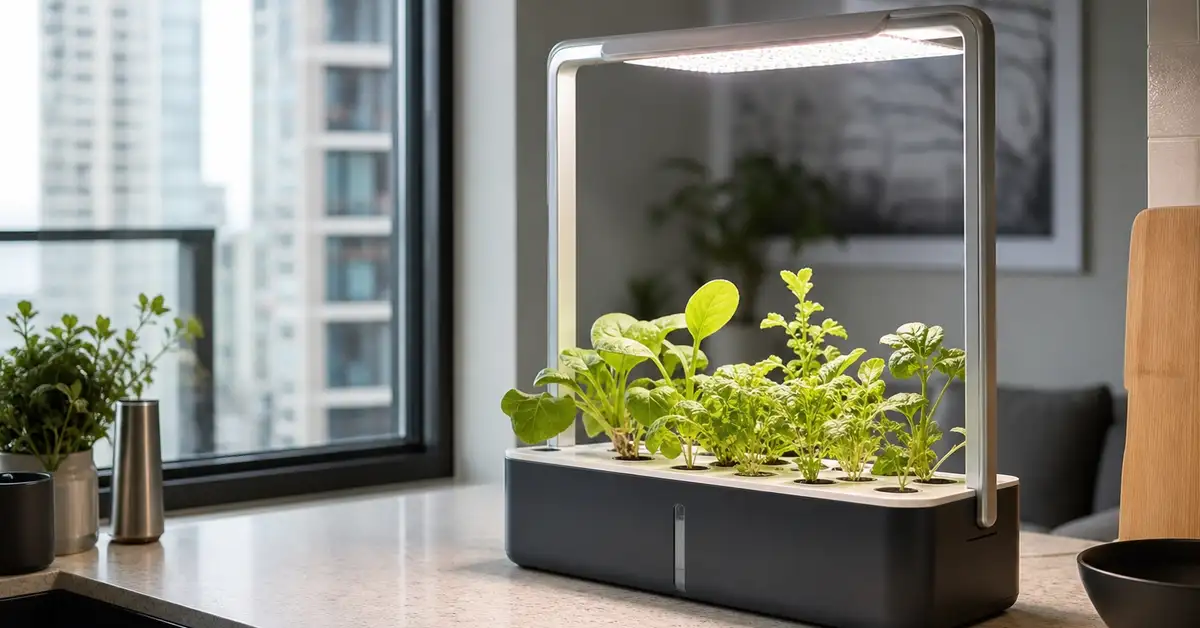
Best for: Buyers who want to start small but may eventually upgrade into a full modular Rise Gardens system.
$–$$ Budget to Mid-Range
Rise Gardens’ Personal Garden is a countertop-sized unit with an aluminum frame and a relatively powerful 50W LED — high output for its size — positioned as an entry point into Rise’s broader modular ecosystem rather than a standalone budget appliance.
- Pros: High light output for a countertop unit; backed by Rise’s support infrastructure (live chat, AI assistant); upgrade path into larger modular systems; no open CPSC recalls found.
- Cons: Higher energy draw than lower-wattage competitors at this size; best value is realized if you plan to expand later.
Key specs: ~8–12 plant sites | 50W LED | Aluminum frame | Countertop footprint
Why we picked it: For buyers who suspect they’ll want to scale up eventually, starting inside the Rise ecosystem avoids having to switch brands later.
Rise Gardens Family System — Best Vertical/Large-Capacity System
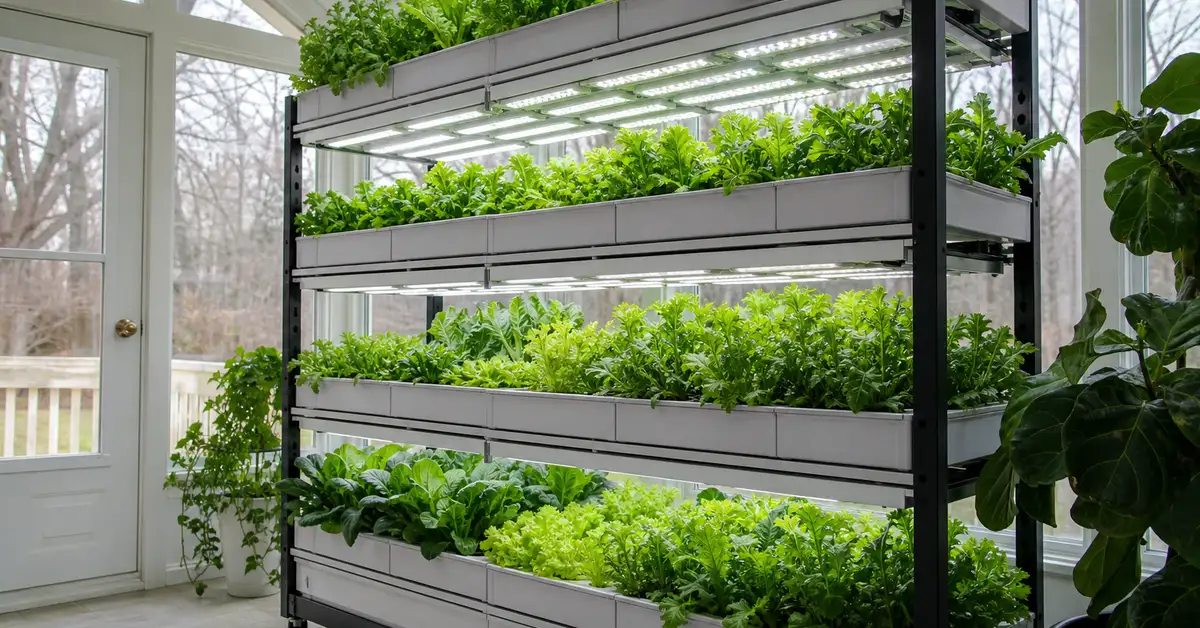
Best for: Families or serious home cooks who want the highest plant capacity of any consumer system in this guide.
$$–$$$ Mid-Range to Premium
Rise Gardens’ modular Family system scales from one level up to three, supporting up to 108 plants across 65W full-spectrum LED arrays per level (195W total at maximum configuration), with up to 12 gallons of water capacity and a three-year limited warranty — among the longest in this category.
- Pros: Highest plant capacity of any system reviewed; horizontal light design gives more even coverage than a tower; 3-year warranty and 90-day returns; no open CPSC recalls found.
- Cons: Requires significant floor space at full configuration; premium pricing scales with the number of levels added.
Key specs: Up to 108 plants | 65W LED per level (195W max) | Up to 3 levels | ~12-gallon water capacity | 3-year warranty
Why we picked it: If raw plant capacity and long-term warranty coverage matter more than aesthetics, the Family system produces more fresh food than anything else on this list.
Lettuce Grow Farmstand (Medium) — Best Design & Lifestyle System
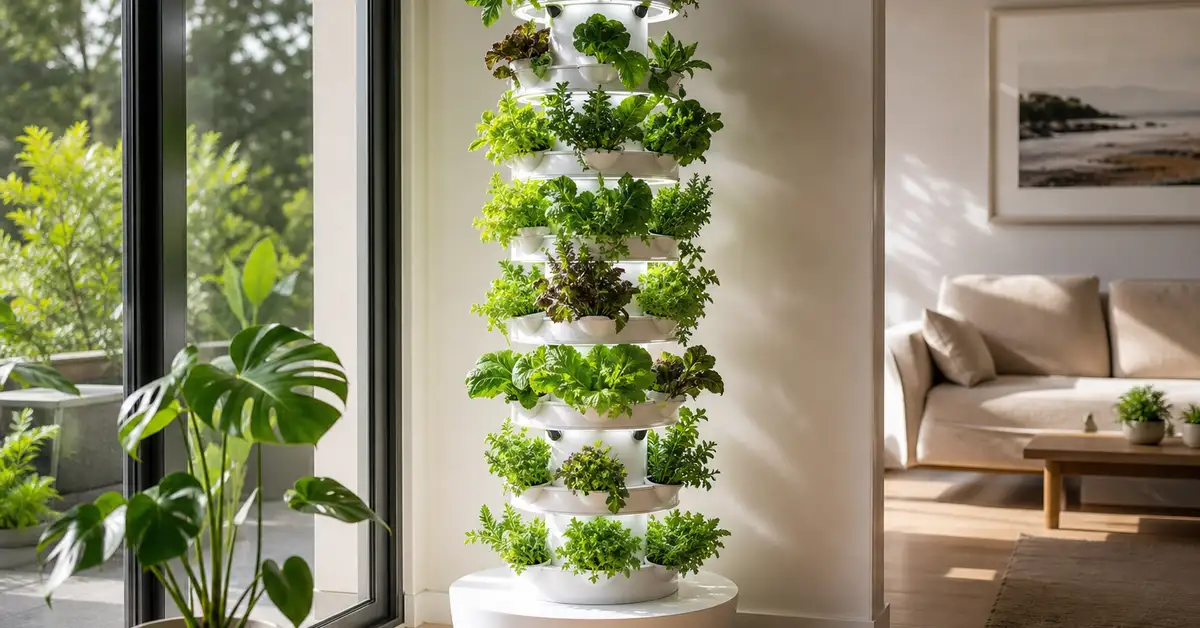
Best for: Buyers who want a vertical garden that doubles as a design centerpiece, not just a growing appliance.
$$–$$$ Mid-Range to Premium
The medium Farmstand supports 24 plant ports across stacked rings, needs about 4 square feet of floor space, and runs on a 20-gallon reservoir. Its standout feature is a live-seedling ecosystem — Lettuce Grow ships 2–3 week old seedlings rather than seeds, cutting time to harvest to as little as three weeks.
- Pros: Distinctive, widely-praised sculptural design; live seedlings remove germination guesswork; optional Glow Rings LED kit for indoor use; no open CPSC recalls found.
- Cons: Ongoing seedling costs (a recurring $ Budget-tier expense per seedling) add up for a fully-planted tower; pump and reservoir maintenance is more involved than countertop systems; requires a GFCI outlet.
Key specs: 24 plant ports (medium) | 4 sq ft footprint | 20-gallon reservoir | Optional Glow Rings LED | Live seedling ecosystem
Why we picked it: No other vertical system in this guide balances real plant capacity with a design that most people would happily leave in a living room.
Tower Garden FLEX — Best for Indoor/Outdoor Flexibility
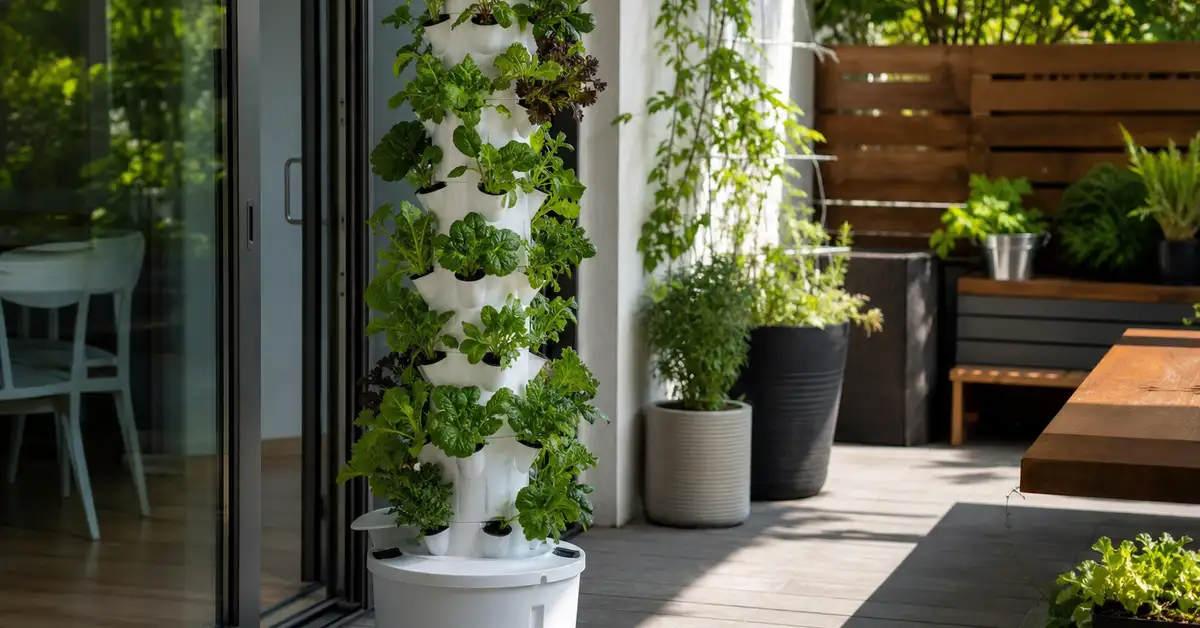
Best for: Buyers who want to grow outdoors in summer and move the system indoors for winter.
$$–$$$ Mid-Range to Premium
The Tower Garden FLEX is a 20-gallon-reservoir aeroponic tower supporting 20+ plants in its base configuration (extendable with additional ports), designed explicitly for both indoor and outdoor placement. An optional 125W LED light kit makes it viable indoors year-round.
- Pros: Genuinely rated for both indoor and outdoor use; extension kits add capacity over time; robust pump and reservoir sizing for serious yield; no open CPSC recalls found.
- Cons: More utilitarian look than the Lettuce Grow Farmstand; regular maintenance (biofilm cleaning, pH checks) is more involved than countertop systems; indoor LED kit is a separate purchase.
Key specs: 20+ plant sites (base) | 20-gallon reservoir | 30″×30″ footprint | 125W indoor LED kit (optional) | Indoor/outdoor rated
Why we picked it: For growers with a patio or deck, the FLEX is the only system in this guide genuinely built to move between indoor and outdoor use across seasons.
Aerospring Indoor Hydroponic System 2.0 — Best Enclosed Tent System
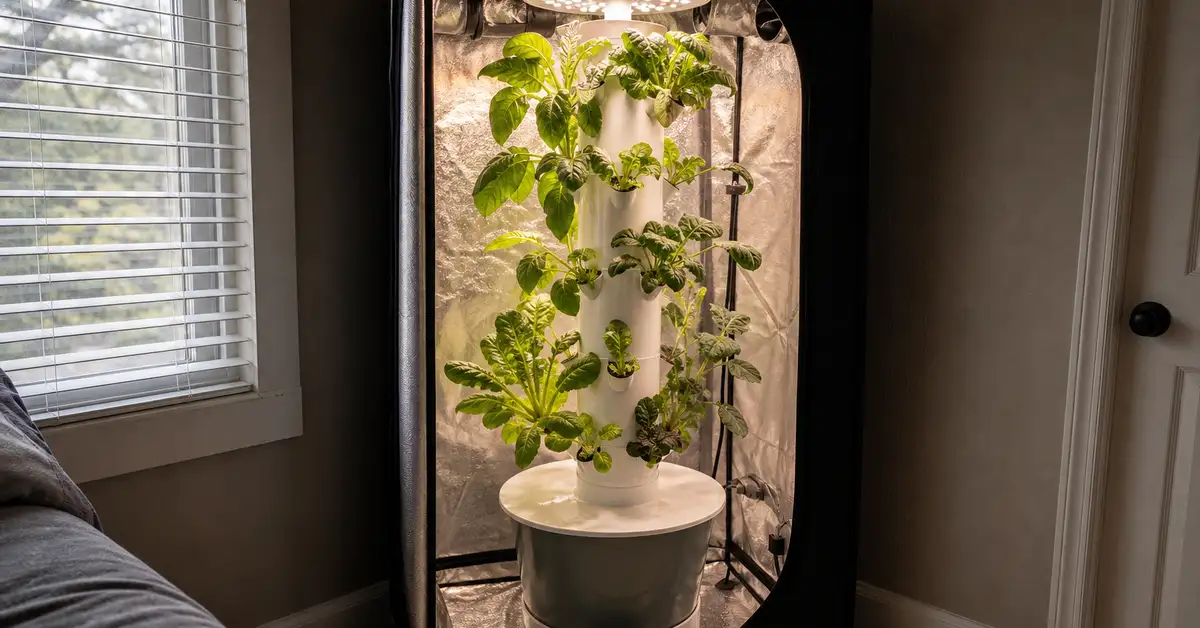
Best for: Serious growers who want near-greenhouse control in a dedicated corner or spare room.
$$$ Premium
Aerospring’s tented system combines a vertical hydroponic tower with an enclosed grow tent, a 150W LED grow light, a fan for air circulation, and a wheeled base — supporting up to 27 plants in a fully-controlled environment.
- Pros: Highest light intensity in this guide, suitable for denser plantings and some fruiting crops; enclosed tent improves climate and pest control; mobile, wheeled base; no open CPSC recalls found.
- Cons: Premium ($$$) price point; requires a dedicated room or corner; more involved setup and maintenance than any countertop system.
Key specs: Up to 27 plants | 150W LED | Enclosed grow tent + fan | Wheeled, mobile base
Why we picked it: For growers who’ve outgrown countertop and open-tower systems, Aerospring is the closest thing to a personal greenhouse in this guide.
iDOO 12–20 Pod System — Best Value Countertop Hydroponic Garden
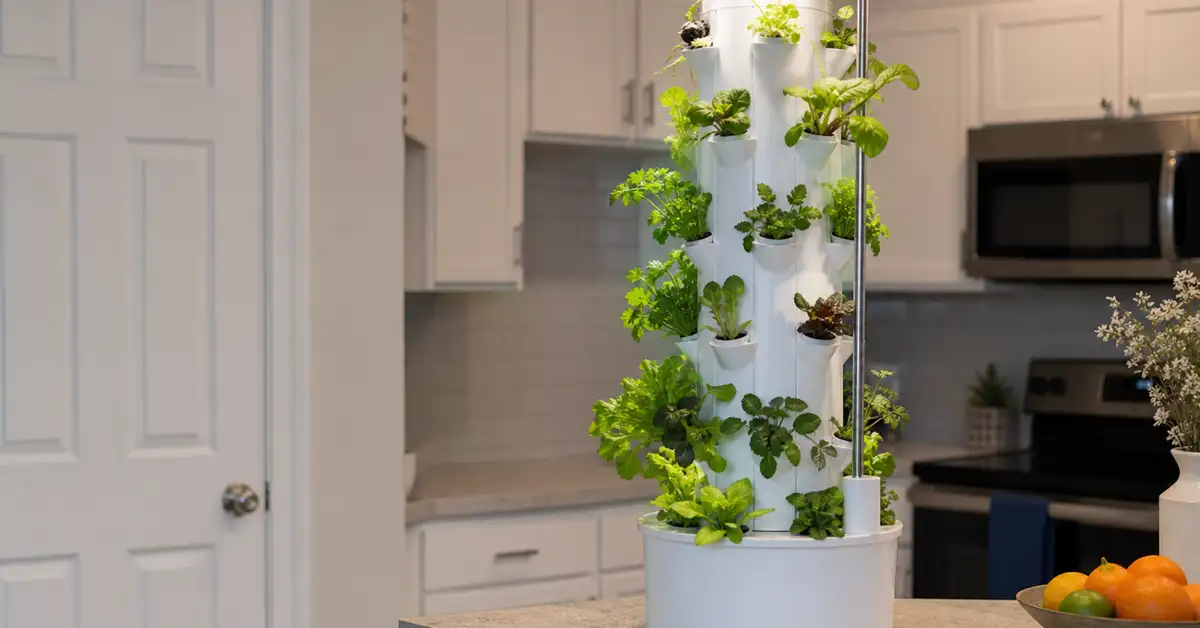
Best for: Budget-conscious buyers who want the most plant sites per dollar and don’t mind a simpler control interface.
$ Budget
iDOO’s countertop hydroponic gardens span 12- to 20-pod configurations with 36–48W LED arrays, using generic sponges and baskets rather than proprietary pods — so you’re free to plant whatever seeds you like, not just the brand’s own kits.
- Pros: Significantly more plant sites per dollar than AeroGarden or Click & Grow; no proprietary pod lock-in; some models add Wi-Fi and larger tanks; no open CPSC recalls found.
- Cons: Simpler app and control interface than premium brands; build quality is more variable at this price point.
Key specs: 12–20 pods | 36–48W LED | Compact to mid-size footprint | Generic seed-compatible baskets
Why we picked it: For buyers testing whether indoor hydroponics is worth a bigger investment, iDOO offers real capacity without a premium-brand price tag.
LetPot LPH-Max 21-Pod — Best High-Capacity Budget Smart Garden
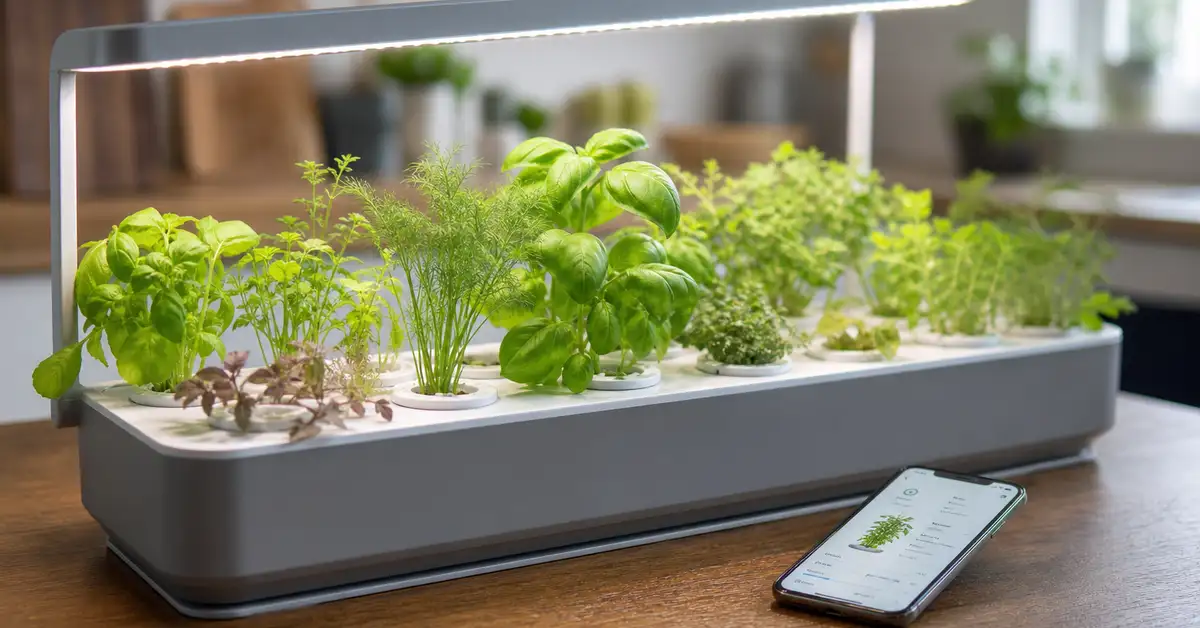
Best for: Buyers who want app control and a high pod count without paying premium-brand prices.
$–$$ Budget to Mid-Range
The LPH-Max supports 21 growing positions with a roughly 7.5-liter water tank and app control for light scheduling — an unusually high pod count for a table-top budget system, backed by a broad accessory catalog of replacement pumps, sponges, and light panels.
- Pros: Highest pod count of any budget system in this guide; app control at a fraction of premium-brand pricing; strong replacement-parts ecosystem; no open CPSC recalls found.
- Cons: LED wattage and pump ratings are less transparently documented than competitors; app quality and long-term reliability are less proven than established brands.
Key specs: 21 pods | ~7.5L water tank | App-controlled | Table-top footprint | Extensive accessory catalog
Why we picked it: For buyers who want AeroGarden-rivaling capacity at a fraction of the price and are comfortable with a less mature brand ecosystem, the LPH-Max is the strongest budget high-capacity option we found.
Full Comparison Table
| System | Best For | Capacity | Format | Price Band |
|---|---|---|---|---|
| Gardyn Home Kit | Best Overall | ~30 sites | Vertical smart wall | $$$ |
| AeroGarden Bounty Elite | Best Overall Countertop | 9 pods | Countertop | $$ |
| Click & Grow Smart Garden 9 | Best for Beginners | 9 pods | Countertop | $$ |
| Click & Grow Smart Garden 3 | Best Compact Pick | 3 pods | Countertop | $ |
| AeroGarden Harvest XL | Best Classic Countertop | 6 pods | Countertop | $$ |
| Rise Gardens Personal Garden | Room to Grow | ~8–12 sites | Countertop | $–$$ |
| Rise Gardens Family System | Vertical / Large-Capacity | Up to 108 | Multi-tier horizontal | $$–$$$ |
| Lettuce Grow Farmstand | Design & Lifestyle | 24 ports (medium) | Vertical tower | $$–$$$ |
| Tower Garden FLEX | Indoor/Outdoor Flexibility | 20+ plants | Vertical tower | $$–$$$ |
| Aerospring 2.0 | Enclosed Tent System | 27 plants | Tented vertical | $$$ |
| iDOO 12–20 Pod | Best Value | 12–20 pods | Countertop | $ |
| LetPot LPH-Max | High-Capacity Budget | 21 pods | Table-top | $–$$ |
Price bands: $ = Budget / $$ = Mid-Range / $$$ = Premium — all USD. No live prices or star ratings displayed; see individual Amazon listings for current pricing.
Buying Guide: What Actually Matters
Countertop or Vertical Tower? How to Choose
Countertop smart gardens (AeroGarden, Click & Grow, iDOO, LetPot, Rise Gardens’ Personal unit) fit on a kitchen counter or shelf and typically grow 3–21 plants — enough for regular herb use and a rotating handful of greens. Vertical and tented systems (Gardyn, Rise Gardens’ Family system, Lettuce Grow, Tower Garden, Aerospring) need a dedicated floor footprint but scale to 20–108+ plants, meaningfully offsetting grocery spend on greens for a household that uses them consistently. If you’re not sure indoor hydroponics is for you, start with a countertop system before committing floor space and budget to a tower.
Understand the Ongoing Costs — Not Just the Hardware Price
Most systems in this guide lock you into a consumable ecosystem: AeroGarden and Click & Grow sell proprietary seed pods; Lettuce Grow sells live seedlings (a recurring $ Budget-tier expense per seedling); Gardyn runs a monthly yCube subscription. Budget brands like iDOO generally use generic sponges and baskets that accept ordinary seeds, avoiding recurring costs but requiring more hands-on nutrient management. Before buying, check what refills cost and how easily they’re available — a system with no active seed-pod restocking is a system you’ll eventually have to replace.
Watch Brand and Ecosystem Stability
This category has real brand-continuity risk. AeroGarden announced a closure under its former owner in late 2024 before relaunching under new ownership in 2025 — see our FAQ below for the full timeline. Before buying into any proprietary pod or subscription ecosystem, check that the manufacturer’s own site is actively shipping product and selling refills, not just that a listing exists on a marketplace.
Red Flags to Watch For
- Marketplace-only listings with no manufacturer site: If you can’t find a product on its own manufacturer’s website, treat long-term parts and refill availability as uncertain.
- No published capacity or lighting specs: Reputable systems publish plant/pod count, LED wattage, and reservoir size. Vague listings with no specifics are a warning sign.
- No CPSC safety screen: We checked every product in this guide against CPSC’s recalls.gov database. Our shortlist is clear of open recalls. Electrical grow gear — pumps, LED drivers, heating elements — carries real safety risk if manufactured to poor standards.
- Unrealistic yield claims: Be skeptical of marketing claims not backed by manufacturer specs or independent reviews — we’ve flagged where a claim comes from a single source.
Frequently Asked Questions
What is a smart indoor garden system?
A smart indoor garden system is a self-contained device that automates core aspects of plant care — typically lighting and watering — and often adds app-based control or monitoring, letting you grow herbs, greens, and sometimes small fruiting crops indoors with minimal gardening knowledge. Examples range from AeroGarden’s touchscreen countertop units to Gardyn’s camera-monitored vertical wall.
How does hydroponic indoor gardening differ from soil-based gardening?
Hydroponic systems grow plant roots directly in nutrient-enriched water or inert materials like rockwool or foam sponges, instead of potting soil. This allows faster growth and higher planting density — vertical towers like the Lettuce Grow Farmstand or Tower Garden FLEX can fit dozens of plants in a few square feet — but requires more attention to water levels, nutrient concentration, and pump function than soil, which is more forgiving of neglect.
How much does an indoor hydroponic garden system typically cost?
Entry-level countertop kits (iDOO, LetPot, small Ivation models) fall in our $ Budget price band. Mid-range countertop systems like AeroGarden’s Harvest and Bounty lines and Click & Grow’s Smart Garden 9 generally sit in our $$ Mid-Range price band. Large vertical towers and tented systems — Lettuce Grow, Tower Garden, Rise Gardens’ Family system, Gardyn, and Aerospring — typically reach our $$$ Premium price band, plus ongoing costs for pods, seedlings, or nutrients.
Are countertop hydroponic systems worth it for beginners?
Yes, for most beginners. Systems like Click & Grow’s Smart Garden 3 and 9, and AeroGarden’s Harvest series, use curated seed pods, automated lighting, and simple reminders that reduce the risk of over- or under-watering. They’re a low-commitment way to learn the basics of hydroponic growing before investing in a larger vertical system.
What is the difference between AeroGarden and Click & Grow?
AeroGarden uses active hydroponics — roots sit in aerated nutrient solution circulated by a pump — with higher-wattage LEDs (25W in the Harvest XL, 50W in the Bounty Elite) capable of supporting some fruiting plants alongside herbs. Click & Grow uses passive capillary watering, where pods wick moisture from a shared reservoir, paired with lower-power (8–13W) but very energy-efficient LEDs, optimized for herbs and small greens rather than larger crops. AeroGarden offers more raw capability and connectivity; Click & Grow prioritizes simplicity and low running costs.
Is AeroGarden still in business and operating in 2026?
Yes, with an important caveat worth knowing before you buy. AeroGarden’s then-owner, Scotts Miracle-Gro, publicly announced in late 2024 that it would close the brand effective January 1, 2025, shortening warranties on units bought after November 1, 2024, and winding down direct sales. AeroGarden was subsequently relaunched under new ownership in 2025, and its manufacturer site continues to list active products, including the Harvest XL and Bounty Elite, into 2026. Reporting on exactly who owns the brand post-relaunch varies by source, and retail availability for some models has reportedly been uneven. If you’re buying an AeroGarden system today, we recommend confirming current warranty terms and seed-pod availability directly on AeroGarden’s site or with the retailer at checkout.
The Bottom Line: Which Indoor Gardening System Should You Buy?
For most households, the Gardyn Home Kit is the best overall system in 2026 — the highest capacity-to-effort ratio of any smart system we reviewed, thanks to camera-assisted monitoring that does most of the watching for you. If you’d rather stay on the countertop, the AeroGarden Bounty Elite is the most capable all-around pick, and the Click & Grow Smart Garden 9 is the easiest system for a genuine first-timer.
Want the highest possible yield and don’t mind giving up floor space? The Rise Gardens Family System and Lettuce Grow Farmstand scale to serious production — one prioritizing capacity and warranty, the other prioritizing design. On a tight budget, the iDOO 12–20 Pod System and LetPot LPH-Max deliver genuine plant capacity without the premium-brand price tag.
Whatever you choose: check current brand and ecosystem stability, confirm ongoing consumable costs before you buy, and don’t skip the CPSC safety screen we’ve already run for you above.